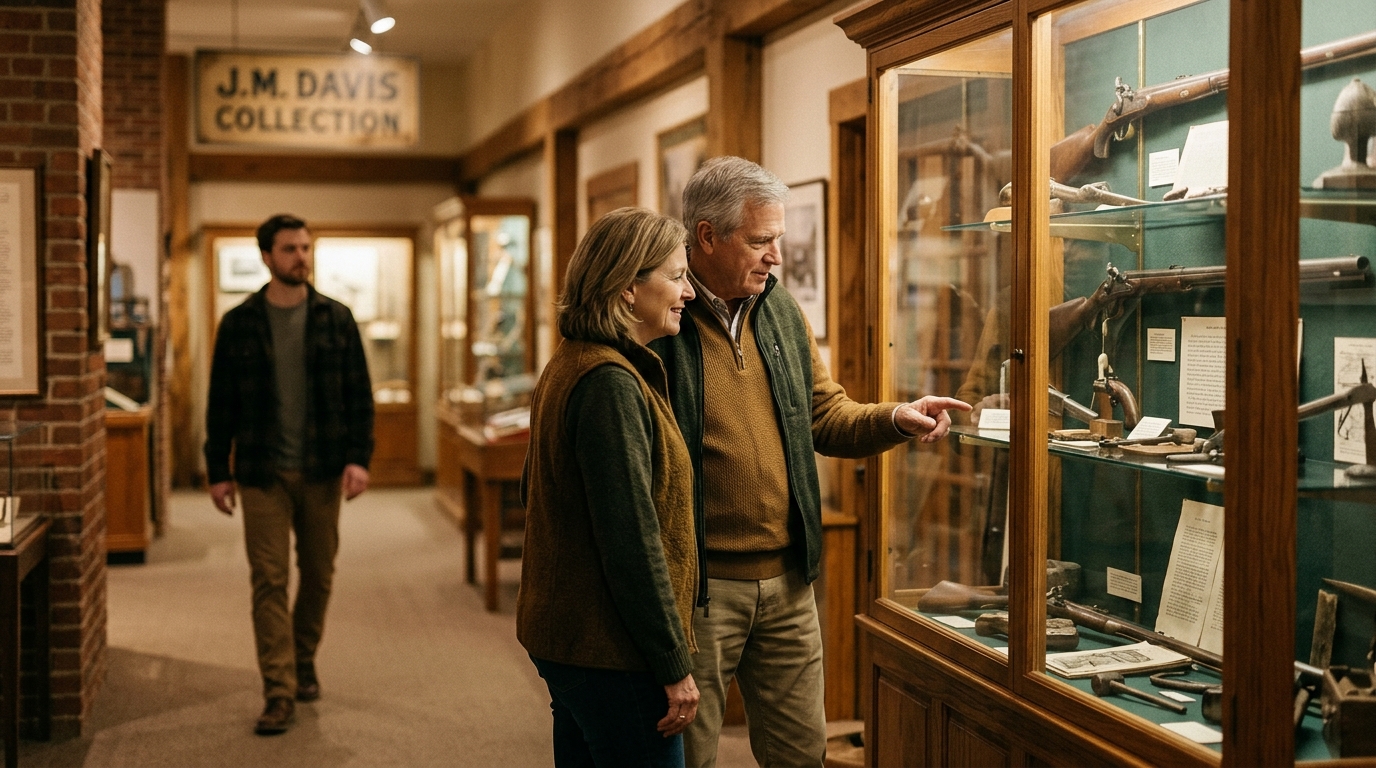
Why Is the J. M. Davis Museum Free?
Why is the J. M. Davis Museum free? Explore what free admission may reveal about J. M. Davis, his collection, and his belief in sharing history with the public.
What Free Admission May Tell Us About J. M. Davis and the Purpose of His Collection
Visitors often notice something unusual when they come through the doors of the J. M. Davis Arms & Historical Museum.
There is no admission charge.
In a world where almost every experience comes with a price tag, that can feel surprising. Museums, historic homes, roadside attractions, and private collections often charge admission. It would not have been unreasonable if J. M. Davis had done the same.
But he did not.
That choice becomes even more interesting when we look at the history of his collection. Davis displayed firearms and artifacts inside the Mason Hotel for decades. Visitors came from across Oklahoma, across the country, and beyond to see what he had gathered. At almost any point, he could have turned that public interest into a ticketed attraction.
Other collectors did. One important collection Davis later acquired, the Bessette Collection, had been exhibited around the country for an admission fee before becoming part of the Davis collection.
So the real question is not whether Davis could have charged admission.
The better question is why he kept moving toward public access instead.
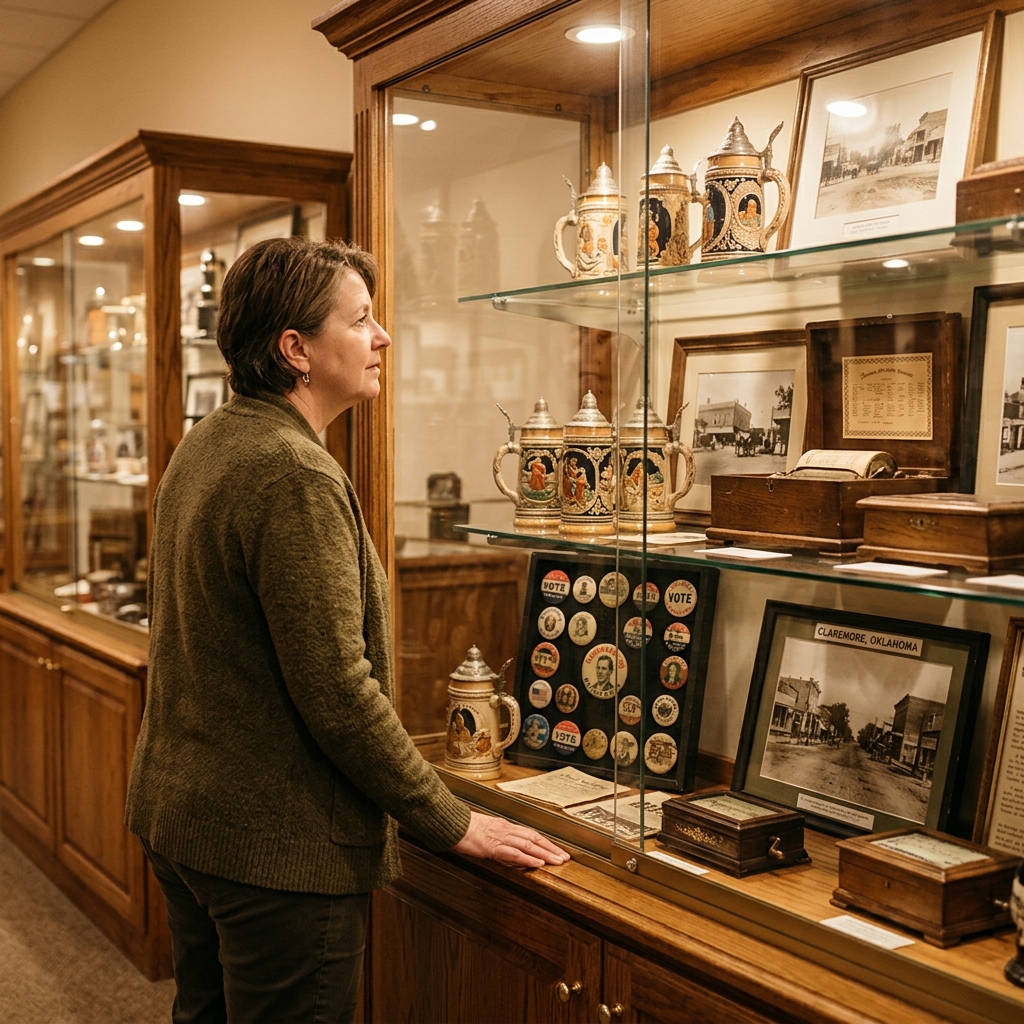
A Collection That Grew Into Something Larger
J. M. Davis did not begin with the enormous collection visitors see today. By 1929, he reportedly owned only 99 firearms. That is still a serious collection, but it does not explain the museum that eventually came into being.
Within a decade, the collection had grown dramatically. Davis acquired major collections, added thousands of firearms and artifacts, traded pieces, refined what he had, and continued searching for objects that helped fill out the story.
That matters.
A collector can gather objects simply to own them. Many collectors enjoy rarity, craftsmanship, age, condition, or the satisfaction of finding something unusual. Davis certainly seems to have appreciated all of those things.
But over time, his collection appears to have become something larger than ownership.
It became a way to walk through history.
Different pieces represented different makers, eras, conflicts, technologies, and people. Visitors could see how design changed over time. They could notice the relationship between invention and need, craftsmanship and function, war and daily life. The collection began to show more than firearms lined up in cases. It began to explain the people and events connected to them.
At some point, the collection was no longer only about what Davis owned.
It was about what the collection could teach.
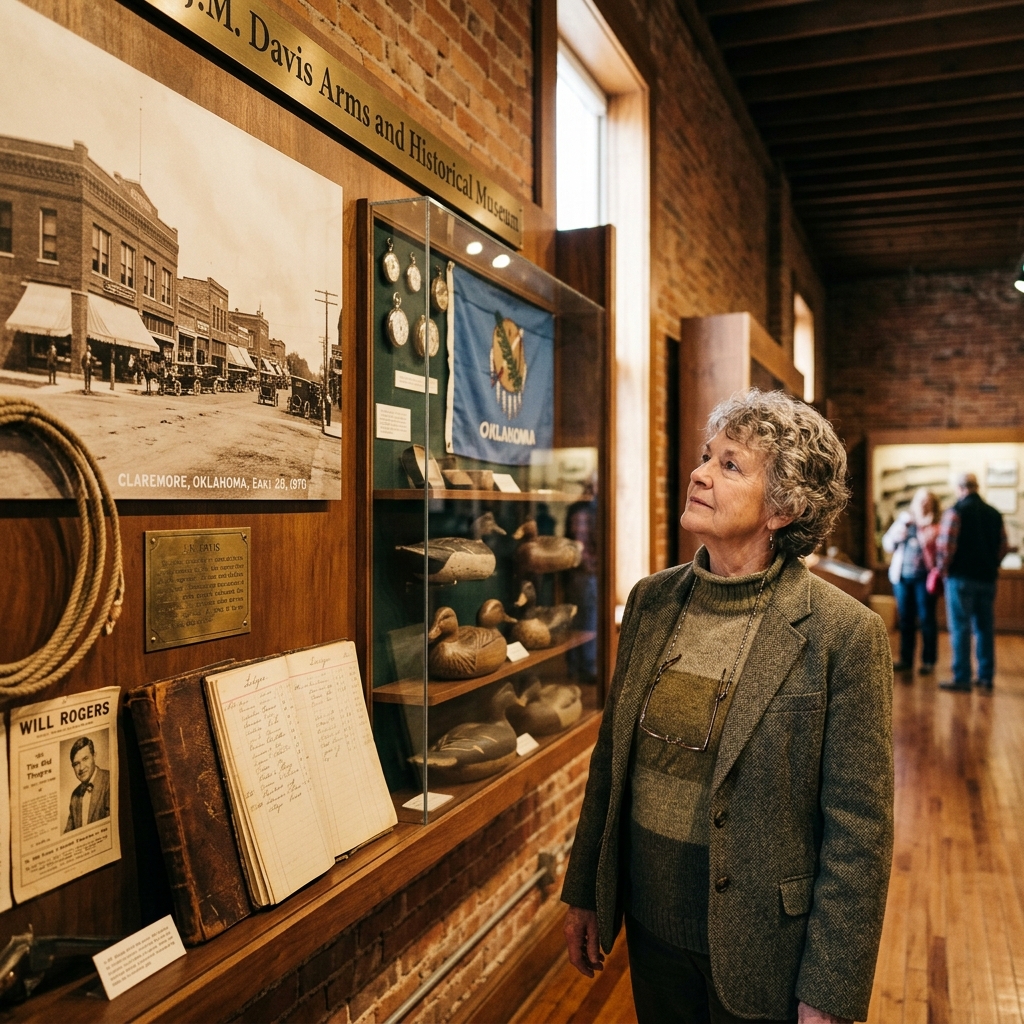
More Than Firearms
One of the clearest signs of Davis’s broader interest is that he did not collect firearms alone.
He also collected saddles, branding irons, spurs, and other artifacts connected to the American West. Eventually, the Mason Hotel banquet room was filled with saddles and western material culture. That detail is important because it shows that Davis was not simply preserving weapons. He was preserving pieces of entire historical worlds.
A saddle tells a story about travel, ranching, work, and daily life.
A branding iron tells a story about cattle, ownership, and the business of the West.
Spurs speak to horsemanship, transportation, and the people who moved across wide stretches of land before automobiles changed the rhythm of American life.
Together, these objects help visitors understand a broader American experience. They point toward settlement, industry, craftsmanship, conflict, travel, and community. They show how people lived, worked, moved, protected themselves, and built lives.
That broader view may help explain why free admission mattered.
If Davis had seen the collection only as a private achievement, he could have treated it differently. He could have limited access. He could have charged admission. He could have made the collection more exclusive.
Instead, he continued allowing people to see it.
That choice suggests that Davis may have understood his collection as something worth sharing long before it became the museum we know today.
Claremore, Visitors, and the Value of Access
The audience around the collection also changed over time.
Claremore was already tied to history and travel, but after the death of Will Rogers, the community became even more connected to heritage tourism. Visitors came to Claremore because they were interested in memory, place, and American stories.
During this same general period, Davis’s public displays continued to grow.
The Mason Hotel became more than a place to stay. It became a destination. Travelers stopped to see the collection. Families wandered through. School groups visited. Questions were asked. Stories were shared.
That kind of audience can change the meaning of a collection.
When a child looks at an artifact and asks what it is, the object becomes a teaching tool.
When a traveler connects an item to something they have only read about, the object becomes a bridge.
When a community begins to take pride in a collection, it becomes part of local identity.
Davis may not have set out at the beginning to create an educational institution. Many important things start more simply than that. But as the collection grew and visitors responded, its educational value must have become harder to ignore.
A collection that teaches is different from a collection that merely impresses.
And a collection that teaches has a reason to be shared.
A Caretaker of History
It would be easy to say we know exactly why J. M. Davis kept access free. We do not.
We cannot know every private thought or motivation. We should be careful not to put words in his mouth or turn his choices into a simple story with only one explanation.
But we can look at what he did.
He collected. He preserved. He displayed. He expanded. He refined. He welcomed visitors. He allowed school groups, travelers, and local residents to experience what he had built. Eventually, his collection became the foundation for a museum that remains free to the public.
Those actions suggest something important.
Davis does not appear to have been only a private collector interested in possession. In many ways, he seems more like a caretaker of history: someone who gathered pieces of the past and came to understand that they should not disappear into private rooms where only a few could see them.
That does not mean ownership did not matter to him. Of course it did. Collectors care deeply about what they collect.
But perhaps the highest purpose of the collection changed over time.
Perhaps the more complete it became, the more it needed an audience.
What Free Admission Says Today
Today, free admission still says something.
It says that history should not only belong to those who can pay for it.
It says a family traveling Route 66 can stop without worrying about the cost.
It says a school group can walk through the doors and stand face-to-face with objects connected to American history.
It says a child can ask a question, follow their curiosity, and leave with a memory.
Free admission does not mean the museum has no cost. Museums require care, staff, preservation, security, utilities, research, maintenance, and countless daily tasks that visitors may never see. But free admission communicates a different kind of value.
It says some things are worth sharing because they belong to public memory.
History is one of those things.
So is education.
So is civic heritage.
The J. M. Davis Museum holds thousands of artifacts, but the free admission points beyond the objects themselves. It points to welcome. It points to access. It points to the belief that the stories preserved here should be available to everyone who walks through the door.
Not Possession, But Sharing
Why is the J. M. Davis Museum free?
There may not be one complete answer.
Maybe Davis wanted travelers to see something remarkable. Maybe he wanted Claremore to have something special. Maybe he understood that his collection had grown beyond private ownership. Maybe he saw the way people responded and realized the collection could teach, inspire, and preserve memory long after he was gone.
Maybe all of those things are true in some measure.
What we can say is this: J. M. Davis had many opportunities to charge admission, and he chose another path.
That choice still matters.
In the end, the free museum may offer one of the clearest clues to what the collection had become. It was no longer only about acquisition. It was no longer only about rarity, display, or personal accomplishment.
By the end of his life, J. M. Davis may have understood that the highest purpose of the collection was not ownership, but access.
Not possession, but education.
Not accumulation, but sharing.
And that may be why, all these years later, the doors remain open.
Sources
“Bessette Collection.” J. M. Davis Arms & Historical Museum Collection Records.
“J. M. Davis Arms and Historical Museum.” Wikipedia, The Free Encyclopedia.
“J.M. Davis Arms & Historical Museum.” J.M. Davis Arms & Historical Museum.
“Will Rogers Memorial Museum.” Will Rogers Memorial Museum.
Share this article
Help someone else find this post
Share it to your favorite platform, email it directly, or copy the link for your next post or message.
Reader reflection
What does free admission to a museum say about the value of history?
The J. M. Davis Museum has remained free to visitors for generations. Reflect on what public access to history means to you, your family, or your community. Why should some stories, collections, and artifacts be shared as widely as possible?
Public reading stays open. Private reflection requires a member account so you can save your thinking and come back to it later.