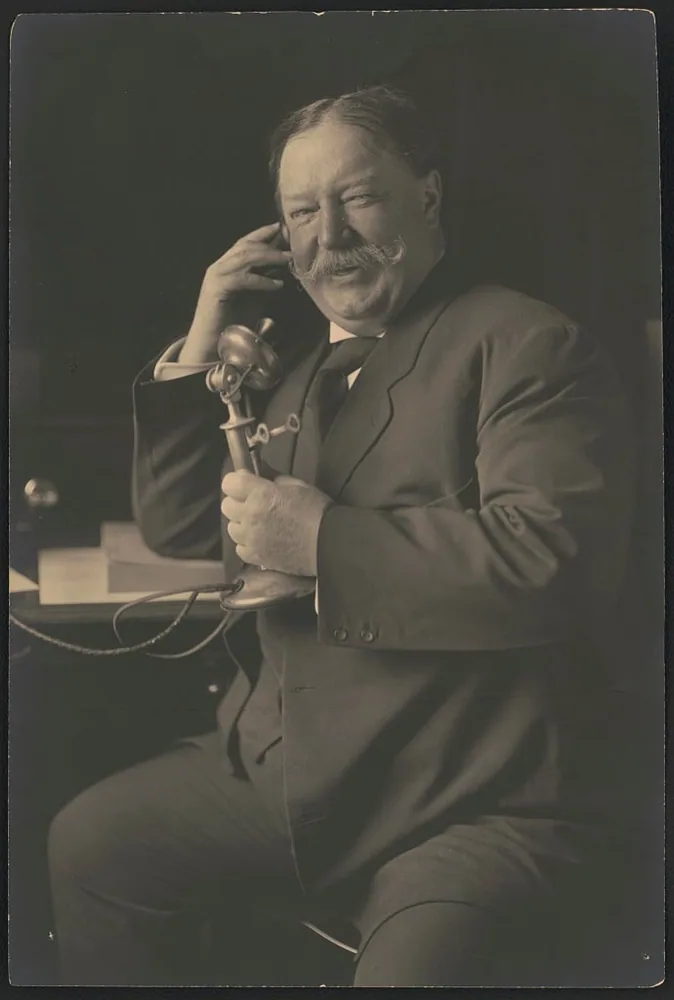
When Former President William Howard Taft Visited Claremore And The Bathtub Mystery That Followed
Explore William Howard Taft’s 1920 visit to Claremore, the Mason Hotel, a packed lecture, and the playful mystery of a famous bathtub legend.
A Former President, A Packed Church, The Mason Hotel, And One Very Famous Bathtub Legend
Claremore Gets Ready For A Very Important Guest
In February of 1920, Claremore had something big to talk about.
A former President of the United States was coming to town.
That was not the kind of news people ignored. Long before social media posts, text alerts, and breaking news banners, word spread through newspapers, storefront conversations, hotel lobbies, and neighbors who probably knew the news before the ink was dry.
William Howard Taft was not just any visitor. He had served as the twenty seventh President of the United States from 1909 to 1913. He would later become Chief Justice of the United States Supreme Court, but in 1920, he was still best known as a former President, a public speaker, and one of the most recognizable men in America.
For Claremore, this was a very big deal.
Newspaper accounts reported that Taft arrived from Tulsa and was escorted into Claremore by local leaders.
For one winter evening, Claremore was not just watching history from a distance.
It was hosting it.
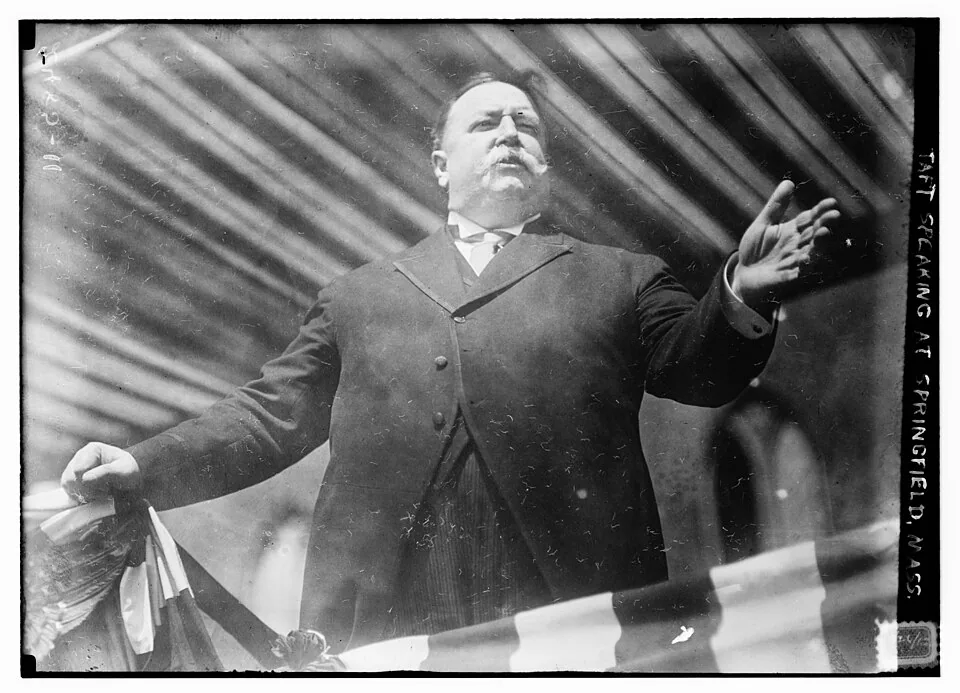
The Mason Hotel Becomes The Center Of Attention
During his visit, Taft stayed at the Mason Hotel, one of Claremore’s important gathering places during the early twentieth century.
Hotels in those days were not just places where travelers slept and complained about the pillows. They were social centers. Civic leaders gathered there. Business discussions happened there. Important visitors were welcomed there.
During Taft’s stay, the Claremore Commercial Club hosted a banquet at the hotel attended by approximately 100 people.
One can easily imagine the atmosphere.
Community leaders discussing politics over dinner.
Residents hoping to catch a glimpse of a former President.
Visitors filling the hotel with conversation and excitement.
And somewhere in the middle of all that respectable civic activity, one question still manages to sneak into the story.
Did William Howard Taft use one of the Mason Hotel bathtubs?
The Bathtub Story Everyone Still Talks About
No story involving William Howard Taft feels complete without mentioning the bathtub.
For decades, people have repeated the story that Taft once became stuck in a bathtub because of his size. Historians have questioned how accurate the story really is, but that has not stopped the legend from becoming one of the most famous presidential stories in American memory.
So, naturally, Claremore gets to ask a playful question.
Did Taft use a bathtub at the Mason Hotel during his 1920 visit?
Probably.
Did anything dramatic happen?
There is no evidence that it did.
No newspaper account reports a splash, a rescue, a plumbing crisis, or a group of concerned Claremore citizens gathering outside the bathroom door.
Still, the question is hard to resist.
If Taft stayed at the Mason Hotel, and the Mason Hotel had bathtubs, then somewhere in the world of historical imagination there may be a Claremore bathtub with an excellent story to tell.
The bigger mystery is this:
What happened to those old Mason Hotel fixtures?
Were they removed during later changes?
Were they discarded?
Could one still be sitting somewhere, completely unaware that history enthusiasts would one day wonder about its presidential possibilities?
History does not always hand us neat answers.
Sometimes it leaves us with newspapers, names, dates, and just enough mystery to keep things interesting.
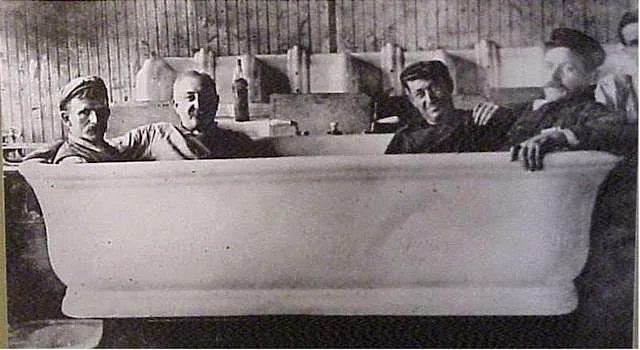
A Packed Church And A Serious Speech
While the bathtub mystery adds a little fun to the story, Taft’s actual reason for visiting Claremore was serious.
He came to speak.
His lecture at the Baptist Church drew one of the largest crowds Claremore had seen in years. Before the event, newspapers predicted the church would likely be full.
They were right.
Reports estimated that approximately 800 people attended the lecture.
That is a lot of people in 1920. That is also a lot of people trying to find a good seat before anyone started saving pews for relatives.
Public lectures were major events during this period. Families dressed for the occasion. Civic organizations attended. Audiences gathered to hear nationally recognized figures speak about the important issues of the day.
Taft focused heavily on the League of Nations and international cooperation after World War I.
For Claremore residents, this was not just an evening out.
It was a chance to hear directly from a former President about issues that were shaping the future of the world.
Claremore Steps Into The National Spotlight
Taft’s visit revealed something important about Claremore.
This was not a sleepy town sitting quietly on the sidelines of history.
Claremore was engaged.
The city embraced education, civic involvement, public lectures, and national discussion. Community leaders worked to bring important speakers and events into the city.
Taft’s visit also included time at Oklahoma Military Academy alongside local leaders including G. D. Davis.
That detail matters because it shows how active Claremore’s civic network was during this period. Local leaders were not simply hosting a famous visitor for show. They were introducing him to the institutions, people, and ambitions of the community.
For residents, the visit represented more than a lecture.
It was a moment of civic pride.
And probably a week of people saying, “Did you hear Taft is coming?” followed by “Yes, I already heard.”
The Mason Hotel’s Place In Claremore History
Years later, the Mason Hotel would become closely connected to J. M. Davis and Addie Davis, whose names remain tied to Claremore history and the museum legacy preserved today through the J. M. Davis Arms and Historical Museum.
That is an important distinction.
The newspaper accounts of Taft’s visit name G. D. Davis among the local leaders involved in the visit. They do not show that J. M. Davis hosted Taft or participated directly in the 1920 visit.
Still, the Mason Hotel connects the story to the broader historical world that later became part of the museum’s legacy.
Stories like this help show why local history matters. The museum is not simply about artifacts behind glass cases. It is connected to the larger story of Claremore itself.
The people.
The visitors.
The conversations.
The moments that made Claremore part of something larger.
And in this case, possibly one very interesting bathtub.
Why Stories Like This Still Matter
Some historical stories are important because they changed the course of nations.
Others matter because they help communities remember who they were.
Taft’s visit to Claremore does both in its own memorable way.
It reminds us that small cities can play meaningful roles in larger national conversations. It shows how civic organizations, local leaders, hotels, churches, and schools helped shape community life. It also proves that history does not have to be dry to be valuable.
Sometimes history includes packed churches, elegant hotels, famous Presidents, international politics, and a bathtub mystery that refuses to go away.
That is the kind of story people remember.
And the next time you visit the J. M. Davis Arms and Historical Museum, remember that the museum is part of a much larger Claremore story. A story filled with people, places, surprises, national figures, and occasionally, a bathtub that may or may not have known it was standing near history.
Related Questions
What Year Did William Howard Taft Visit Claremore? William Howard Taft visited Claremore in February 1920.
Where Did William Howard Taft Stay In Claremore? Newspaper accounts reported that Taft stayed at the Mason Hotel during his visit.
What Was William Howard Taft’s Claremore Speech About? Taft spoke about the League of Nations and international cooperation after World War I.
Did William Howard Taft Get Stuck In A Bathtub In Claremore? There is no evidence that Taft became stuck in a bathtub in Claremore. The bathtub story is included as part of the broader presidential folklore surrounding Taft.
Visitors Can Experience A Small Room Inspired By The Mason Hotel
One of the most interesting ways this story connects to the museum today is through a small historical room display at the J. M. Davis Arms and Historical Museum.
The display helps visitors imagine the atmosphere surrounding the Mason Hotel during Claremore’s early twentieth century history. While it is not an exact recreation of the hotel itself, it offers a glimpse into the style, furnishings, and character associated with the period.
The Mason Hotel later became closely connected to J. M. Davis and Addie Davis, helping tie the building to the broader story preserved through the museum today.
And after hearing about Taft’s famous visit and the legendary bathtub story, visitors may still find themselves wondering one thing:
Where did that bathtub go?
Sources
“Taft.” Claremore Progress, 26 Feb. 1920, p. 2. Newspapers.com
“Taft contd.” Claremore Progress, 26 Feb. 1920, p. 2. Newspapers.com
“Taft Lecture Cmore.” The Claremore Messenger, 20 Feb. 1920, p. 1. Newspapers.com
“Taft Visits Claremore.” The Claremore Messenger, 27 Feb. 1920, p.1 Newspapers.com
“About The Museum.” J. M. Davis Arms And Historical Museum, www.thegunmuseum.com/about Accessed 1 May 2026.
Share this article
Help someone else find this post
Share it to your favorite platform, email it directly, or copy the link for your next post or message.
Reader reflection
What part of Taft’s Claremore visit surprised you most?
Think about the Mason Hotel, the packed church, the bathtub legend, or Claremore’s role in welcoming a former President.
Public reading stays open. Private reflection requires a member account so you can save your thinking and come back to it later.