Sybil Ludington: The Teenage Rider Remembered for Her Revolutionary War Warning
Explore the story of Sybil Ludington, the teenage Revolutionary War rider remembered for warning Patriot militia after the British raid on Danbury.
Behind the Story: Who Was Sybil Ludington?
Some Revolutionary War stories are repeated so often that they become part of the national imagination. Others survive in local memory, family tradition, monuments, and later retellings. The story of Sybil Ludington belongs somewhere in that fascinating space between history, memory, and legend.
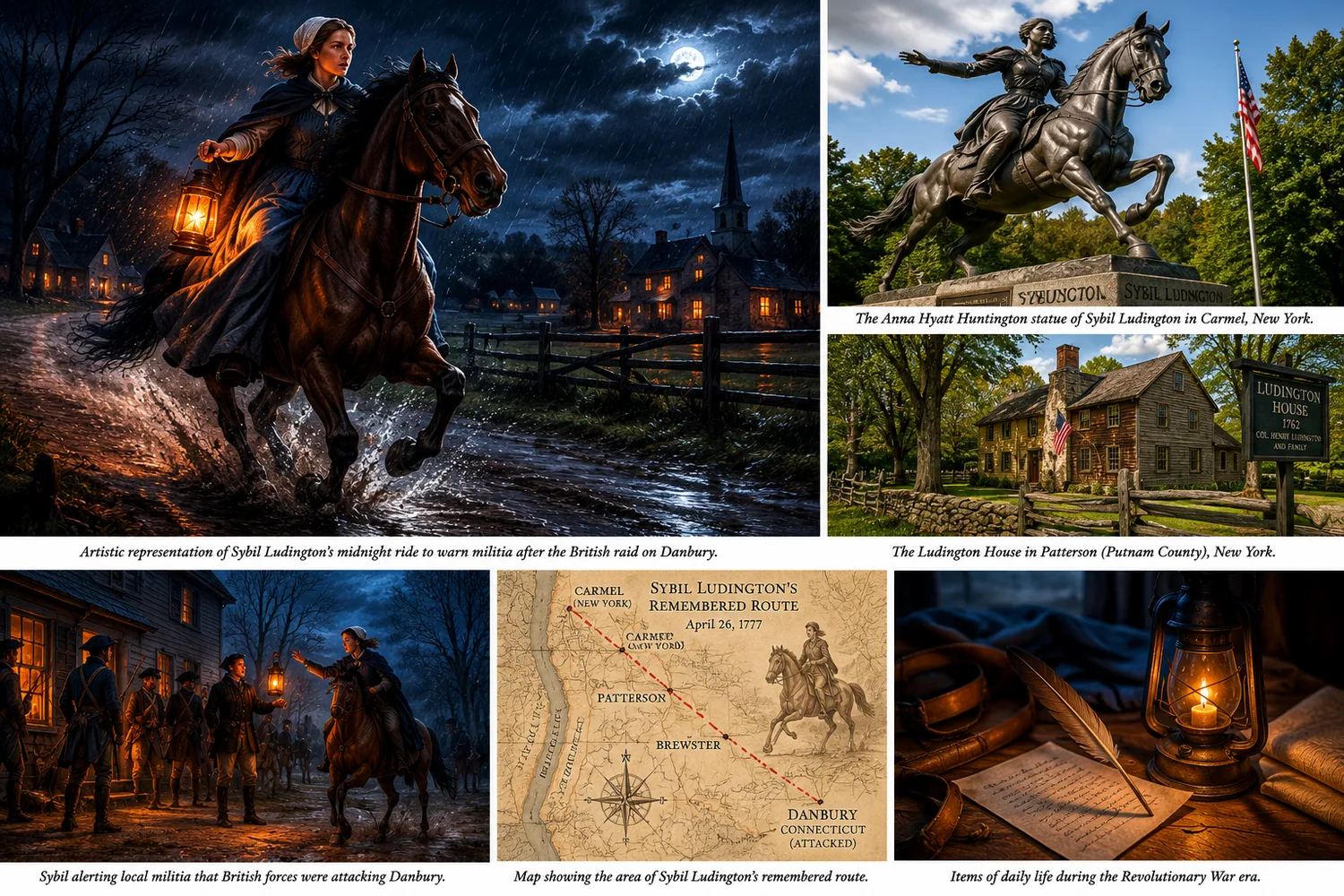
Sybil Ludington is remembered as a teenage rider of the American Revolution. According to the traditional account, she rode through the night on April 26, 1777, to alert Patriot militia after British forces attacked Danbury, Connecticut. Because of this remembered ride, she is sometimes called the “female Paul Revere.” However, her story should be told with care. While many sources celebrate her courage, historians continue to debate how much of the famous ride can be proven from contemporary evidence.
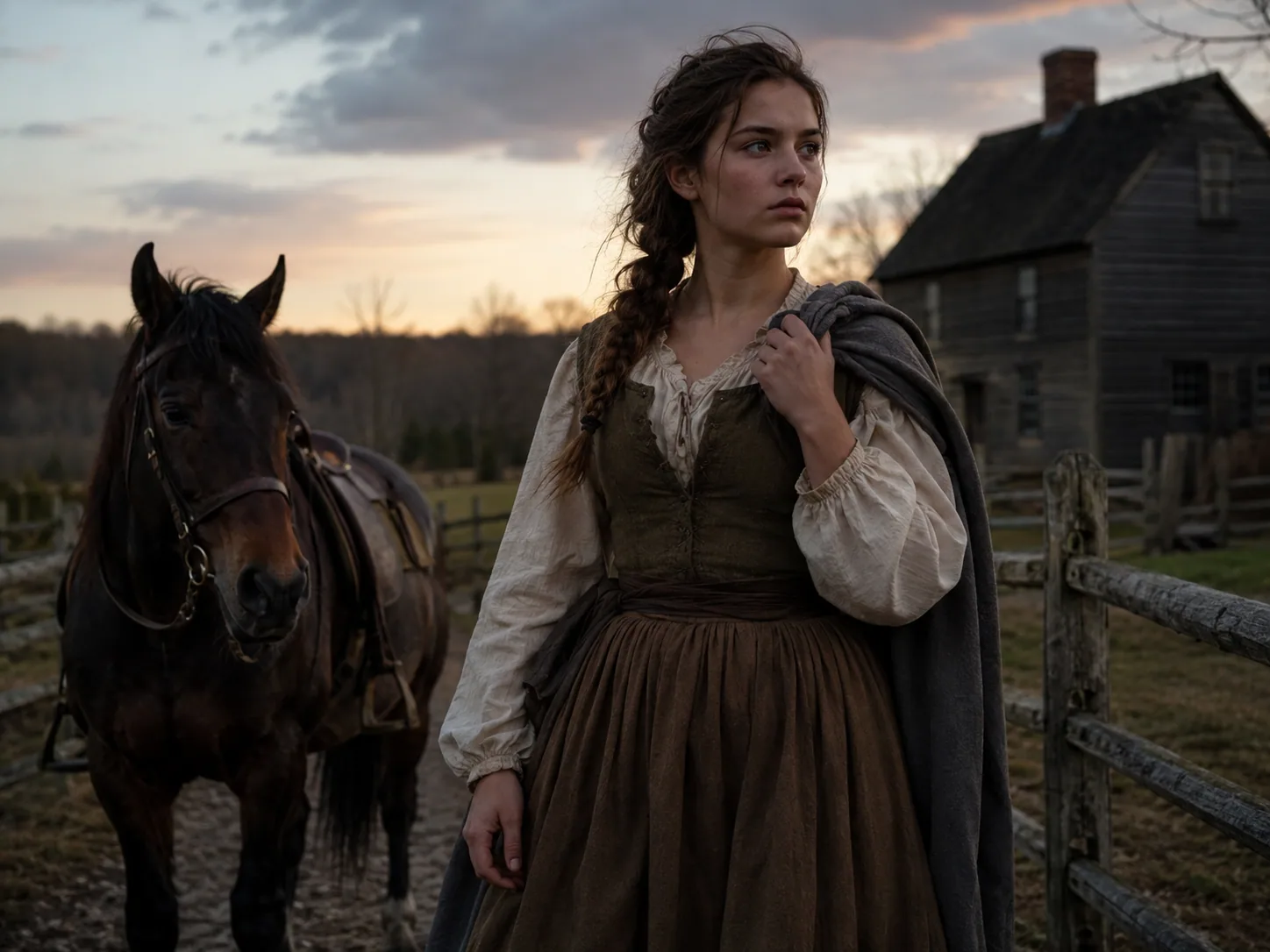
Sybil was born in New York in 1761. She was the daughter of Colonel Henry Ludington, a Patriot militia leader connected to the 7th Regiment of the Dutchess County, New York militia. Her family lived in a region later associated with Putnam County, New York. Like many young people of the Revolutionary era, Sybil grew up in a world shaped by political unrest, military danger, and uncertain loyalties.
At the J. M. Davis Arms and Historical Museum, stories like Sybil’s remind us that history is not always simple. Sometimes the past reaches us through official records. Sometimes it reaches us through family memory, local pride, monuments, and questions that historians continue to study. Sybil Ludington’s story matters not only because of what she is said to have done, but also because of what her story reveals about how Americans remember courage.
The British Raid on Danbury and the Need for a Warning
To understand why Sybil Ludington’s story became important, we first need to understand the British raid on Danbury, Connecticut.
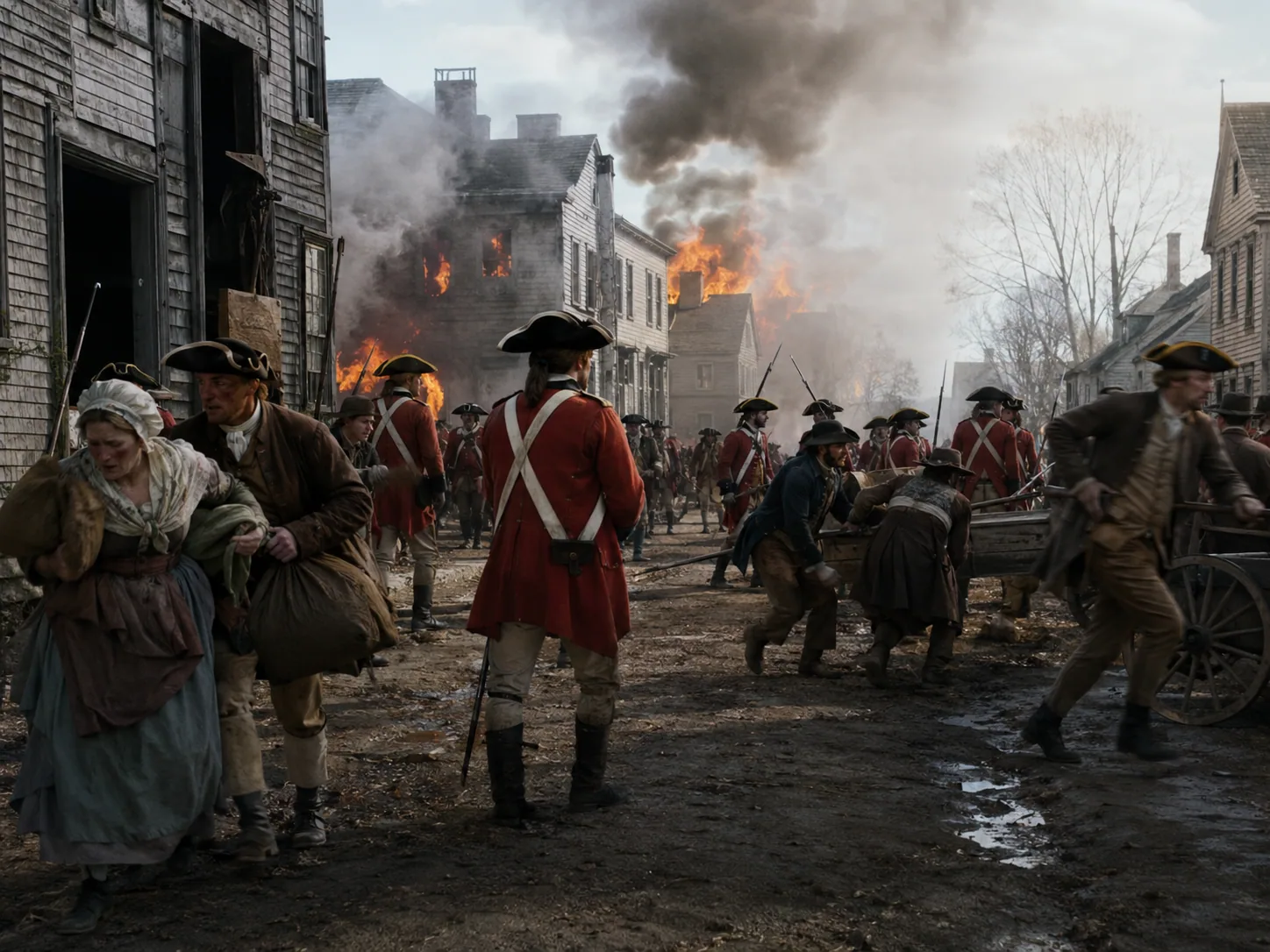
In April 1777, Danbury served as an important Patriot supply depot. Military supplies, provisions, and equipment stored there supported the American war effort. British forces targeted Danbury because destroying those supplies could weaken Patriot resistance and disrupt Continental Army operations.
On April 26, 1777, British forces attacked and burned Danbury. The raid was part of the larger struggle for control and momentum during the Revolutionary War. News of the attack spread through the region, and Patriot militia needed to be alerted quickly.
According to the traditional account, word reached Colonel Henry Ludington that Danbury was under attack. His militia members were spread across the countryside, and a warning had to reach them before they could gather. This is where Sybil Ludington enters the story.
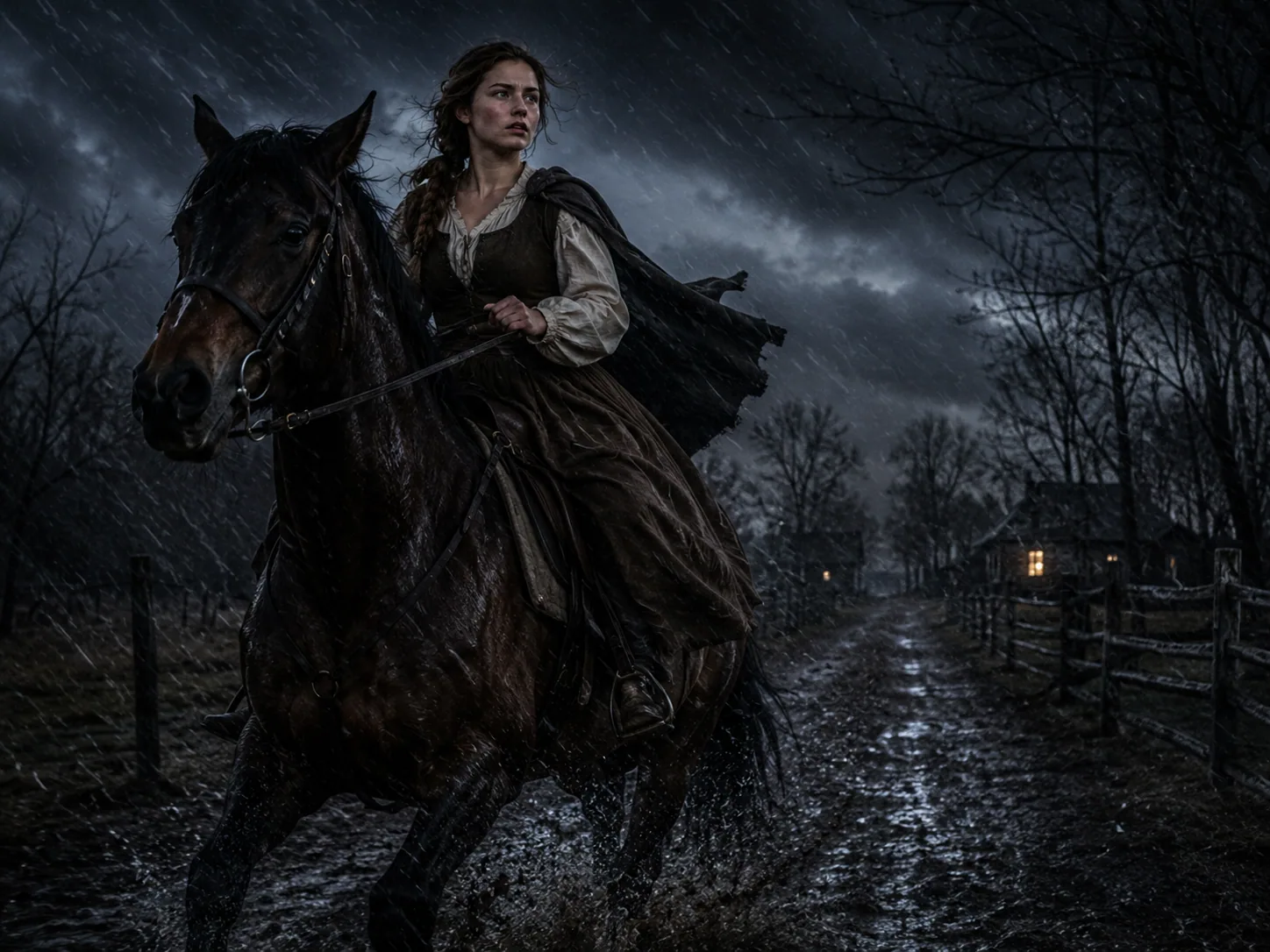
Tradition says that at about sixteen years old, Sybil mounted her horse and rode into the night to alert local militia members. Accounts often describe the ride as taking place in heavy rain and covering a long distance through the countryside. Some versions say she rode about forty miles. Other sources are more cautious, describing the distance as somewhere between twenty and forty miles.
The exact route and details remain debated, but the setting is clear: the British raid on Danbury created a moment of urgency, and local militia response mattered.
Sybil Ludington’s Midnight Ride in American Memory
The story of Sybil Ludington’s midnight ride has become one of the best-known stories of a young woman connected to the American Revolution. In the traditional telling, Sybil rode through darkness, rain, and danger to call out militia members loyal to the Patriot cause.
This version of the story is dramatic and memorable. It has appeared in books, local histories, children’s literature, public commemorations, and educational materials. Sybil has been honored with monuments and a United States postage stamp. Her story continues to appear in discussions of women in the American Revolution.
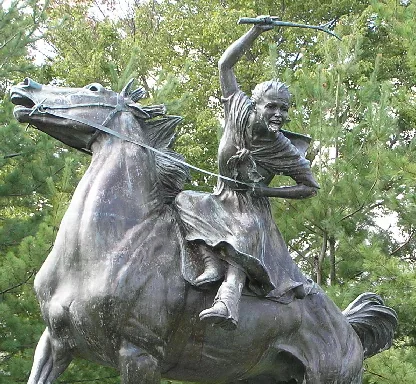
One of the most visible tributes to Sybil Ludington is the statue created by sculptor Anna Hyatt Huntington near Carmel, New York. Huntington was not connected to Sybil’s Revolutionary War life. She was a later artist who helped shape how Sybil’s story has been remembered in public space. The statue shows Sybil on horseback, capturing the energy and motion of the remembered ride.
Sybil’s ride is also often compared to Paul Revere’s famous midnight ride. That comparison can help readers understand why her story has captured attention, but it should not overshadow Sybil herself. Paul Revere’s story became famous through poetry and national memory. Sybil Ludington’s story grew more slowly through local tradition, family accounts, and later public recognition.
That difference is important. Sybil’s story asks us to think not only about what happened in 1777, but also about how stories become famous, how some names enter textbooks, and how others remain less familiar.
Courage, Legend, and Historical Evidence
Sybil Ludington’s story is powerful, but it is also historically complicated.
Many traditional accounts describe her as a brave sixteen-year-old who rode through the night to alert militia after the British attack on Danbury. However, historians have questioned how much of the story can be verified. There are no known official military records or contemporary accounts that clearly document the ride as it is usually told. The story appears more fully in later sources, which means historians must treat some details with caution.
This does not mean the story has no value. It means the story should be told responsibly.
Some details often included in popular retellings may be based more on tradition than firm documentation. For example, her horse is sometimes called Star, but that name should be presented as part of later tradition rather than established fact. The distance of the ride is also reported differently, with some sources saying forty miles and others giving a broader range.
A careful approach allows us to respect both history and memory. We can say that Sybil Ludington is remembered for a daring Revolutionary War warning ride, while also acknowledging that historians debate the surviving evidence. This balanced approach does not weaken the story. It makes the telling more honest.
Museums often work in this space between object, memory, and interpretation. Some stories come with clear documentation. Others come with gaps, contradictions, or traditions that must be examined. Sybil Ludington’s story gives us an opportunity to talk about courage while also showing how history is studied, questioned, and preserved.

Women, Youth, and Courage in the American Revolution
Sybil Ludington’s story also gives us a chance to look more closely at the roles of women and young people during the American Revolution.
The Revolution was not experienced only by generals, soldiers, and political leaders. It was also experienced by families, communities, children, and teenagers who lived through danger and uncertainty. Young people heard the sounds of war, watched families divide over loyalty, helped with daily labor, and sometimes became part of the conflict in ways they did not expect.
Women contributed in many ways during the Revolutionary War. Some worked as nurses, cooks, laundresses, suppliers, and messengers. Others gathered intelligence, managed households and farms, protected property, or supported local militia efforts. Their work was often less documented than the actions of officers and soldiers, but it was still important to the survival of families, communities, and armies.
Sybil’s remembered ride places a young woman at the center of a moment of urgency. Whether readers view every detail of the ride as proven fact, local tradition, or a mixture of both, the story reflects the larger truth that women and young people were not separate from the Revolutionary struggle. They lived inside it.
That is one reason Sybil Ludington continues to matter. Her story encourages us to ask who else helped shape the Revolutionary era, even when their names were not written into official records.

Why Sybil Ludington Still Matters
Sybil Ludington’s story continues to matter because it helps us look beyond the most familiar names of the American Revolution. Whether readers view her ride as documented history, patriotic tradition, or a mixture of both, her story reflects the way communities remember courage.
She also represents a larger truth about the Revolutionary War. Women and young people were not separate from the conflict. They experienced danger, displacement, labor, fear, and sacrifice. Some served as nurses, messengers, suppliers, spies, writers, organizers, and defenders of home and community. Their stories were often less documented than those of military officers, but they still shaped the world around them.
Sybil’s remembered ride has endured because it speaks to initiative and courage. It shows a young woman connected to a moment of crisis and remembered as someone who acted when action was needed. Even the debate around her story has value because it encourages us to ask better questions about the past.
Who gets remembered? Who gets documented? Who becomes a symbol? Whose stories are passed down, and whose disappear?
At the J. M. Davis Arms and Historical Museum, stories like Sybil Ludington’s help us remember that history is more than dates and battles. It is also the study of memory, evidence, and the people whose lives became part of a larger national story.
Sybil Ludington remains worth exploring because her story invites both inspiration and careful thought. It encourages us to honor courage while also respecting the work of historical accuracy. That combination makes her an important figure in any discussion of women, youth, and memory in the American Revolution.
Related Questions
Who was Sybil Ludington? Sybil Ludington was a young woman from New York who is remembered for a Revolutionary War warning ride after British forces attacked Danbury, Connecticut, in 1777.
What is Sybil Ludington remembered for? She is remembered for reportedly riding through the night to alert Patriot militia members during the British raid on Danbury.
Was Sybil Ludington the female Paul Revere? Sybil Ludington is sometimes called the “female Paul Revere” because tradition says she rode to warn Patriot militia. However, her story should also be understood on its own, not only through comparison to Paul Revere.
Did Sybil Ludington’s ride really happen? The traditional story says she made the ride, but historians debate the evidence. There are no known official records or contemporary accounts that fully prove the famous version of the ride.
Who was Anna Hyatt Huntington? Anna Hyatt Huntington was a sculptor who created a public statue honoring Sybil Ludington near Carmel, New York. She was not part of Sybil’s Revolutionary War story, but her artwork helped shape how later generations remember Sybil.
Why was Danbury, Connecticut important during the Revolutionary War? Danbury was important because it held Patriot supplies. British forces attacked the town in 1777 to destroy those supplies and weaken the American war effort.
Why does Sybil Ludington’s story still matter? Her story matters because it highlights women, young people, local memory, and the complicated way Revolutionary War stories are preserved and remembered.
Sources
American Battlefield Trust. “Sybil Ludington.” American Battlefield Trust, www.battlefields.org/learn/biographies/sybil-ludington
National Park Service. “Before the Rosies.” Martin Van Buren National Historic Site, U.S. Department of the Interior, www.nps.gov/mava/learn/historyculture/before-the-rosies.htm
Smithsonian Institution. “Sybil Ludington.” National Postal Museum, postalmuseum.si.edu/exhibition/women-on-stamps-part-1-forming-the-nation-revolutionary-fighters/sybil-ludington
Tucker, Abigail. “Did the Midnight Ride of Sibyl Ludington Ever Happen?” Smithsonian Magazine, Mar. 2022, www.smithsonianmag.com/history/did-midnight-ride-sibyl-ludington-ever-happen-180979557/
Share this article
Help someone else find this post
Share it to your favorite platform, email it directly, or copy the link for your next post or message.
Reader reflection
What part of "Sybil Ludington: The Teenage Rider Remembered for Her Revolutionary War Warning" feels most relevant to your business right now, and what is one step you can take in the next 48 hours?
Choose one idea from the article, connect it to your current situation, and write down the smallest concrete next action you are willing to take.
Public reading stays open. Private reflection requires a member account so you can save your thinking and come back to it later.