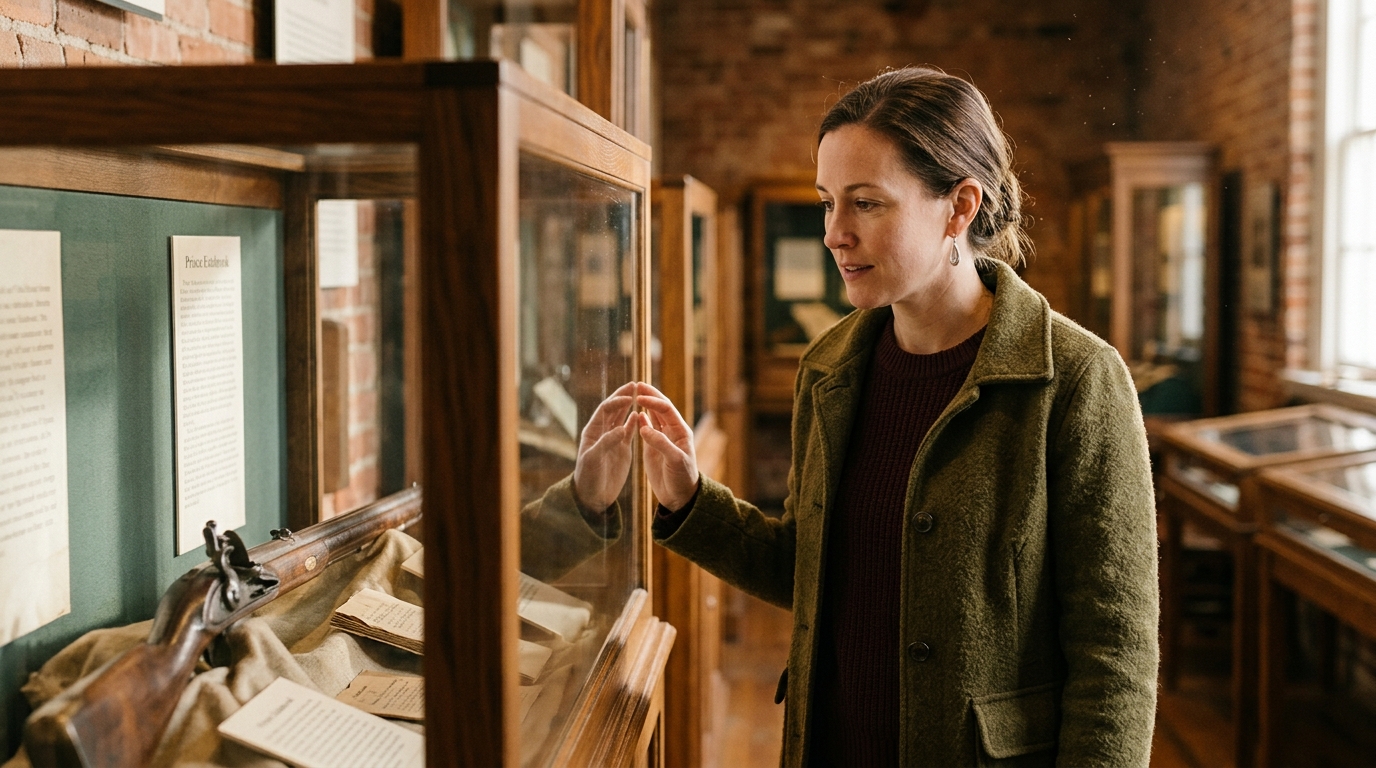
Prince Estabrook: The Wounded Patriot of Lexington Green
Discover the story of Prince Estabrook, an enslaved Patriot wounded on Lexington Green during the first day of the American Revolution.
The Morning the Revolution Began
Before the American Revolution became a war of armies, alliances, declarations, and famous names, it began with a tense morning on a small green in Lexington, Massachusetts.
It was April 19, 1775.
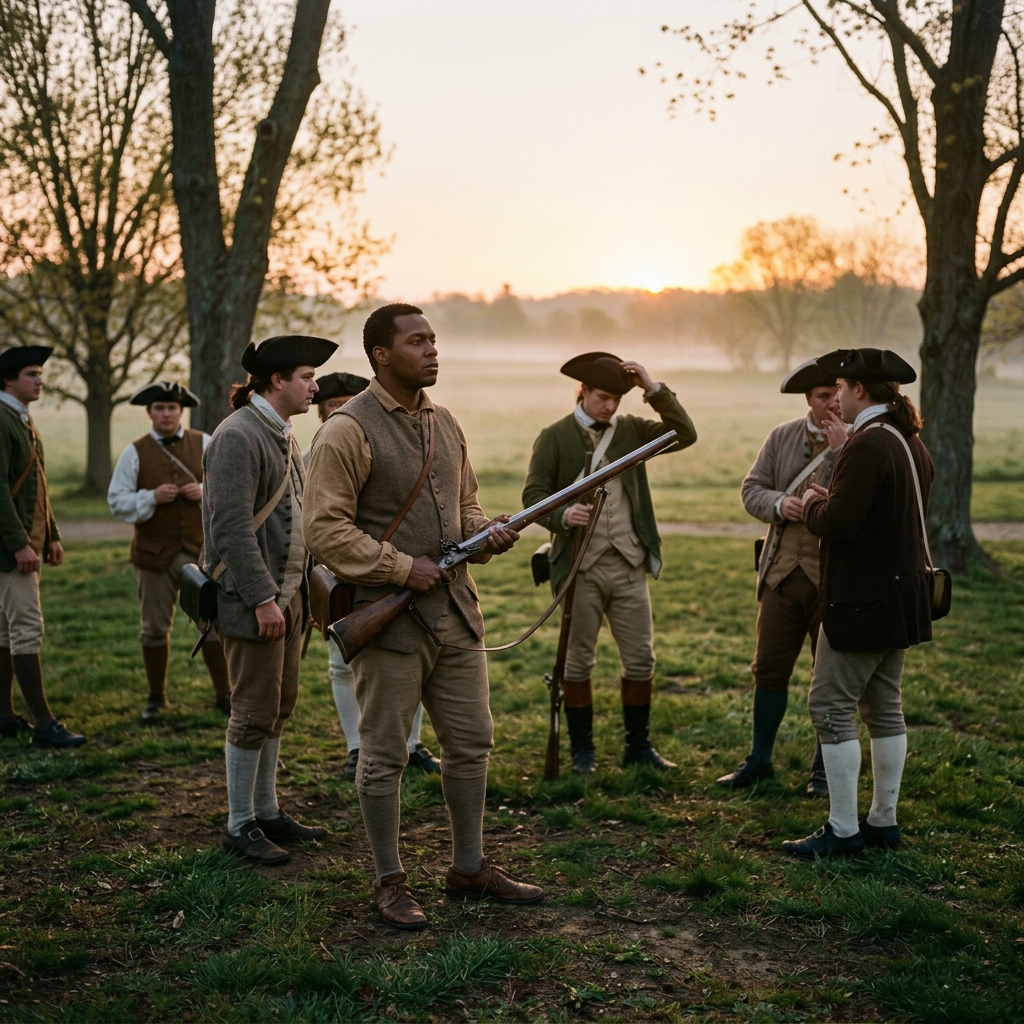
British regulars were marching through the countryside. Alarm riders had spread the warning. Local militia gathered before dawn, not fully knowing what the morning would bring. Some men had been called from their homes. Some had waited at Buckman Tavern. Some stood with muskets in hand, facing trained British soldiers on Lexington Green.
Among them was Prince Estabrook.
He was an enslaved Black man from Lexington. He stood with Captain John Parker’s militia in the opening moments of a war remembered for liberty, even though his own freedom was still denied.
That is what makes his story so powerful.
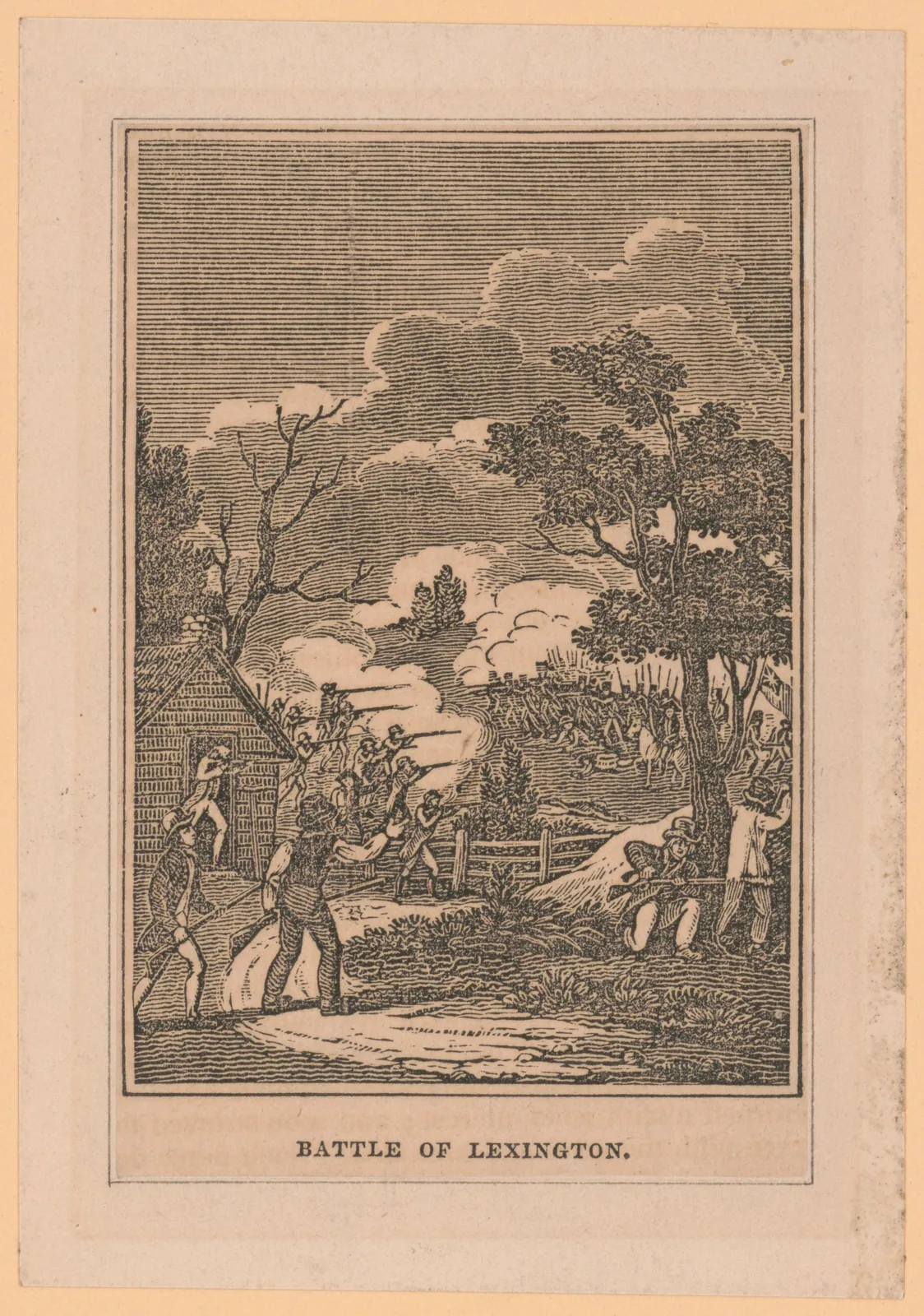
Prince Estabrook was not watching history from a distance. He was standing inside it. When the first shots of the American Revolution were fired, he was there. When the militia line broke and men fell wounded or dead, he was among those struck. A musket ball hit him in the left shoulder, making him one of the first known Patriots wounded in the Revolutionary War.
His name is not as familiar as Washington, Adams, Jefferson, or Revere.
But Prince Estabrook was there when the Revolution began.
His story deserves to be remembered.
Who Was Prince Estabrook?
Prince Estabrook was born around 1740 in Massachusetts, likely in or near Lexington. He was born into slavery and was connected to the family of Benjamin Estabrook, who lived just east of Lexington’s town center.
Like many enslaved people in colonial New England, Prince lived in a world full of contradiction. He was part of the community, yet not fully free within it. He lived among people who spoke more and more boldly about rights, representation, and liberty, while the law still allowed human beings to be held as property.
That contradiction followed him into the militia.
Colonial militia laws could be complicated and unequal. In some cases, Black and Indigenous men were restricted from regular militia training. Yet in an emergency, the defense of the community could require every available man to turn out. Prince Estabrook stood within that legal and moral tension.
He was not free, but he was present.
He was not treated as equal, but he answered the alarm.
By the early 1770s, he appears to have been connected to Captain John Parker’s Lexington militia. Parker’s men were not professional soldiers. They were farmers, tradesmen, laborers, neighbors, and townsmen called to defend their community. On the night of April 18 and the early morning of April 19, 1775, they gathered because British regulars were moving through Massachusetts.
Prince Estabrook stood among them.
It would be easy to describe him only as a symbol, but he was more than that. He was a man with a life, a body, a wound, and a future. He lived through one of the most famous mornings in American history, and then he continued forward.

Wounded on Lexington Green
The moment on Lexington Green was brief, confusing, and deadly.
The militia stood facing British regulars. Orders were given. Men were told to disperse. No one can say with certainty who fired the first shot. But once gunfire began, the green became chaos.
Eight Lexington men were killed. Others were wounded.
Prince Estabrook was shot in the left shoulder.
That detail matters because it reminds us that this was not just a line in a history book. It was a real wound suffered by a real man. He felt the force of the musket ball. He survived the pain, fear, and uncertainty of that morning. He was later treated by Dr. Joseph Fisk, a local physician.
In many accounts, Prince Estabrook is remembered as one of the first Black Patriots wounded in the American Revolution. Some memorial language honors him as the first Black soldier of the Revolution. However the wording is framed, the importance of his presence is clear.
Black Patriots were there from the beginning.
Prince Estabrook stood on Lexington Green before the Declaration of Independence, before the long war, before the victory at Yorktown, and before the United States existed as a nation. He stood there at the uncertain start, when no one knew how long the conflict would last or what it would cost.
His wound tells us something important about the Revolution.
The fight for American independence began with people whose own freedoms were not equal, not settled, and not guaranteed. Prince Estabrook’s presence on Lexington Green forces us to see the Revolution more fully. It was a war for liberty, but it was also a war fought by people who did not all receive liberty at the same time.
That truth does not make the story less meaningful.
It makes it more honest.
More Than One Morning
Prince Estabrook’s story did not end on Lexington Green.
That may be the most important part to remember.
It would be easy to think of him only as a wounded man from the first day of the Revolution. But after surviving his injury, Estabrook continued to serve. His military service stretched across the long years of the war.
He served during the period surrounding the Battle of Bunker Hill, including guarding Continental Army headquarters in Cambridge. He later served in deployments connected to Fort Ticonderoga and Cambridge, and his later service extended into the final years of the Revolutionary War. By the time his service was complete, he had remained connected to the American cause far beyond that first morning in Lexington.
That changes the way we should understand him.
Prince Estabrook was not simply present at the beginning. He endured. He returned. He continued.
The American Revolution lasted eight years. It was not one dramatic morning, one famous ride, or one battlefield victory. It was years of uncertainty, shortages, marching, waiting, fear, illness, and sacrifice. Men who served through that kind of war gave more than a single moment of courage.
Estabrook’s continued service makes his story deeper.
He had already been wounded. He had already paid a price. Yet he remained part of the fight.
That kind of commitment deserves more than a footnote.
A Man Not Yet Free in a War for Liberty
Prince Estabrook’s story carries a contradiction that cannot be ignored.
He stood in a war remembered for liberty while living under a system that denied him liberty.
America’s founding generation spoke powerful words about rights, freedom, tyranny, and self-government. Those words mattered. They inspired action. They helped shape a nation. But they were not applied equally to everyone.
Prince Estabrook’s life shows that unfinished truth.
He was part of a community that needed him in a moment of danger, but that same society did not yet fully recognize his freedom. He stood with men who were resisting British authority, while he himself was still bound by another form of authority.
That is not a simple story.
But American history is rarely simple.
Prince Estabrook’s service reminds us that the Revolution was shaped by courage and contradiction at the same time. It included bold ideals and painful exclusions. It included men who fought for independence while others had to continue fighting for their own freedom long after the first shots were fired.
After the war, Prince Estabrook did become free. His freedom came during a period when slavery was being challenged in Massachusetts through the state constitution and court decisions. By 1790, Lexington tax records identified him as a “non-white freeman,” and he was listed on Benjamin Estabrook’s paid farm payroll.
That detail matters.
The man once enslaved by the Estabrook family was later recorded as a free man and paid laborer. His life had moved from bondage, to battlefield service, to freedom.
Later, he relocated to Ashby, Massachusetts. He lived into old age and died around 1830, near the age of ninety. He is buried in the Ashby First Parish Burial Ground.
His life stretched from colonial slavery to the early decades of the United States.
He had seen the Revolution begin.
He had lived long enough to see the nation it created still wrestling with the meaning of freedom.
Why His Name Belongs in America 250
As America approaches its 250th birthday, we have a chance to remember more than the familiar names.
We should remember the founders, generals, writers, and leaders. Their work mattered. Their decisions shaped history. But the American Revolution was not carried by famous men alone.
It was also carried by people like Prince Estabrook.
He stood on Lexington Green when the Revolution began. He was wounded in the first clash of the war. He recovered and continued to serve. He later lived as a free man after years of enslavement. His life reminds us that America’s founding included people whose stories were too often left at the edges of the page.
In 2008, a bronze memorial was dedicated near Buckman Tavern in Lexington to honor Prince Estabrook and other Black Patriots. That memorial helps restore his name to the landscape where his story unfolded.
But remembering him should not only happen in Lexington.
His story belongs in the larger American memory.
At the J. M. Davis Arms & Historical Museum, we often look at history through the objects people carried, used, made, and left behind. A musket is never just a musket. It is connected to the person who held it, the fear they felt, the decision they made, and the world they helped shape.
Prince Estabrook’s story asks us to look beyond the weapon and see the man.
He was enslaved, but he stood with the militia.
He was wounded, but he survived.
He served, and then he served again.
He lived to become free.
As we remember America at 250, Prince Estabrook’s name is worth saying. Not because his story is simple, but because it is not. Not because it fits neatly into one version of the Revolution, but because it helps us see the Revolution more clearly.
He was there at the beginning.
He bled on Lexington Green.
And his story still asks us to remember everyone who stood in dangerous places before the promise of freedom was fully shared.
Sources
Daut, Marlene. “Estabrook, Prince.” African American National Biography, Oxford University Press, 2013.
Hinkle, Alice. Prince Estabrook: Slave and Soldier. Pleasant Mountain Press, 2001.
Kollen, Richard. Lexington: From Liberty’s Birthplace to Progressive Suburb. Arcadia Publishing, 2004.
“Prince Estabrook.” Wikipedia, The Free Encyclopedia.
Seymour, Pete. “Prince Estabrook of Lexington.” National Park Service, May 2020.
“Stories of Black and Indigenous Patriots Come into Focus as US Remembers the American Revolution.” AP News, 18 Apr. 2026.
Share this article
Help someone else find this post
Share it to your favorite platform, email it directly, or copy the link for your next post or message.
Reader reflection
What does Prince Estabrook’s story teach us about who stood at the beginning of America’s fight for independence?
Prince Estabrook’s story reminds us that the American Revolution was shaped by people whose names are not always widely known. Reflect on why it matters to remember the soldiers, workers, families, and communities who helped shape history from the edges of the spotlight.
Public reading stays open. Private reflection requires a member account so you can save your thinking and come back to it later.