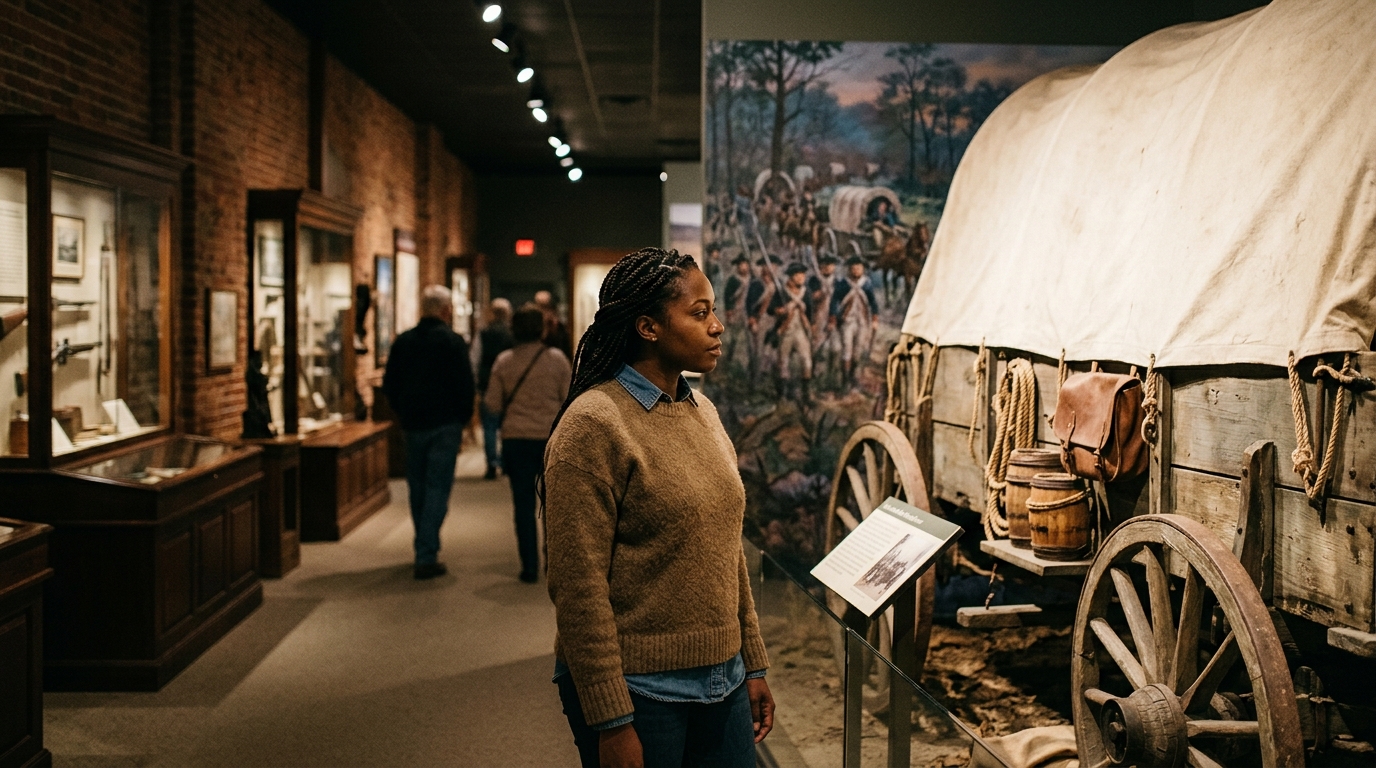
Ned Hector: The Patriot Who Would Not Leave His Wagon
Discover the story of Ned Hector, a free Black soldier whose bravery during the American Revolution helped protect vital supplies.
An America 250 Unsung Hero Story from the Battle of Brandywine
More Than Muskets and Generals
When we think about the American Revolution, we often picture generals, muskets, flags, and men standing in line under fire.
Those images matter, but they are not the whole story.
An army cannot fight on courage alone. It needs ammunition. It needs horses. It needs wagons. It needs food, tools, powder, shot, and people willing to move those supplies through mud, smoke, confusion, and danger.
That is where Ned Hector’s story begins.
Ned Hector, also known as Edward Hector, was a free Black Patriot from Pennsylvania who served during the American Revolution. His work placed him close to the weapons of war, but his story is not only about artillery. It is about the people who kept the army moving when everything around them was falling apart.
Hector served as both a teamster and a bombardier. A teamster drove and managed wagons and horses. A bombardier served as part of an artillery crew. Both roles mattered. Cannons could not fire without crews, ammunition, and transport. Soldiers could not continue a campaign if wagons, horses, and supplies were lost.
That makes Hector’s story especially fitting for the J. M. Davis Arms & Historical Museum.
A weapon in a museum case can teach us about craftsmanship, technology, and battle. But it also points to the people behind it: the person who carried it, repaired it, loaded it, moved it, protected it, or refused to leave it behind.
Ned Hector was one of those people.
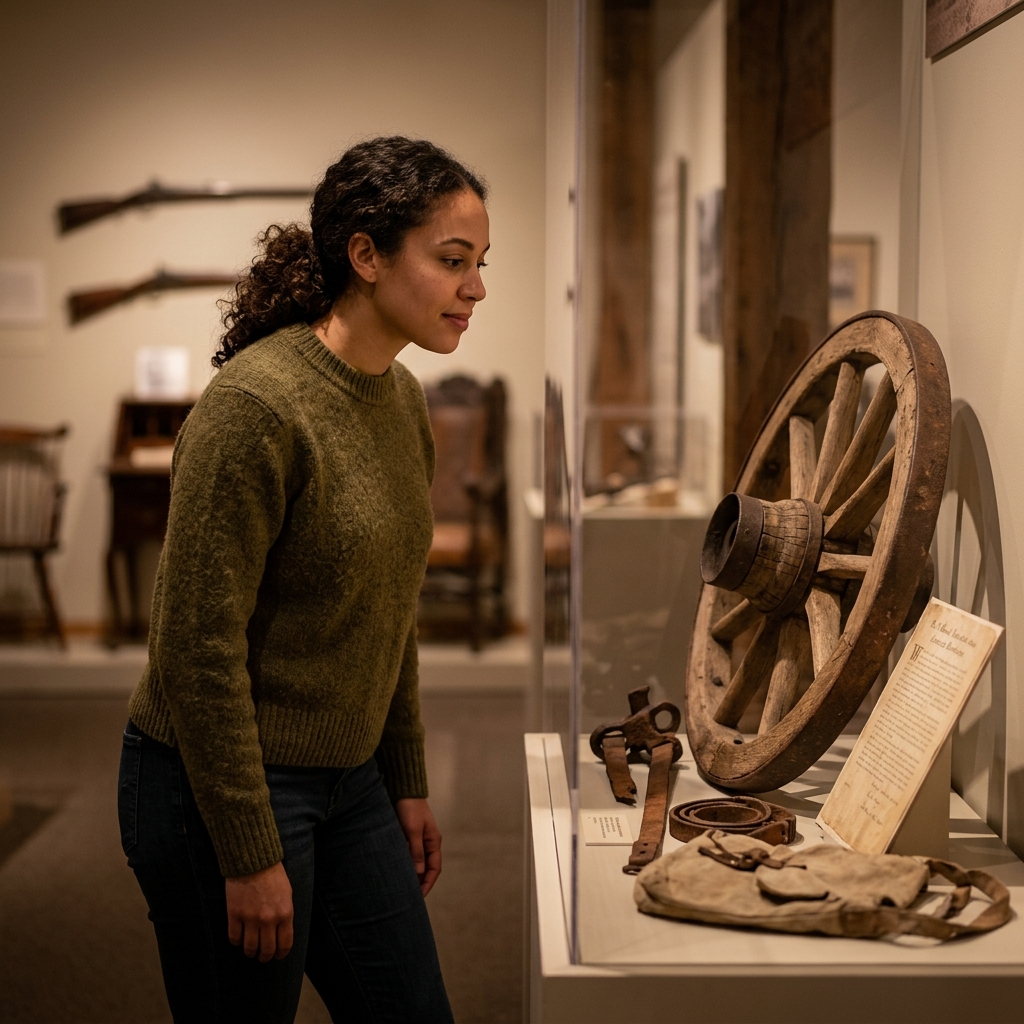
Who Was Ned Hector?
Ned Hector was a free Black man from Pennsylvania at a time when freedom was not equally shared and Black service in the Revolution was often pushed to the margins of memory.
He served with Proctor’s Pennsylvania Artillery, which became part of the Continental Army during the war. Records connect him to artillery service, and he is remembered as a bombardier and teamster. That combination tells us something important about the kind of soldier he was.
He was not simply standing at a distance from the fighting.
He was connected to the movement, protection, and use of military supplies. He handled the practical side of war: horses, wagons, ammunition, arms, and equipment. These were not small details. They were the difference between an army that could regroup and one that could not.
Too often, the history of war focuses only on the men giving orders. But the orders meant little without the people who carried them out. A cannon crew needed men who understood the rhythm and danger of artillery. A supply wagon needed someone steady enough to manage horses under stress. A retreat needed men who could think quickly while others panicked.
Hector’s life reminds us that Revolutionary War service took many forms.
Some men became famous for leading charges.
Some became famous for speeches or signatures.
Some became remembered because, in one dangerous moment, they refused to abandon what others would need to keep fighting.
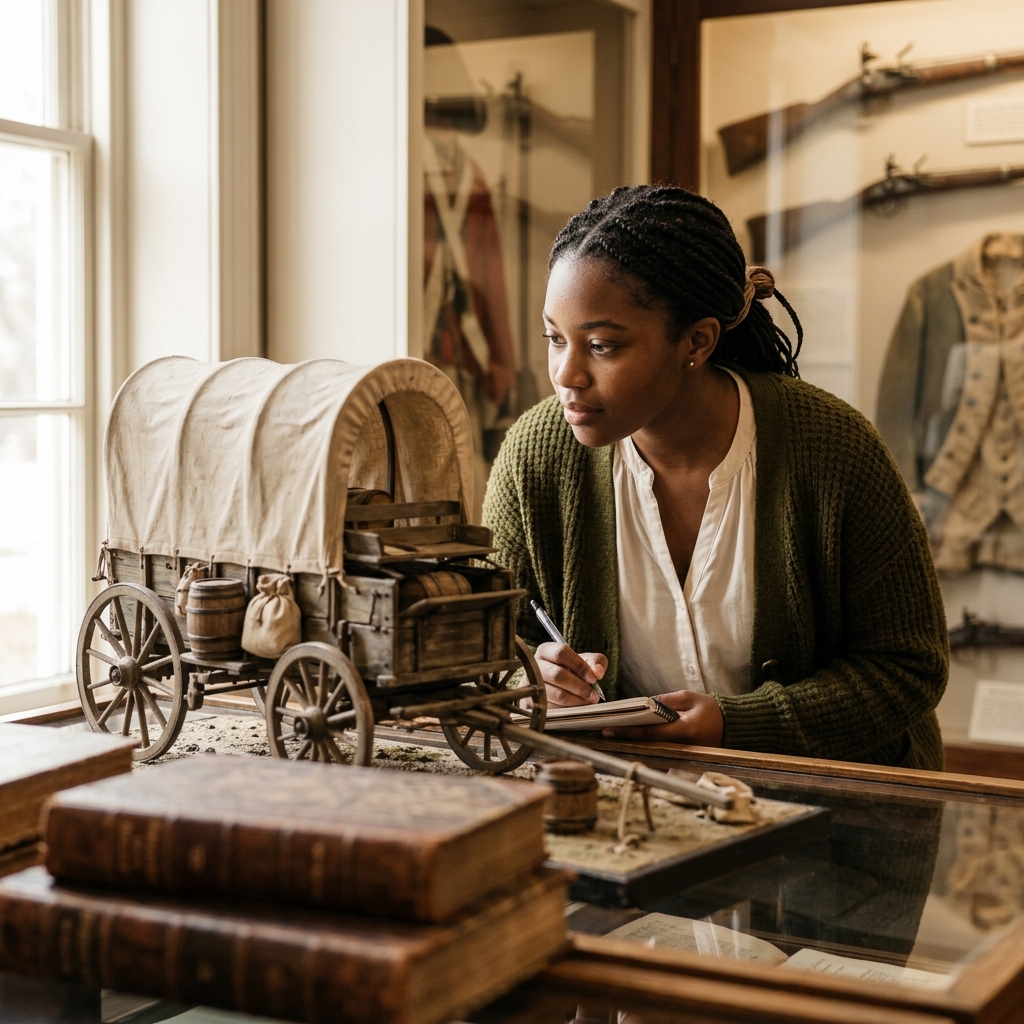
Brandywine and the Retreat
On September 11, 1777, American and British forces clashed at the Battle of Brandywine in Pennsylvania. The battle was part of the British campaign to capture Philadelphia.
The fighting took place in the region around Brandywine Creek, near Chadds Ford and the surrounding countryside. George Washington’s army tried to block the British advance, but the British attack was strong and well-coordinated. By the end of the day, the Americans were forced to retreat.
Retreat is one of the hardest moments in war to understand from a distance.
It is not simply a group of soldiers walking away. It can mean confusion, shouted orders, broken lines, lost equipment, wounded men, frightened horses, and the terrible pressure of knowing the enemy is still advancing.
In that kind of chaos, commanders sometimes ordered supplies and equipment abandoned so men could escape more quickly. It was a harsh choice, but sometimes a necessary one.
Ned Hector was caught in that moment.
As American forces withdrew, he was ordered to abandon his wagon. He could have obeyed. No one would have had to question his courage. The battle had gone against the Americans, and retreat was already dangerous enough.
But Hector saw what would be lost.
His wagon, horses, supplies, and abandoned arms were not just property. They were part of what the army needed. If the enemy captured them, the Americans would lose more than a battle. They would lose tools needed for the next one.
So Hector made a decision.
The Wagon He Would Not Leave
Ned Hector is remembered for refusing to abandon his team during the retreat from Brandywine.
When ordered to leave the wagon behind, he is said to have replied, “The enemy shall not have my team; I will save my horses and myself”.
That line has carried his story through generations.
Whether spoken exactly as remembered or preserved through later retelling, the meaning is clear. Hector would not leave his wagon, his horses, or his supplies for the enemy.
Instead, he gathered what he could. He loaded abandoned weapons and equipment into the wagon. Then he escaped through the confusion with his horses and supplies intact.
That act did not change the outcome of Brandywine by itself. The Americans still lost the battle. Philadelphia would still fall to the British.
But Hector’s decision mattered.
He preserved valuable supplies during a difficult retreat. He protected resources that could continue to serve the Patriot cause. He showed calm and determination when it would have been easier, and understandable, to run.
That is a different kind of courage.
It is not the courage of a painting or monument. It is the courage of a man holding onto reins, managing frightened horses, thinking through danger, and refusing to let the enemy take what the army still needed.
For a museum that tells the stories behind arms and artifacts, Hector’s moment matters because it reminds us that military history is not only about weapons being fired. It is also about weapons being moved, guarded, saved, and carried forward.
A Soldier After Brandywine
Ned Hector’s story did not end at Brandywine.
He is also connected to the Battle of Germantown, fought less than a month later on October 4, 1777. That detail is important because it shows that his Revolutionary War service was not limited to one remembered moment.
The war continued.
So did Hector.
Like many veterans, he later had to seek recognition for his service. Records tied to his petitions show the struggle some Revolutionary War soldiers faced after the fighting was over. Service did not always bring easy reward. Many veterans had to prove what they had done, ask for compensation, and wait for others to decide whether their sacrifice would be acknowledged.
Hector lived into old age and died in 1834, around the age of ninety.
Long after the Revolution, his name continued to be remembered in Pennsylvania. In Conshohocken, where he lived after the war, Hector Street was named in his honor. That kind of local remembrance matters. It tells us that even when national history overlooked him, people closer to his story knew his name was worth keeping.
His life gives us more than one scene from battle.
It gives us a fuller picture of a free Black Patriot who served, survived, worked, petitioned, and became part of his community’s memory.
Why His Story Matters
Ned Hector’s story helps us widen the way we think about Revolutionary War heroism.
Not every hero stood in front of a famous speech.
Not every hero signed a founding document.
Not every hero commanded troops or had a portrait painted.
Some drove wagons.
Some guarded supplies.
Some served artillery pieces.
Some made one brave decision in a chaotic retreat and saved what others had been ordered to leave behind.
That kind of service is easy to overlook because it does not always fit the grand image of war. But without people like Hector, armies could not function. The tools of war had to be transported. Ammunition had to reach the field. Horses had to be managed. Equipment had to be protected. Wagons had to keep moving.
Hector’s courage was practical, steady, and immediate.
He saw what needed to be done, and he did it.
His story also reminds us that Black Patriots were part of the American Revolution in many roles. Some were enslaved. Some were free. Some served in combat. Some served in support roles. Some fought for a country that had not yet figured out how fully it would live up to its own language of liberty.
Ned Hector was one of those Patriots.
His life does not need to be exaggerated to matter. The truth is strong enough.
He served.
He stood his ground in a dangerous retreat.
He protected his team, his wagon, and supplies the army needed.
And his name deserves to be remembered.
Why His Name Belongs in America 250
As America approaches its 250th birthday, we have an opportunity to tell fuller stories about the Revolution.
We should remember Washington, Lafayette, Jefferson, Adams, and the great turning points of the war. But we should also remember the people who kept the Revolution moving in less famous ways.
Ned Hector belongs in that memory.
His story connects battlefield history to the practical realities of war. It reminds us that weapons do not move themselves. Supplies do not protect themselves. Armies do not survive on speeches alone.
They survive because people do the hard, dangerous, necessary work.
At the J. M. Davis Arms & Historical Museum, we understand that every artifact has a human story behind it. A firearm, cannon, saddle, wagon, or tool means more when we ask who used it, who carried it, and what choices surrounded it.
Ned Hector’s story asks us to look beyond the battle line and see the man with the wagon.
A free Black Patriot.
A teamster.
A bombardier.
A soldier who refused to leave behind what the enemy could use.
When the retreat at Brandywine became dangerous and confusing, Hector did not simply save himself. He saved what he could for the cause he served.
That is why his name belongs in America 250.
Not because he was the most famous man on the field.
But because he was faithful in the moment history gave him.
And sometimes, that is exactly what courage looks like.
Sources
“Battle of Brandywine.” American Battlefield Trust.
“Brandywine Battlefield.” Pennsylvania Historical & Museum Commission.
“Edward Hector.” Pennsylvania Historical Marker Program, Pennsylvania Historical & Museum Commission.
Grundset, Eric G., editor. Forgotten Patriots: African American and American Indian Patriots in the Revolutionary War. National Society Daughters of the American Revolution, 2008.
Hector, Edward. “Petition and Report of the Committee on Claims.” Journal of the House of Representatives of the Commonwealth of Pennsylvania, 1826–1827.
Lewis, Noah. “Being Edward Hector: The Life and Times of a Black Revolutionary War Hero.” Bulletin of the Historical Society of Montgomery County, Pennsylvania.
“Edward Hector.” Wikipedia, The Free Encyclopedia.
Share this article
Help someone else find this post
Share it to your favorite platform, email it directly, or copy the link for your next post or message.
Reader reflection
What kind of courage does it take to protect what others need in a moment of danger?
Ned Hector’s story reminds us that history is shaped not only by generals and battlefield victories, but also by the people who carried supplies, guarded equipment, and made brave choices when everything was at risk. Reflect on why these quieter forms of service deserve to be remembered.
Public reading stays open. Private reflection requires a member account so you can save your thinking and come back to it later.