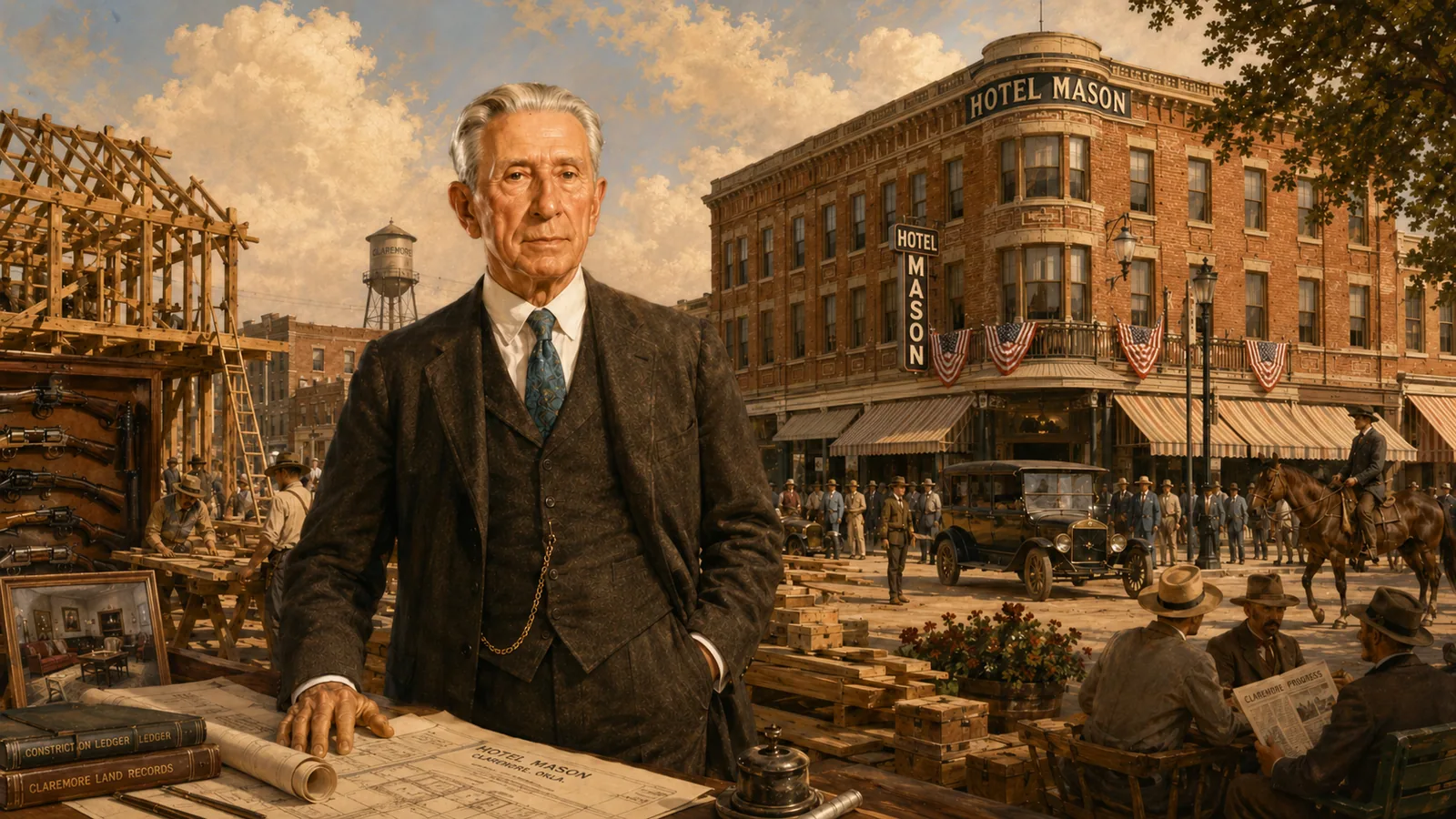
J. M. Davis Was More Than A Collector: The Contractor, Businessman, And Mayor Behind A Claremore Landmark
Learn the fuller story of J. M. Davis, the Claremore contractor, Mason Hotel owner, builder, landlord, mayor, and collector behind the J. M. Davis Arms and Historical Museum.
J. M. Davis Was More Than A Collector
The Claremore Contractor, Businessman, And Mayor Behind The Museum
Most people know J. M. Davis because of the museum that carries his name.
That makes sense. The collection is remarkable. It is the reason visitors still walk through the doors of the J. M. Davis Arms and Historical Museum in Claremore, Oklahoma.
But Davis was not only a collector.
John Monroe “J. M.” Davis was also a businessman, Mason Hotel owner, builder, contractor, landlord, mayor, and one of the people who helped shape Claremore during important years of growth.
His story is not only about what he collected. It is also about what he built, how he worked, and how people in Claremore remembered him.
Who Was J. M. Davis?
His Story Reaches Far Beyond The Museum Collection
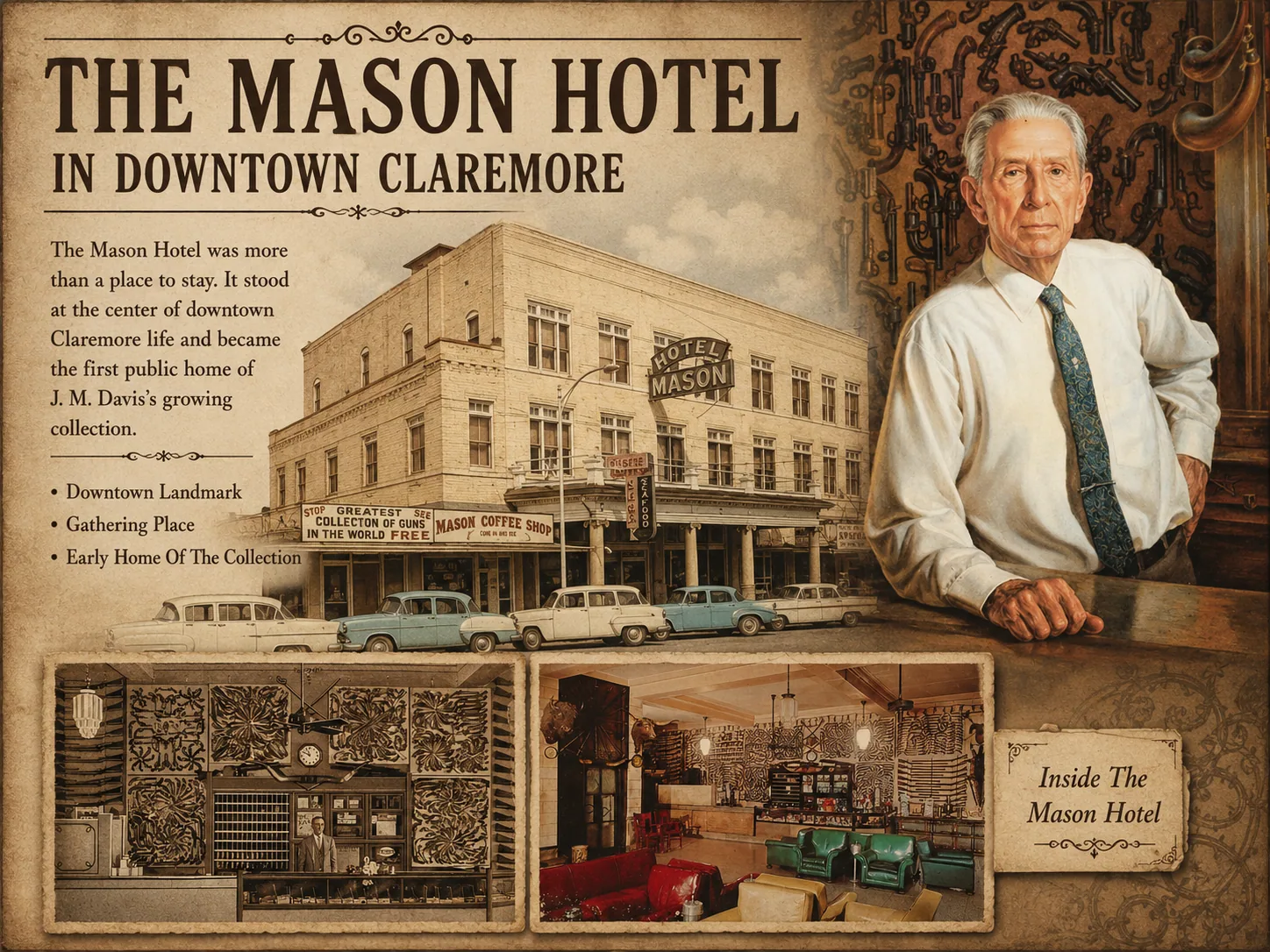
J. M. Davis came to Claremore from Arkansas with his wife, Addie, during the oil boom years. According to the museum’s history, the couple reached Claremore in 1916 while hoping to benefit from the oil boom around Tulsa. They stayed at the Mason Hotel, and Davis soon learned the hotel owner was interested in selling. In 1917, Davis offered his Arkansas timber land as a down payment on the hotel.
That one decision tied him to downtown Claremore for decades.
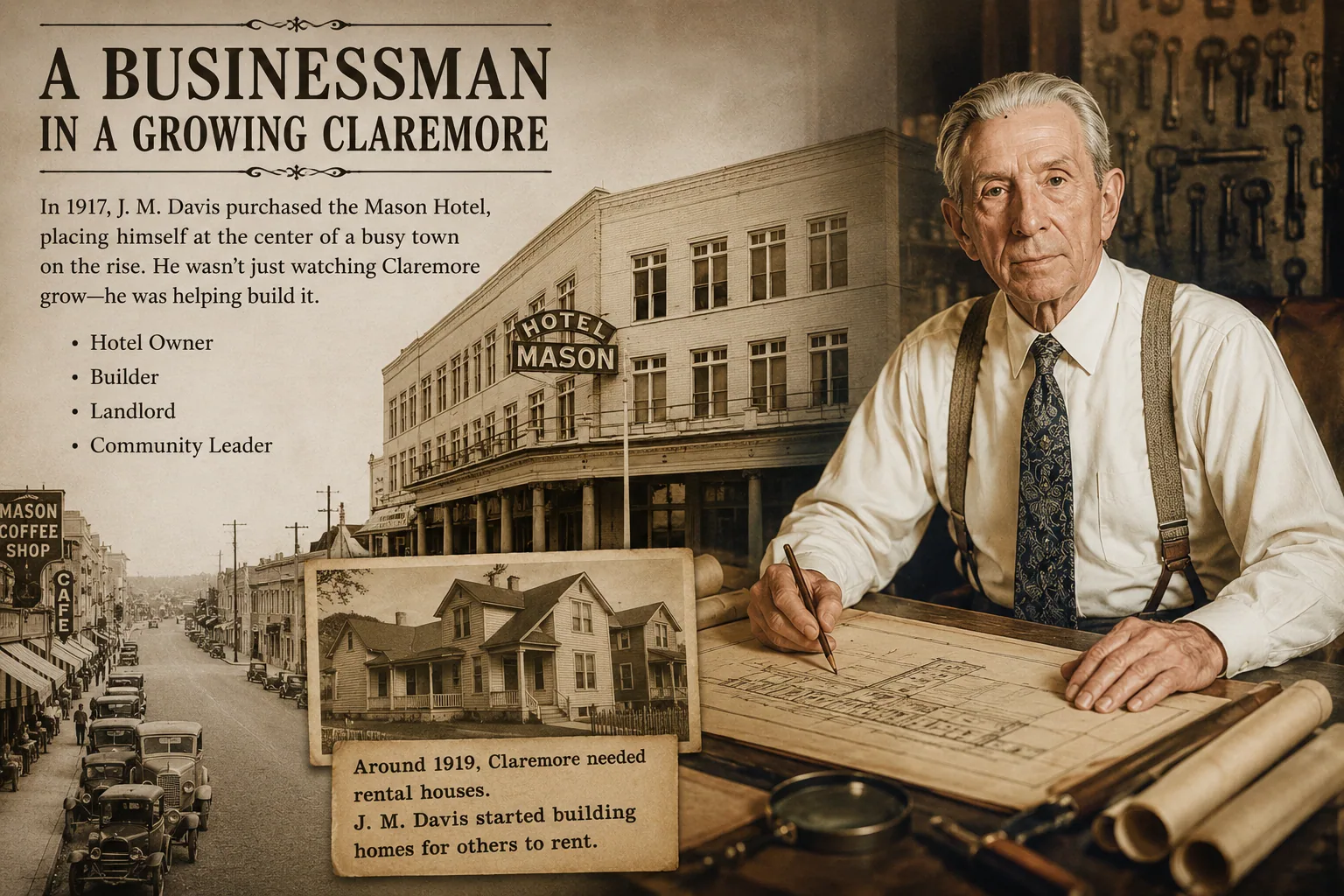
The Mason Hotel became part of his business life, his public life, and eventually the early public life of his collection. It was not just a place where travelers stayed. It was a downtown building filled with businesses, guests, local activity, and later, the items Davis had gathered over many years.
That is why the fuller story matters. Davis was not simply a man who owned interesting things. He was a man whose work was tied to Claremore itself.
The Mason Hotel In Downtown Claremore
The Hotel Became The First Public Home Of His Collection
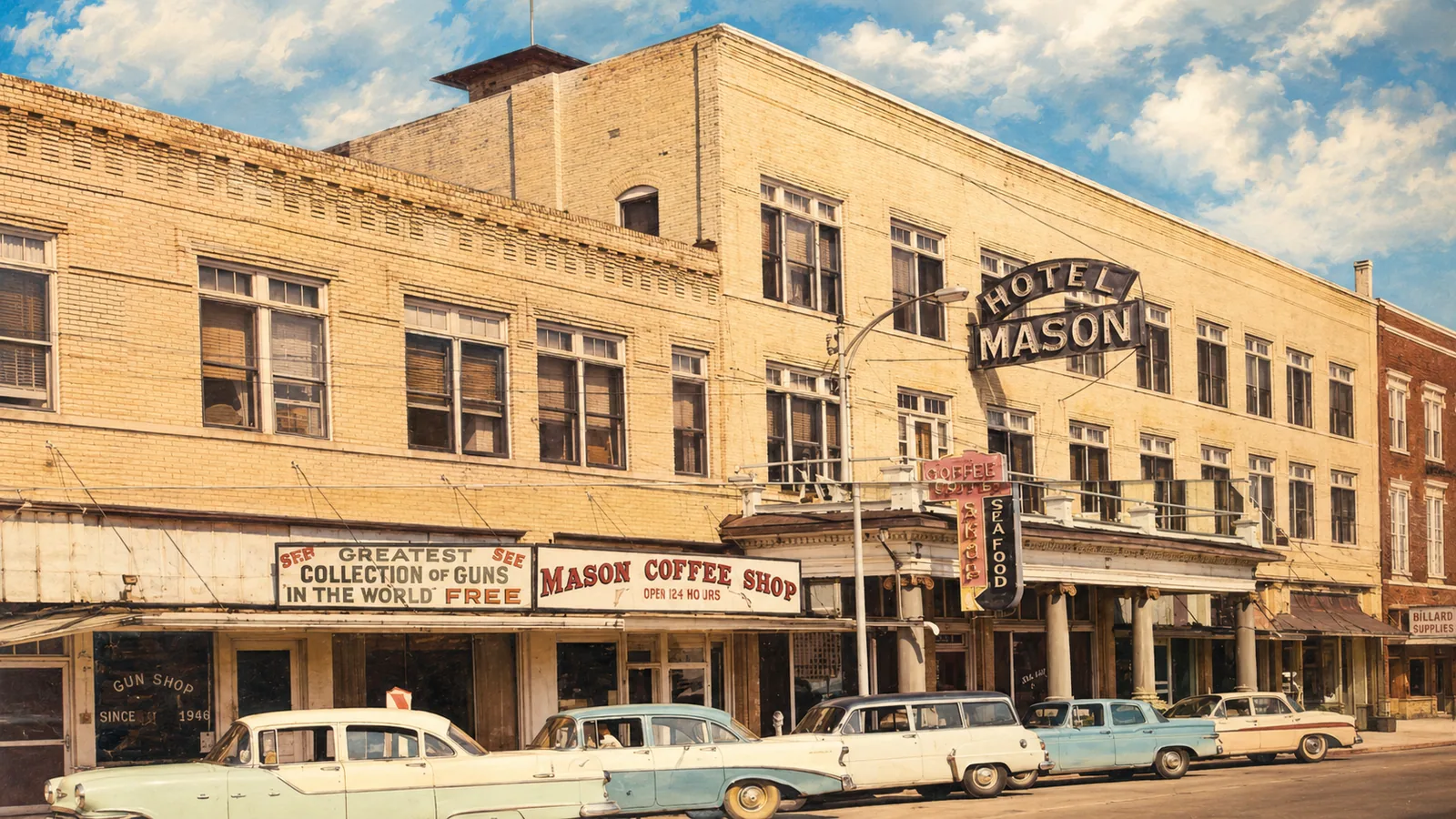
The Mason Hotel was built in 1910 and stood at what is now Will Rogers Boulevard and Lynn Riggs Boulevard, also known as Highway 66. The museum’s history says the hotel had three stories and 116 rooms. The ground floor included several businesses, including Claremore’s first bank, a dress shop, a real estate office, and the hotel coffee shop.
That tells us something important.
The Mason Hotel was not tucked away from town life. It was part of downtown Claremore. People came through its doors for business, meals, travel, and conversation.
Over time, Davis’s collection began to fill the hotel. By 1929, after about twelve years of operating the Mason Hotel, his collection had grown to 99 guns. In the early 1930s, three large collections helped increase that number to about 2,500 weapons.
The museum story started there, inside a working hotel in downtown Claremore.
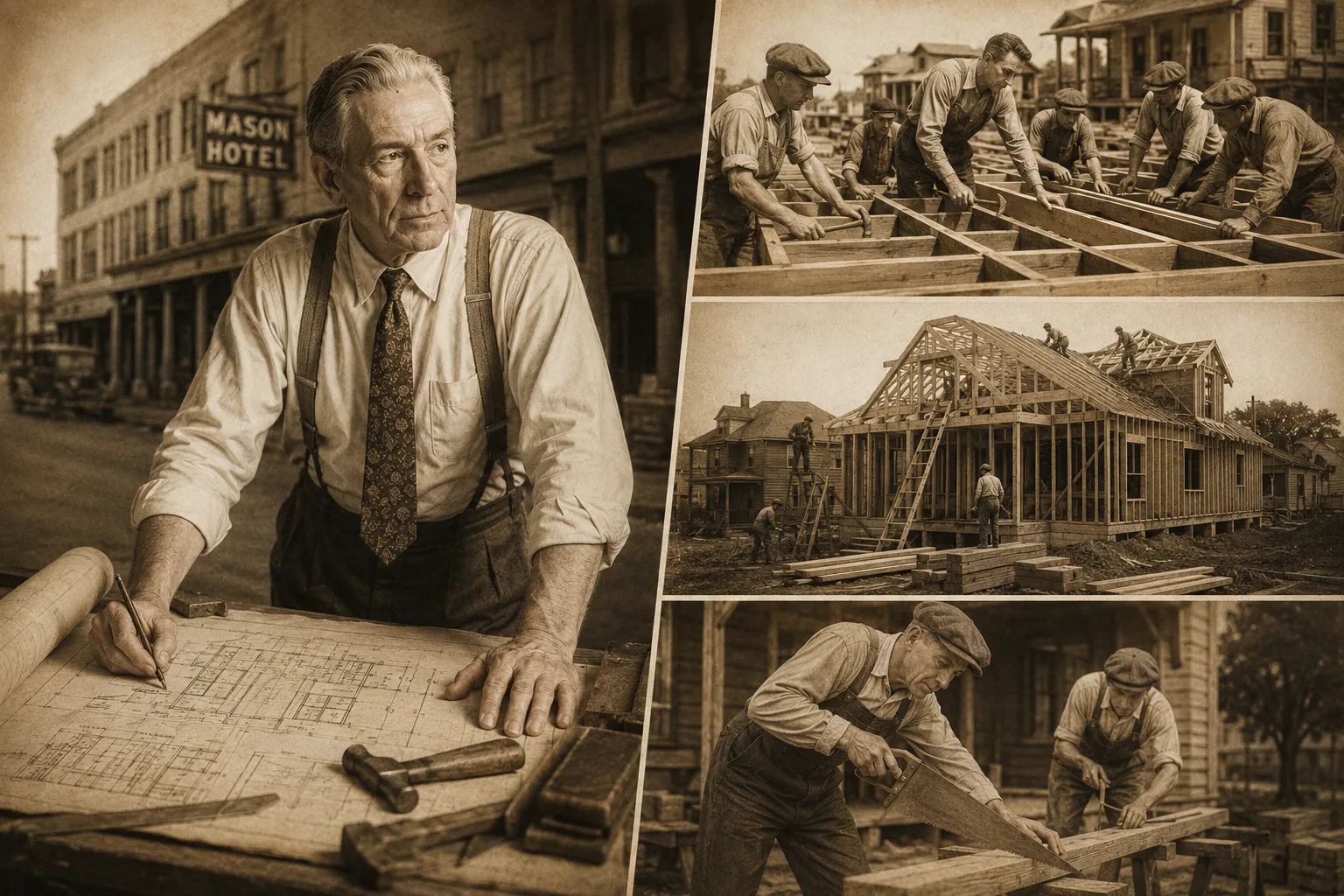
J. M. Davis As A Builder And Contractor
A Newspaper Clipping Shows A Man Who Worked Alongside His Men
One of the strongest details about Davis is that he was known locally as a contractor.
A January 1936 notice from the Claremore Daily Progress described him as mayor, but it also called him a contractor. The notice said Davis did not ask his men to do work he could not do, or would not do, himself. That one line gives us a much clearer picture of the man.
He was not described as someone who only gave orders.
He was described as someone who worked.
The same notice expressed concern that Davis was ill again and had been working harder than many of the men he employed. The writer urged him to rest and recover before “pitching in” so hard again.
Then came the line that makes the clipping feel local and real:
“We got a good mayor and we want to keep him.”
That sentence does not sound like a polished history book. It sounds like Claremore talking about one of its own.
Building Homes In A Growing Town
Davis Helped Meet A Real Housing Need In Claremore
Davis’s work in Claremore also included rental housing.
Around 1919, the museum’s history says Claremore needed rent houses, so Davis began building houses for others to rent. That detail is easy to pass over, but it matters.
He was not only preserving history. He was also investing in the town while people were moving in, looking for work, and trying to build lives in Rogers County.
A travel profile from Roadside America also describes Davis as having wealth connected to his construction business and the management of the downtown Mason Hotel.
The safest way to say it is this: J. M. Davis was a contractor, builder, hotel owner, and landlord whose work reached beyond the walls of the Mason Hotel.
He helped build places where people lived.
A Landlord During The Great Depression
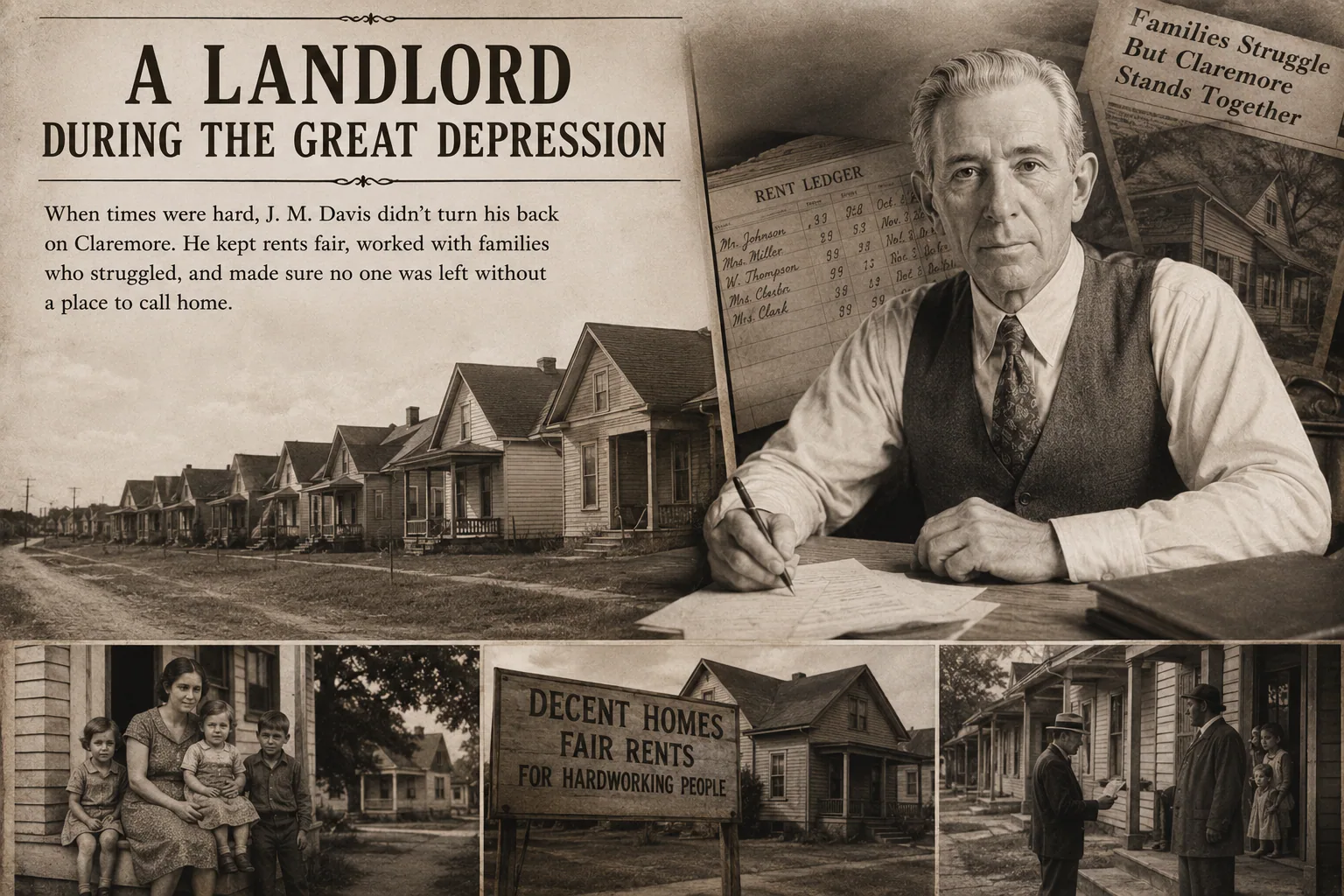
Some Rent Was Paid With Old Guns And Other Items
The Great Depression showed another side of Davis.
Money was scarce. Jobs were hard to find. Families struggled to pay rent. According to the museum’s history, families living in Davis rent houses who could not find money for rent were not evicted because Davis knew they had nowhere else to go. Some people swapped an old gun or another item toward their rent.
That detail gives the collection a deeper story.
Some pieces came through purchase. Some came through trade. Some came through the hard years when families were doing what they could to get by.
That does not make every object in the museum sentimental, but it does remind us that collections do not grow in a vacuum. They grow through people, places, timing, hardship, opportunity, and memory.
J. M. Davis And Public Service
He Was A Businessman Who Also Served The City
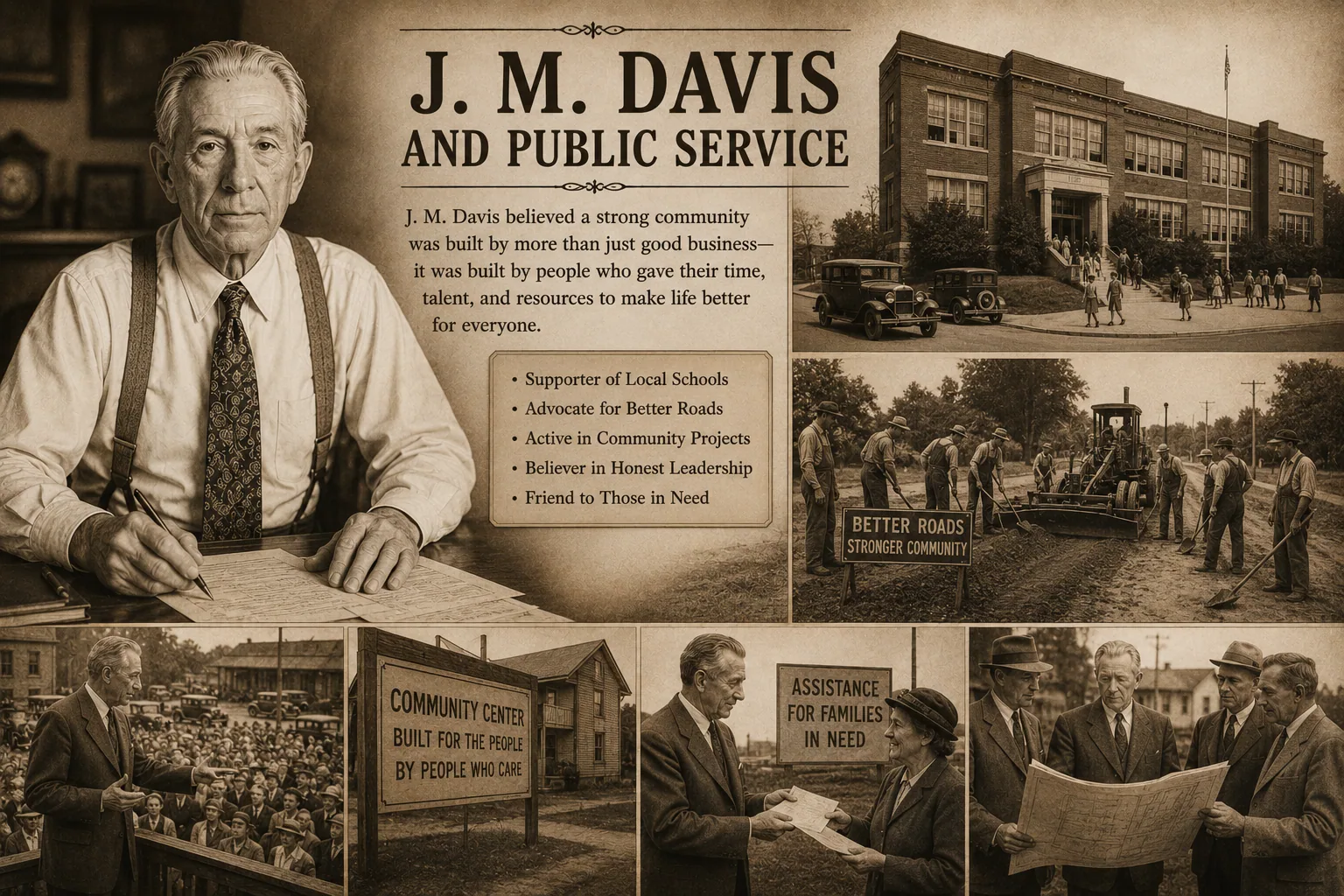
Davis also served Claremore in public office.
The museum’s history says he served on the City Council for eight years and served as mayor from 1921 to 1923 and again from 1933 to 1943.
That matters because his connection to Claremore was not limited to private business.
He owned the Mason Hotel.
He built rent houses.
He worked as a contractor.
He served in city government.
He grew a collection that later became known far beyond Claremore.
That combination makes his life more interesting than a simple museum founder story.
The Collection That Started With One Childhood Gift
A Small Muzzleloading Shotgun Led To A Lifelong Passion
The collection itself began when Davis was a boy.
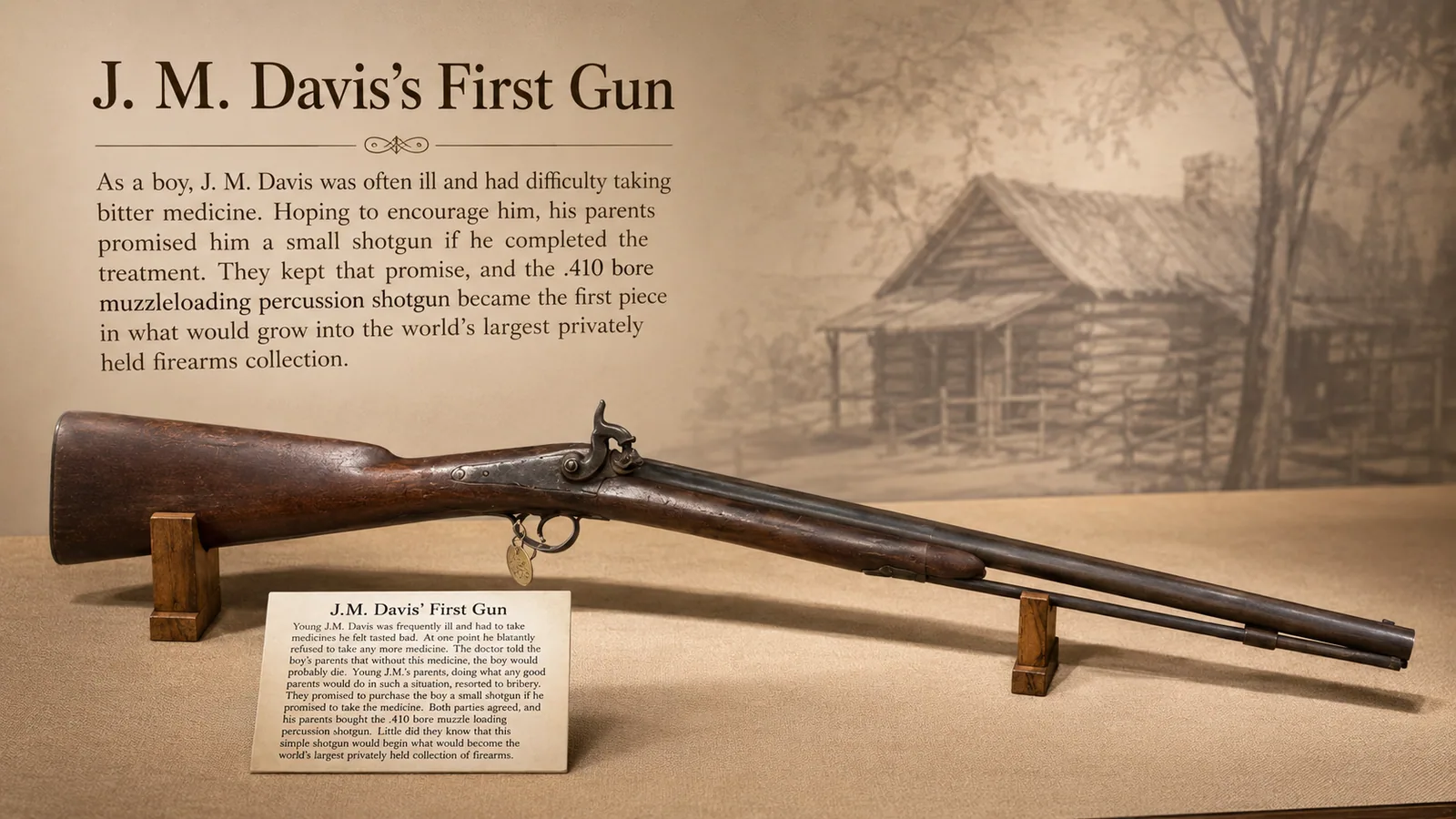
According to the museum’s history, young J. M. had been sick and refused to take his medicine. His father encouraged him by giving him a small muzzleloading shotgun. That gift became the beginning of what the museum describes as the largest privately held firearms collection in the world.
Today, the J. M. Davis Arms and Historical Museum is home to more than 12,000 firearms and thousands of other historical artifacts, including Old West saddles and spurs, John Rogers statuary, Toby mugs, beer steins, World War I posters, and Claremore and Rogers County history.
Visit Claremore also describes the museum as displaying the world’s largest privately owned gun collection, with more than 12,000 firearms and thousands of other artifacts.
But the heart of the story is still personal.
A boy received a small shotgun from his father.
A businessman carried that interest throughout his life.
A hotel became the first public home of the collection.
A town became home to one of Oklahoma’s most memorable museums.
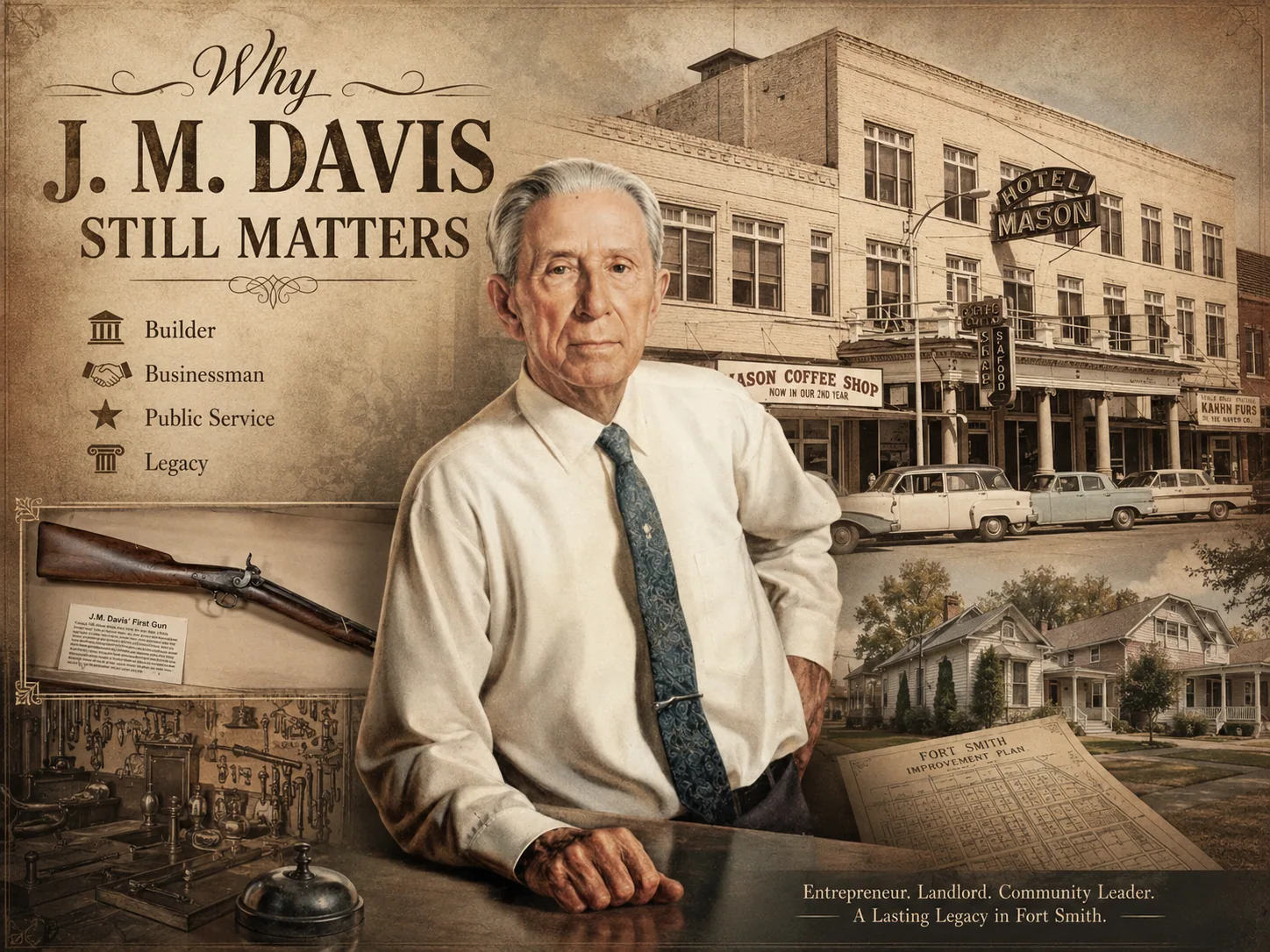
Why J. M. Davis Still Matters
His Legacy Connects Claremore, The Mason Hotel, Public Service, And Preservation
J. M. Davis was more than a collector.
He helped build Claremore. He served Claremore. He owned one of its important downtown hotels. He built rental houses when the town needed them. He worked as a contractor. He led as mayor. He preserved pieces of history that might otherwise have disappeared.
That is why his story still matters.
When visitors walk through the J. M. Davis Arms and Historical Museum today, they are not only looking at rows of historic firearms. They are stepping into part of the story of a man, a hotel, a town, and a community that still carries his name.
J. M. Davis was not just the man behind the collection.
He was one of the builders of Claremore’s story.
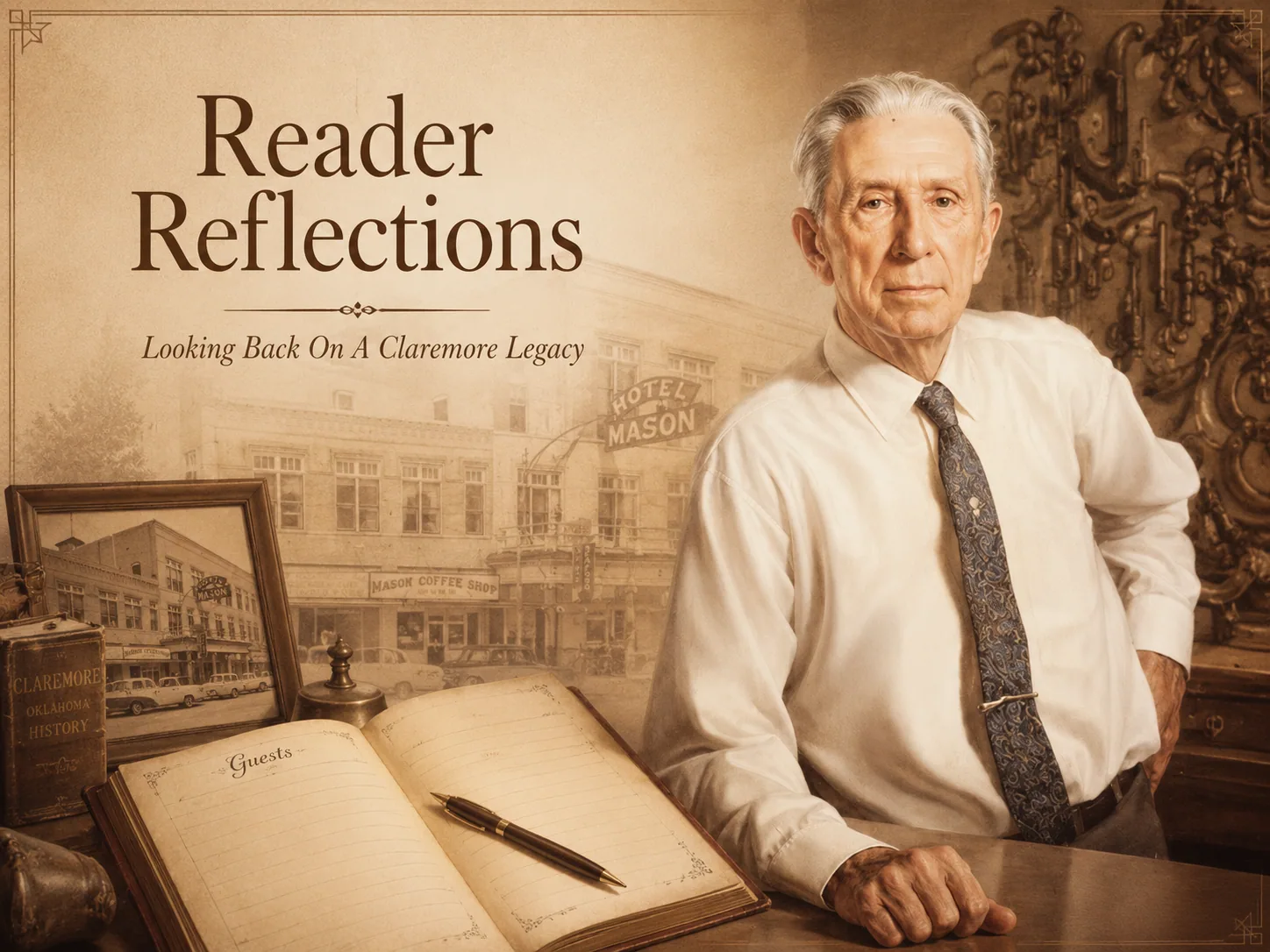
Reader Reflection
A Question To Think About During Your Visit
The next time you visit the J. M. Davis Arms and Historical Museum, look beyond the collection itself.
Ask yourself this:
What does this museum tell us about the man, the town, and the people whose lives became part of the story?
That is where the deeper history begins.
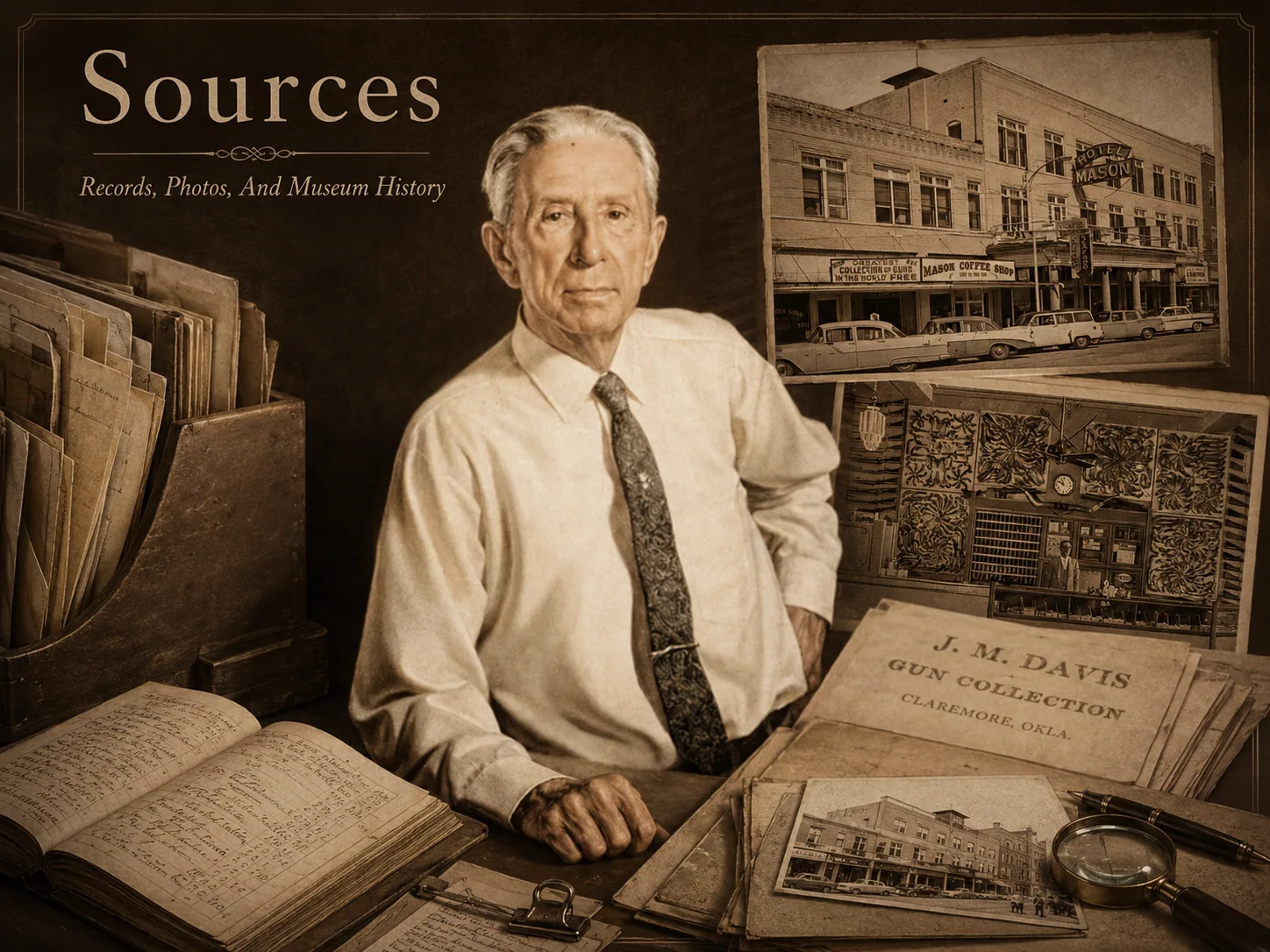
Sources
J. M. Davis Arms and Historical Museum. “About The Museum.” J. M. Davis Arms And Historical Museum.
Roadside America. “J. M. Davis Arms And Historical Museum.” RoadsideAmerica.com.
Visit Claremore. “J. M. Davis Arms And Historical Museum.” Visit Claremore.
Claremore Daily Progress. Newspaper notice about Mayor J. M. Davis illness and contractor work, January 3, 1936.
Share this article
Help someone else find this post
Share it to your favorite platform, email it directly, or copy the link for your next post or message.
Reader reflection
What part of "J. M. Davis Was More Than A Collector" feels most relevant to your business right now, and what is one step you can take in the next 48 hours?
Choose one idea from the article, connect it to your current situation, and write down the smallest concrete next action you are willing to take.
Public reading stays open. Private reflection requires a member account so you can save your thinking and come back to it later.