Forward Stevens: An Unsung Hero of the American Revolution
Discover the story of Forward Stevens, a teenage soldier who served in the American Revolution and left a lasting legacy at the J.M. Davis Arms and Historical Museum.
When people first hear the name Forward Stevens, they may assume it is a command, a military order or perhaps a nickname earned on the battlefield.
It was none of those things.
“Forward” was his actual first name.
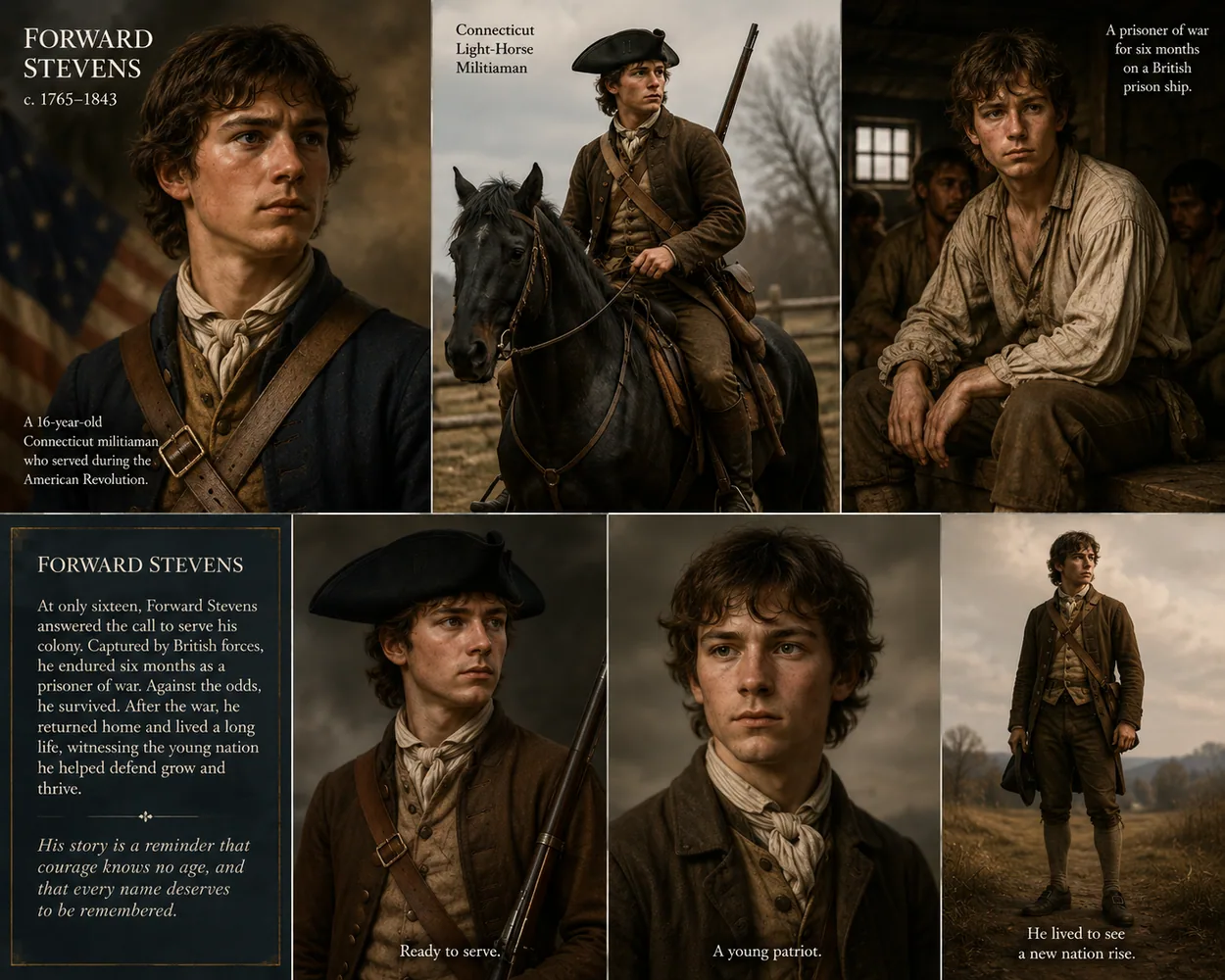
Born in Danbury, Connecticut, in May 1762, Forward Stevens was only a teenager when he entered the fight for American independence. His story includes militia service, capture by British forces, six months as a prisoner of war and a long life after the Revolution.
Although his name rarely appears alongside the famous generals and political leaders of the era, Forward Stevens represents the thousands of ordinary Americans whose courage helped create a new nation.
“Forward” Was His Real Name
Forward Stevens was born into a family already connected to military service.
His father, Lieutenant Ezra Stevens, also served during the American Revolution. Growing up in Danbury, Forward would have witnessed the growing conflict between the American colonies and Great Britain during his childhood.
By the time the war began in 1775, Forward was approximately 13 years old. Within only a few years, he would be old enough to join the Connecticut militia himself.
His unusual name makes him memorable today, but it was his service as a young soldier that earned him a place in the story of the American Revolution.
A Soldier at Sixteen
Forward Stevens entered military service at approximately 16 years old.
At an age when many young people today are learning to drive or preparing to finish high school, Stevens joined other Connecticut militiamen in defending their communities and supporting the Patriot cause.
Historical family records identify him as having served in the light-horse cavalry. Mounted militia units could assist with communication, scouting, transportation and the rapid movement of information or personnel.
The surviving records do not provide a complete account of every assignment Stevens received or every location where he served. However, they establish that he participated in the war while still a teenager.
Connecticut played an important role in supporting the Revolution. Sometimes called the “Provisions State”, the colony supplied food, equipment and other necessities to the Continental Army. Its towns and storehouses became targets for British attacks.
For young militiamen such as Forward Stevens, military service was not a distant adventure. The war could reach their homes, families and communities with little warning.
Six Months as a Prisoner
During his service, Forward Stevens was captured by British forces.
Records indicate that he remained a prisoner of war for six months. A family history published in 1891 also states that Stevens was confined aboard a British prison ship in New York Harbor.
The surviving information does not identify the specific ship on which he was held. Therefore, it would be inaccurate to claim that he was imprisoned aboard the notorious HMS Jersey or any other named vessel without additional documentation.
What is known about British prison ships provides sobering context for Stevens’ experience.
As prisons in British-occupied New York became overcrowded, decommissioned ships were converted into floating prisons. Many were anchored near Wallabout Bay, in the area that later became the Brooklyn Navy Yard.
Conditions aboard these ships were frequently appalling. Prisoners endured overcrowded quarters, inadequate sanitation, poor ventilation, contaminated water, limited food and the constant threat of disease.
Thousands of American prisoners died while being held by the British during the Revolution. Illness, hunger and unsanitary conditions often proved more deadly than the battlefield.
The historical record does not tell us exactly what Forward Stevens saw, felt or suffered during his six months in captivity. We should not invent those details.
However, the simple facts are powerful enough.
He was a teenage soldier. He was captured by the enemy. He spent six months as a prisoner of war. He survived.
Twenty Pounds for His Service
One of the surviving records connected to Forward Stevens documents that he was later paid 20 pounds for his militia service.
At first glance, a payment record may seem less dramatic than a battlefield account or a story of imprisonment. However, records like this are extremely important to historians.
They provide evidence that an individual served. They connect a name to military activity and help researchers separate documented history from family tradition or legend.
The payment does not tell us everything about Forward Stevens’ wartime experience. It does not describe the circumstances of his capture, identify his guards or explain how he regained his freedom.
Nevertheless, it provides a tangible link to his Revolutionary War service.
More than two centuries later, that surviving record helps ensure that Forward Stevens is remembered as a real person rather than simply a name passed down through generations.
A Long Life After the Revolution
Forward Stevens returned to civilian life after the war.
He continued to reside in the Danbury area and married Rachel Knapp. After her death, he later married Mary Sears.
Stevens lived for many decades after the Revolution, witnessing the growth of the United States from a struggling collection of former colonies into an expanding nation.
He died on September 1, 1847, at approximately 85 years old.
He is buried in Danbury, alongside other members of a community whose lives were shaped by the Revolution.
His long life stands in sharp contrast to the uncertainty he faced as a teenager. At 16, he could not have known whether the Patriot cause would succeed, whether he would survive captivity or whether the new nation would endure.
Yet he lived long enough to see the country he helped establish move well beyond its revolutionary beginnings.
The Firearm That Preserved His Name
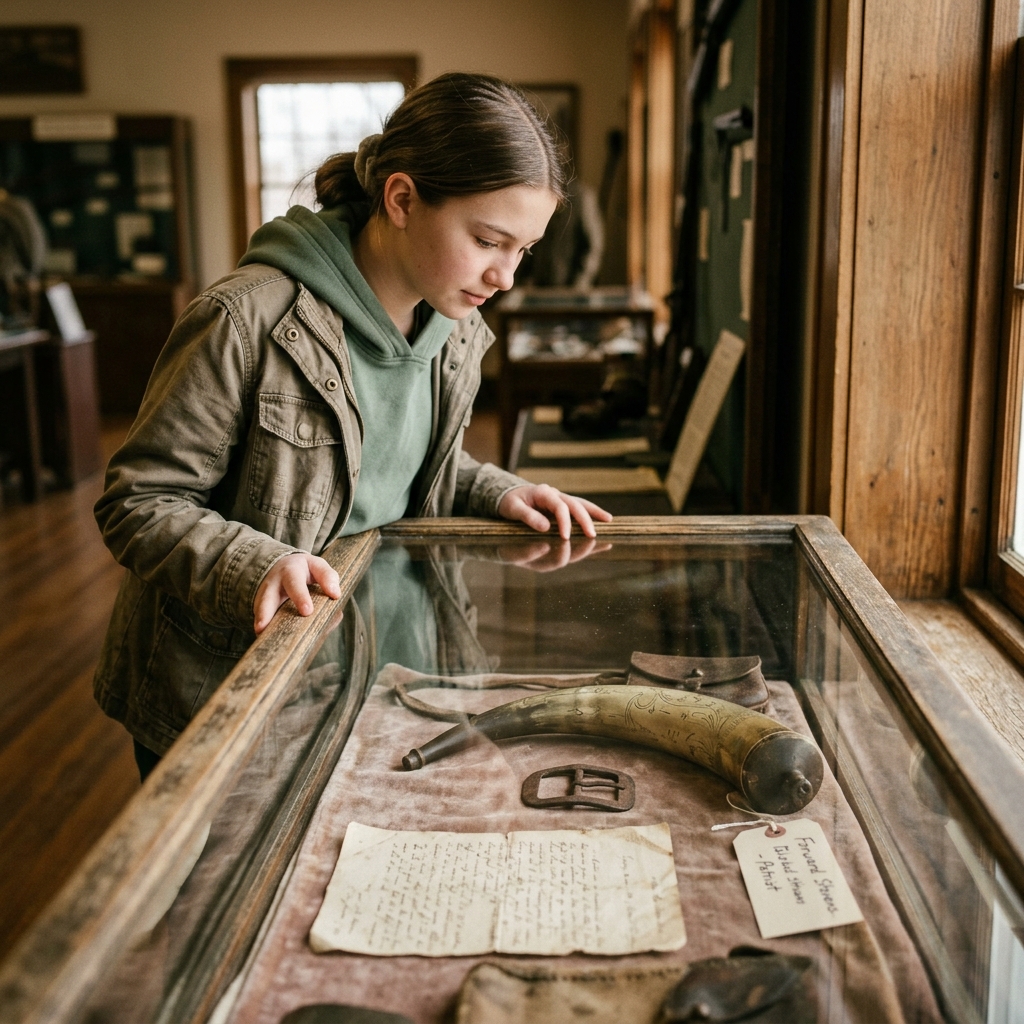
A firearm identified as having belonged to Forward Stevens is now preserved in the collection of the J.M. Davis Arms and Historical Museum.
The firearm creates a physical connection between modern museum visitors and a teenage soldier who lived during the founding of the United States.
Museum records should guide how the artifact is described. Unless additional documentation confirms it, the firearm should not be presented as the weapon Stevens carried in a particular battle, used during his cavalry service or possessed while he was a prisoner.
Its significance does not depend on an invented battlefield story.
The known association with Forward Stevens is meaningful on its own.
A firearm can be examined for its construction, design and craftsmanship. When the name of an owner is known, however, the object can also become a doorway into a human life.
In this case, that life belonged to a 16-year-old Connecticut militiaman who served, was captured, survived and returned home.
Bringing an Unsung Hero Forward
J.M. Davis Arms and Historical Museum Executive Director Randy Ramer identified Forward Stevens as one of several Connecticut Revolutionary War soldiers associated with firearms in the museum’s collection.
That discovery has helped inspire further research.
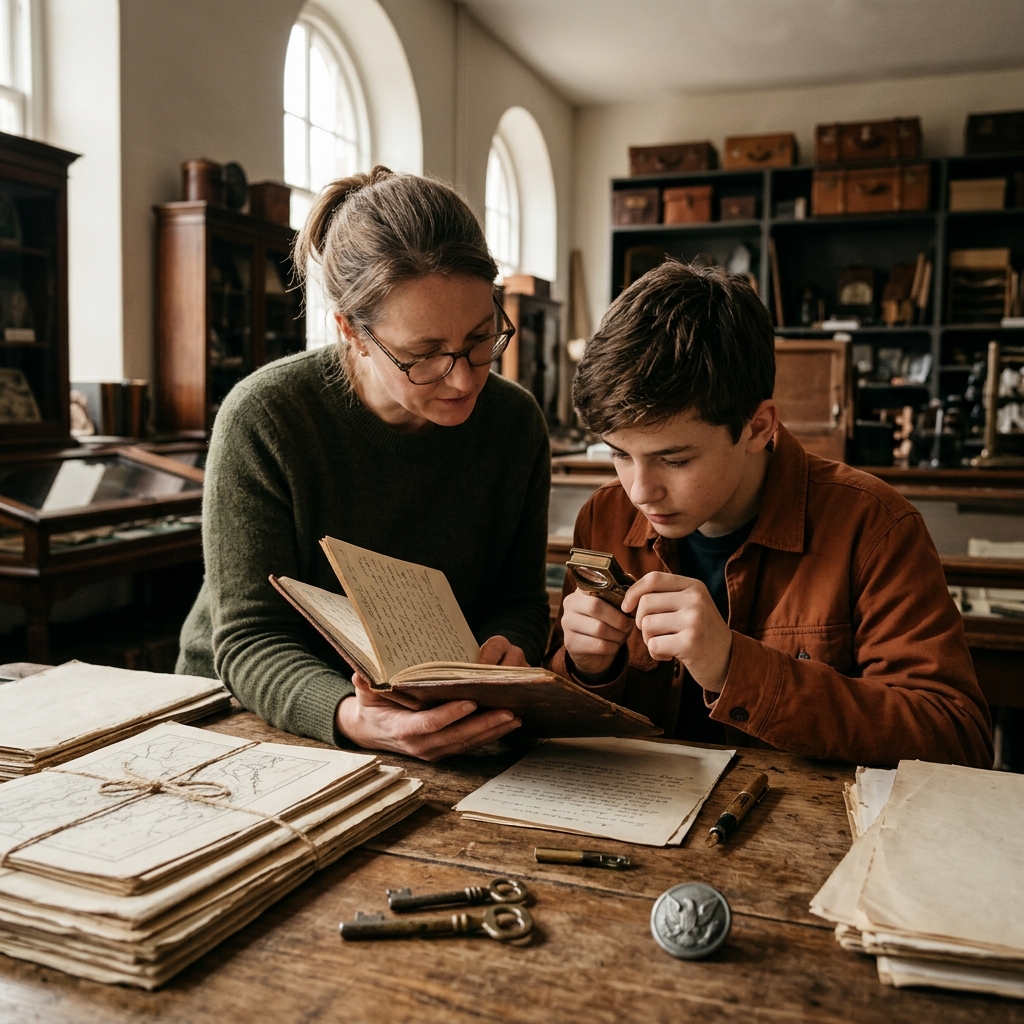
Wesleyan University student Ivelisse Rodriguez has been researching Stevens and other Connecticut soldiers represented by firearms preserved at the museum. The project is part of a collaboration involving Wesleyan University, the Guns & Society Center and the J.M. Davis Arms and Historical Museum.
This work demonstrates how much can still be learned from objects that have remained in museum collections for many years.
The firearm associated with Forward Stevens may be preserved in Claremore, Oklahoma, but the story behind it begins more than 1,400 miles away in Danbury, Connecticut.
Through research, military documents, genealogical records and museum collections, those two places are now connected.
The goal is not merely to identify who owned a particular firearm. It is to recover the stories of people whose contributions have been overshadowed by the Revolution’s most famous names.
Why Forward Stevens Deserves to Be Remembered
The American Revolution was not won by generals alone.
It depended on farmers, tradesmen, messengers, militia members and young soldiers who stepped forward despite the risks.
Forward Stevens was one of those soldiers.
He was approximately 16 years old when he entered military service. Records supplied to the museum indicate that he was captured by British forces and remained a prisoner of war for six months. Those records also indicate that he later received 20 pounds for his militia service.
Stevens survived the war, returned to Connecticut and lived to approximately 85 years of age.
His story does not require invented dialogue, exaggerated heroics or imaginary battle scenes. The known facts already reveal courage, endurance and sacrifice.
Forward Stevens may never become one of the best-known figures of the American Revolution. However, his life reminds us that the nation’s founding depended on thousands of individuals whose names rarely appear in textbooks.
Today, through surviving records, ongoing research and a firearm associated with him in the museum’s collection, his story is being brought forward once again.
Visit the J.M. Davis Arms and Historical Museum in Claremore, Oklahoma, to explore the American Revolution exhibit and discover the people and artifacts connected to America’s struggle for independence.
Sources
Center for the Study of Guns & Society. “Wesleyan Students and Nonprofits Collaborate on Research Thanks to the Troy and de Wit Grant Fund for the Study of Guns & Society”. 18 May 2026, gunsandsocietycenter.com/2026/05/18/wesleyan-students-and-nonprofits-collaborate-on-research-thanks-to-the-troy-and-de-wit-grant-fund-for-the-study-of-guns-society/.
“Danbury, Fairfield Co., CT, Old Burial-Grounds”. Dunham-Wilcox-Trott-Kirk, dunhamwilcox.net/ct/danbury_ct_cem.htm.
“Danbury, Fairfield Co., CT, Vital Records from Barbour, 1685–1847—I to L”. CTGenWeb, ctgenweb.org/county/cofairfield/pages/danbury/danbury_i-l.htm.
Hoyt, George S. Record of Soldiers Buried in Danbury, Brookfield, New Fairfield and Ridgefield. 1928. Transcribed by Liz Dellinger, Genealogy Trails History Group, genealogytrails.com/conn/fairfield/cem_northmainst.html.
May, Samuel P. The Descendants of Richard Sares (Sears) of Yarmouth, Massachusetts, 1638–1888. J. Munsell’s Sons, 1890. Internet Archive, archive.org/details/descendantsofric00mays.
National Archives and Records Administration. American Prisoners of War During the American Revolution, 1776–1783. National Archives and Records Administration, archives.gov/files/research/military/american-revolution/prisoners-1776-1783.pdf.
National Park Service. “The Prison Ship Martyrs”. U.S. Department of the Interior, 22 June 2026, nps.gov/articles/000/prison-ship-martyrs.htm.
Stevens, Frederick S. Genealogy of the Stevens Family, from 1635 to 1891: Tracing the Various Branches from the Early Settlers in America. J. H. Cogswell, 1891. Internet Archive, archive.org/details/genealogyofsteve1891stev.
Share this article
Help someone else find this post
Share it to your favorite platform, email it directly, or copy the link for your next post or message.
Reader reflection
Who was Forward Stevens, and why does this teenage Revolutionary War soldier deserve to be remembered?
Discover the story of Forward Stevens, a 16-year-old Connecticut militiaman who served during the American Revolution, survived six months as a prisoner of war and lived to see the nation he helped establish grow beyond its revolutionary beginnings.
Public reading stays open. Private reflection requires a member account so you can save your thinking and come back to it later.