Captain Molly: Margaret Corbin and the Courage Shown at the Battle of Fort Washington
Explore the remarkable story of Margaret Corbin, known as Captain Molly, and her bravery during the Battle of Fort Washington.
Behind the Collection
In the tapestry of the American Revolution, many stories of courage remain overlooked, often overshadowed by the grand narratives of generals, campaigns, and famous battles. Yet history is not made only by the names printed in textbooks. It is also shaped by people who acted in moments of danger, grief, and sacrifice, even when they never expected to be remembered.
One such story belongs to Margaret Cochran Corbin, remembered by many as “Captain Molly.”
At the J. M. Davis Arms and Historical Museum, stories like hers remind us that history is more than objects behind glass. Every artifact, every weapon, every military account, and every battlefield memory points back to real people. Their choices, losses, and courage give meaning to the past. Margaret Corbin’s story is one of those powerful reminders.
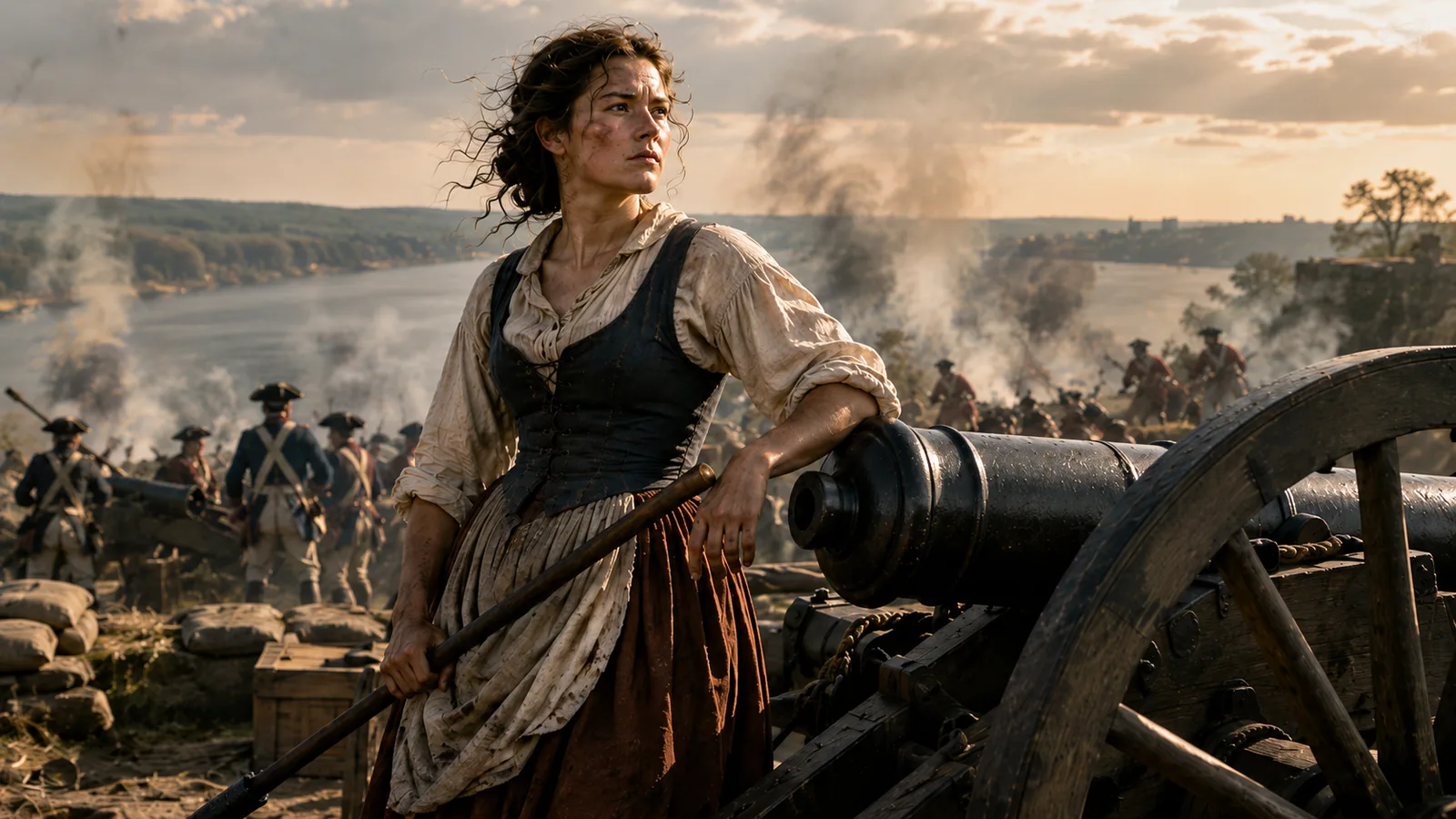
During the Battle of Fort Washington on November 16, 1776, Margaret stood near her husband’s cannon as British and Hessian forces attacked the American position on Manhattan Island. When her husband, John Corbin, was killed, Margaret did not run from the battlefield. She took his place at the cannon and continued helping keep it in action until she was severely wounded.
Her story is not simply a tale of devotion to her husband. It is a story of courage, sacrifice, and service. Margaret Corbin’s actions remind us that women were not only witnesses to the American Revolution. Some stood close to the fighting, endured its hardships, and helped shape the story of American independence.
Behind the Story: Who Was Margaret Corbin?
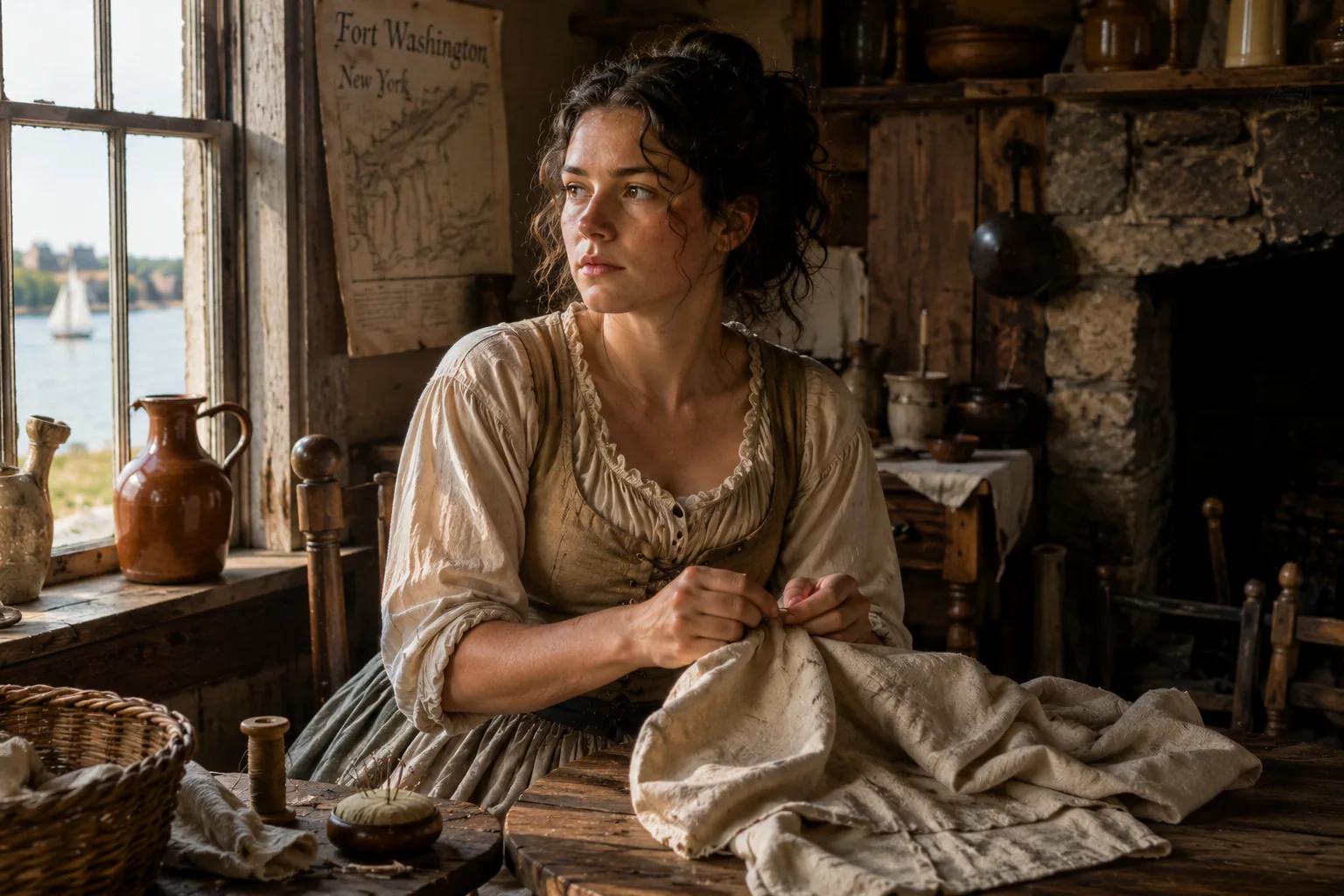
Margaret Cochran Corbin was born in Pennsylvania in 1751. Her early life was shaped by hardship, frontier realities, and the limited opportunities available to women in the eighteenth century. Like many women of her time, she lived in a world where survival required strength, labor, and resilience.
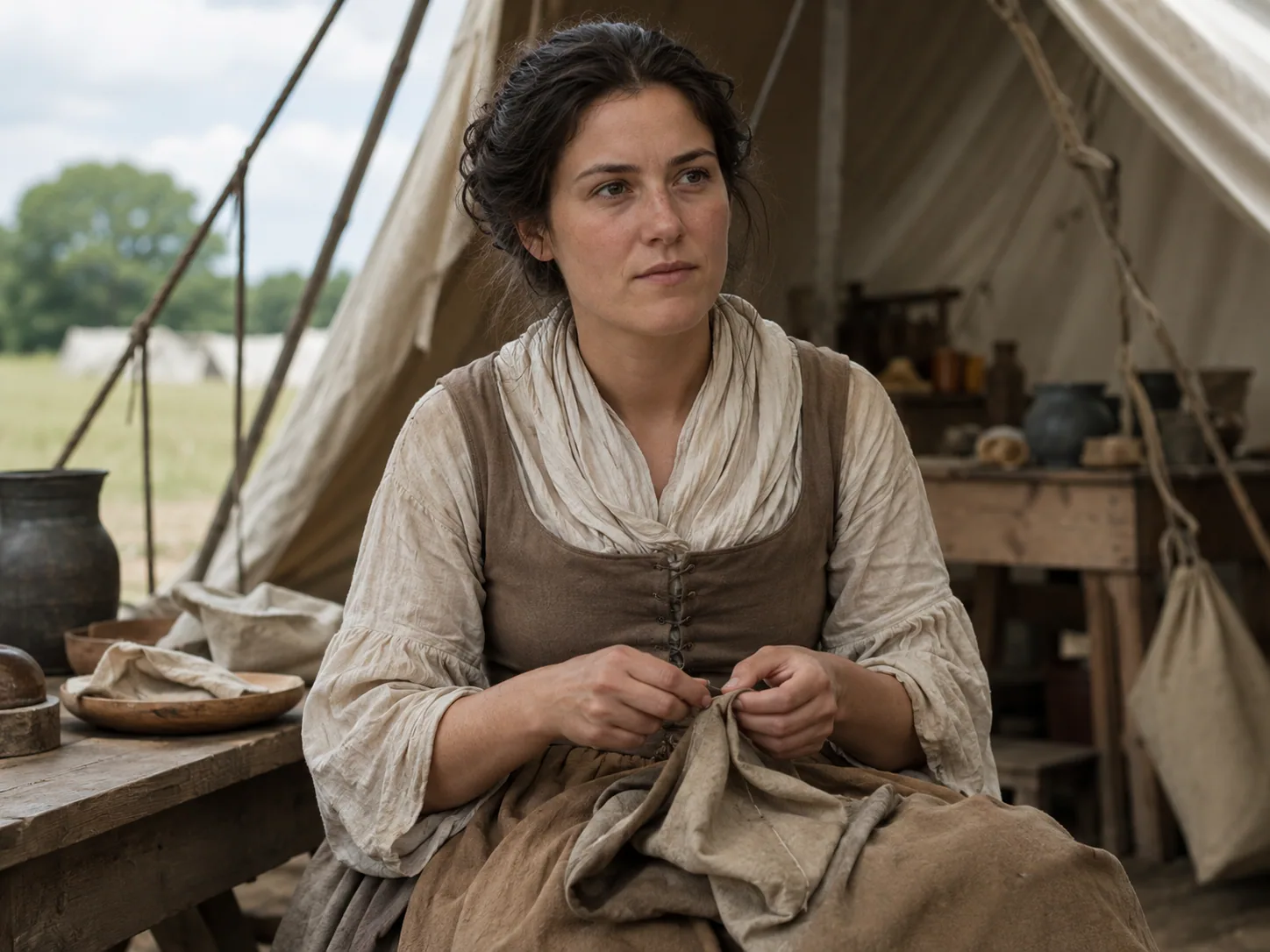
Margaret married John Corbin, who later joined the American fight for independence. Rather than remain far from the conflict, Margaret accompanied him with the army. Women who traveled with military forces during the Revolutionary War were often called camp followers. That phrase can sound secondary, but their work was essential.
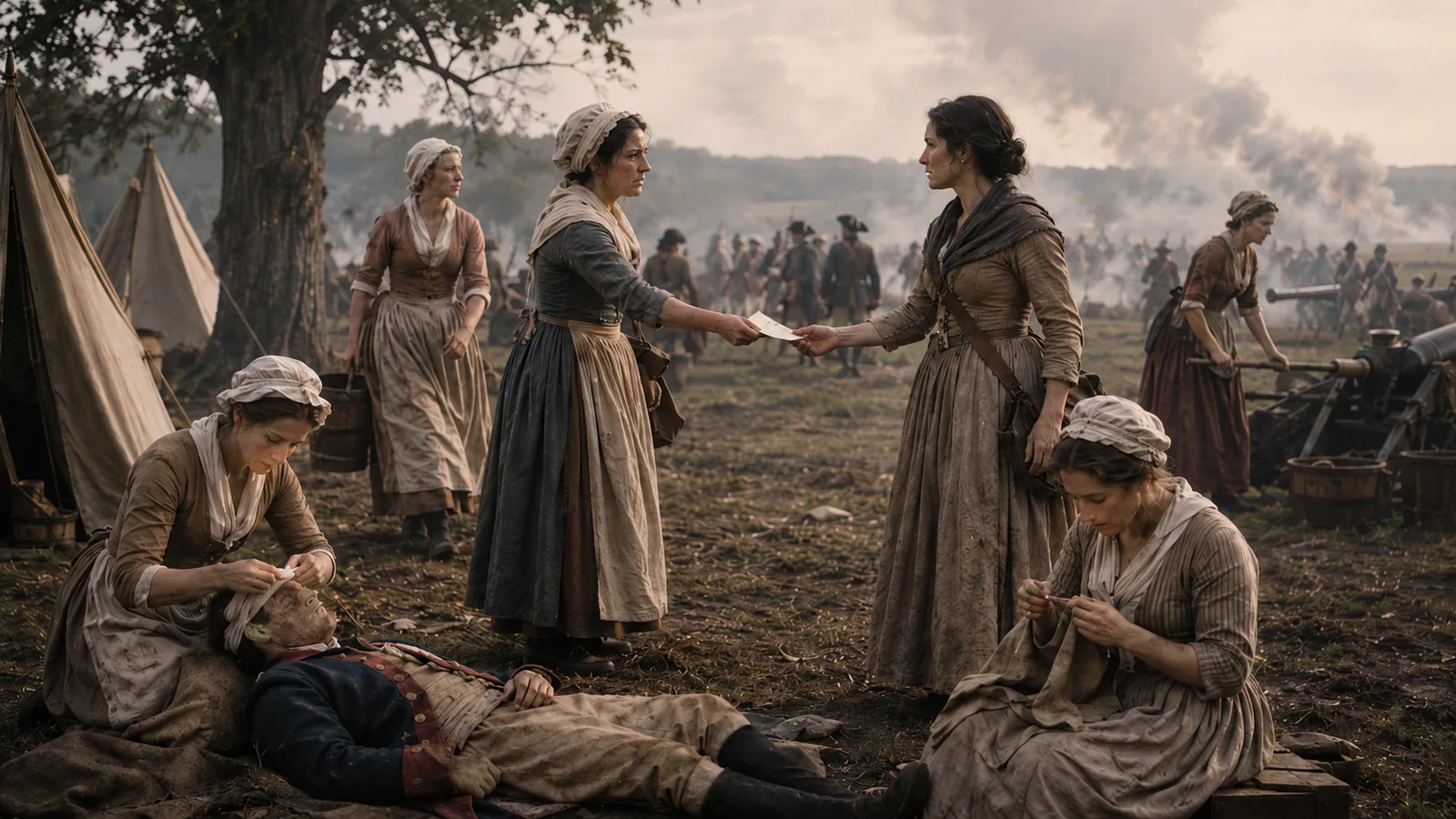
Women in military camps cooked meals, washed clothing, mended uniforms, carried water, cared for the sick and wounded, and helped soldiers survive the daily hardships of war. Armies did not function on military strategy alone. They depended on labor that was often performed by women whose names rarely appeared in official records.
Margaret’s story, however, moved beyond the routines of camp life and into the smoke and danger of battle. At Fort Washington, she was near John’s artillery position and helped with the demanding work required to keep the cannon firing. Artillery work required speed, strength, timing, and courage. A cannon had to be loaded, aimed, fired, cleaned, and reloaded while the crew remained exposed to enemy fire.
The moment that made Margaret Corbin’s name part of Revolutionary War history came when her husband was killed. Instead of retreating, she stepped forward and took his place at the cannon. That act of bravery helped earn her the nickname “Captain Molly”.
Fort Washington: The Battle That Changed Her Life
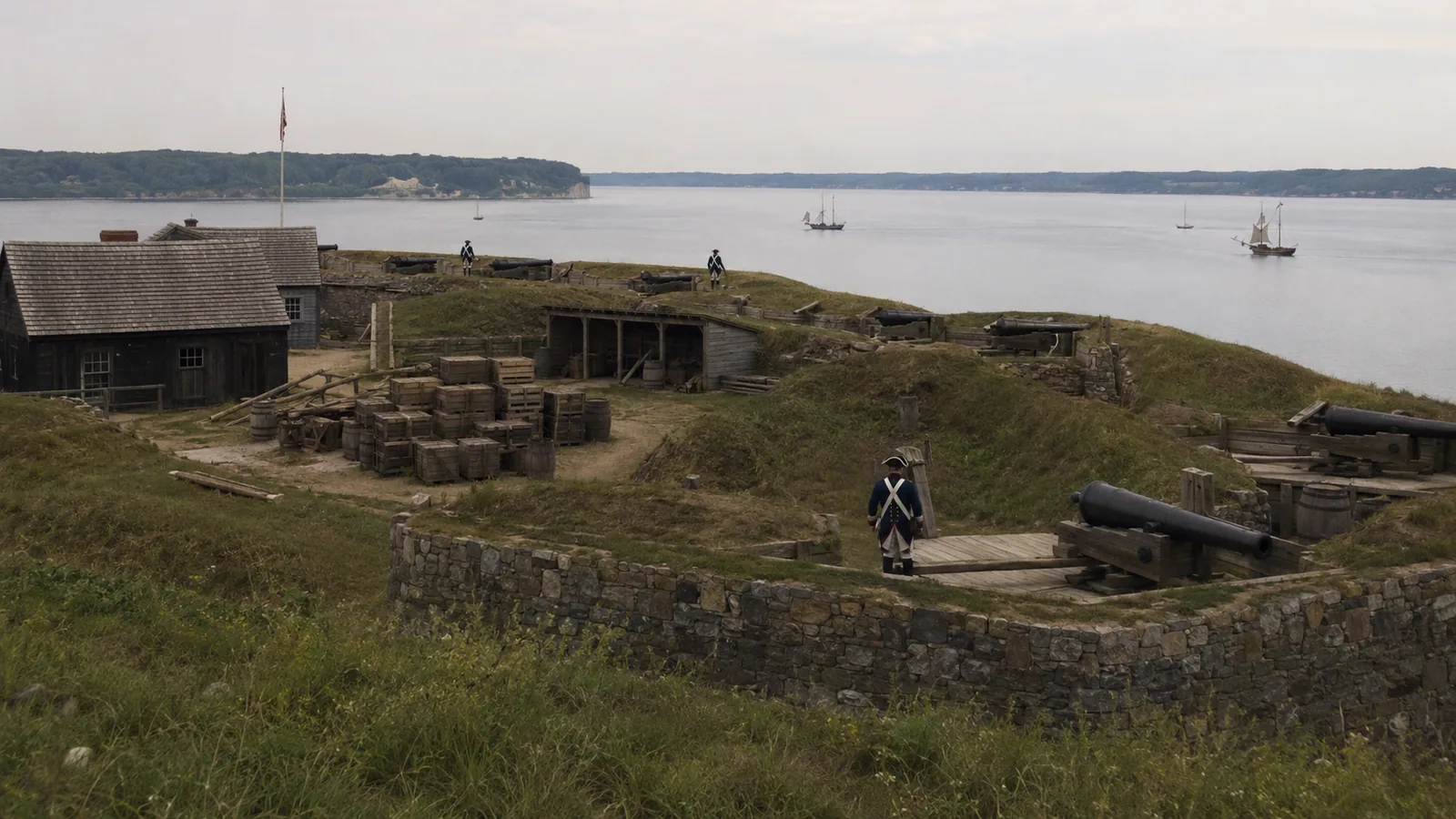
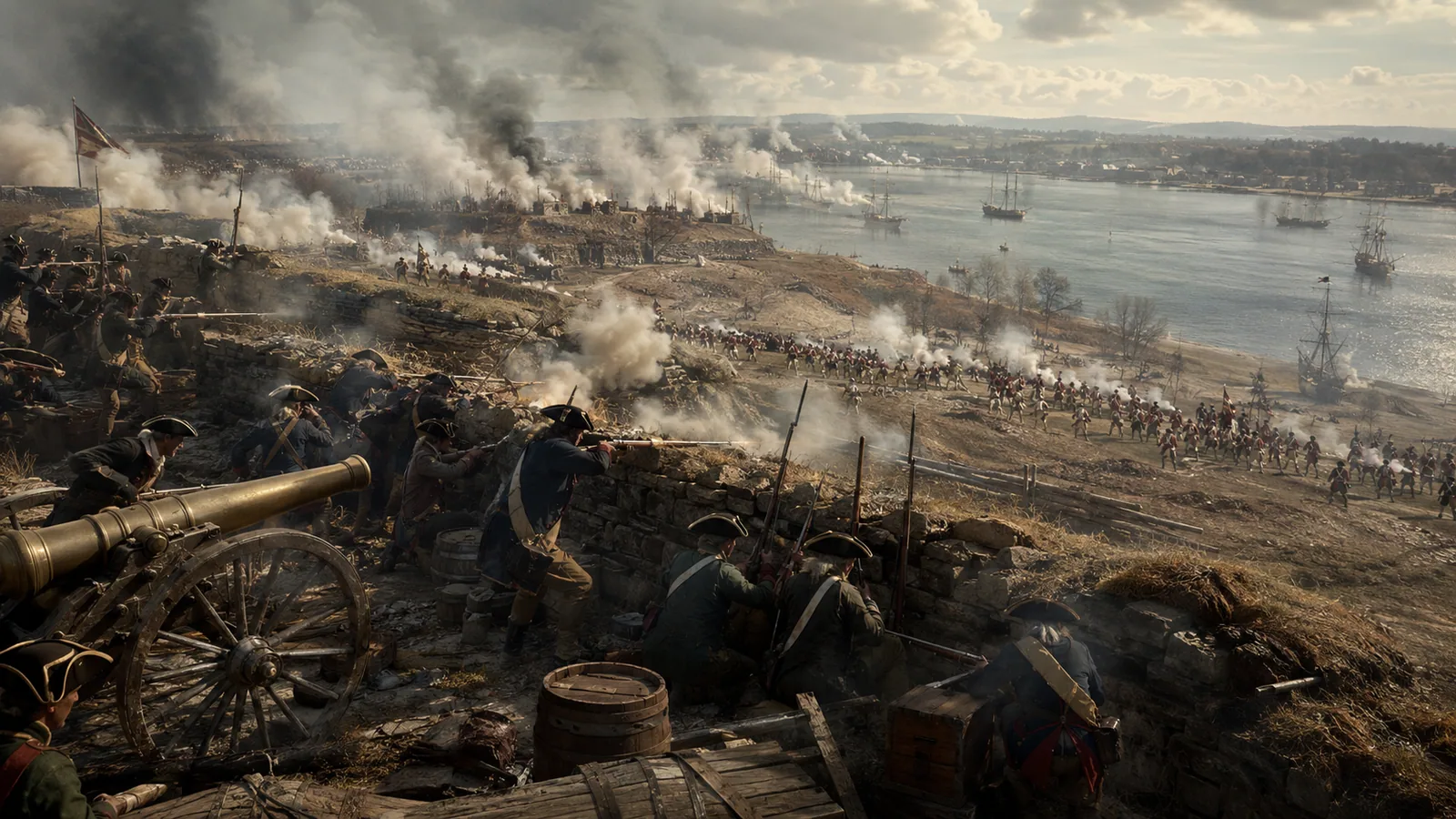
The Battle of Fort Washington took place on November 16, 1776, on Manhattan Island. At that point in the Revolutionary War, the American cause was under enormous pressure. British and Hessian forces were working to secure control of New York, and Fort Washington stood as an important American defensive position near the Hudson River.
The fort’s defenders faced overwhelming odds. The British-Hessian assault was powerful, organized, and difficult to withstand. Cannon fire, musket fire, smoke, confusion, and fear filled the battlefield. For the Americans, Fort Washington became one of the major defeats of the early Revolutionary War.
Margaret Corbin was there in the middle of this danger. Her husband served at a cannon, and she assisted him as the battle unfolded. When John Corbin was killed at his post, Margaret continued the work at the gun. Her decision placed her in direct danger at a moment when the American defense was collapsing.
Despite fierce resistance, Fort Washington fell. Thousands of American defenders were captured, and many endured harsh imprisonment afterward. Yet even in defeat, Margaret Corbin’s courage stood out.
This is one reason her story matters. The Battle of Fort Washington was a military loss, but within that loss was an act of personal bravery that deserves to be remembered. History is often told through victories, but sacrifice is just as important to understanding the past.
When Captain Molly Took the Cannon
Margaret Corbin’s most remembered act came in the chaos of battle. After John Corbin was killed, she stepped into his place at the cannon. She helped continue the artillery fire until she herself was struck and severely wounded.
This was not symbolic courage. It was immediate, dangerous, and physical. A cannon crew worked under tremendous pressure. Every action had to be done with speed and care. The gun had to be swabbed, loaded, aimed, fired, and reloaded. Doing that while under attack required discipline and nerve.
Margaret’s injuries were serious. Historical accounts describe wounds to her arm, chest, and jaw. These wounds left her disabled and affected her for the rest of her life.
The nickname “Captain Molly” connects Margaret Corbin with the broader Revolutionary War tradition of women remembered for battlefield bravery. However, she should not be confused with the more famous “Molly Pitcher” legend. Margaret Corbin was a real, documented woman whose actions at Fort Washington were later recognized by Congress.
Her courage came in a moment of grief. Her husband had just been killed. The battle was turning against the Americans. Yet Margaret stayed at the cannon.
That is why her story still carries power. She was not seeking fame, rank, or recognition. She acted because the moment demanded it.
Wounded, Widowed, and Recognized
After the Battle of Fort Washington, Margaret Corbin faced the consequences of war in deeply personal ways. She was wounded, widowed, and left with injuries that limited her ability to support herself. The Revolution did not end for her when the battle ended. Its effects stayed with her.
In 1779, the Continental Congress recognized her sacrifice by awarding her a military pension. She is widely recognized as the first woman in American history to receive a U.S. military pension for military service.
That recognition was remarkable for the time. In an era when women’s contributions were often overlooked or minimized, Congress acknowledged that Margaret Corbin had served and suffered in connection with the American cause. Her pension did not erase her hardship, but it placed her sacrifice into the public record.
Margaret’s recognition also helps us understand the human cost of the Revolution. Behind every battle were people who carried wounds, grief, disability, and loss long after the smoke cleared.
In a museum setting, this is where the story becomes especially important. Military history is not only about weapons, uniforms, or strategy. It is also about the people whose lives were changed by war. Margaret Corbin’s story gives us a human lens through which to understand service and sacrifice.
The West Point Monument and a Complicated Burial Story
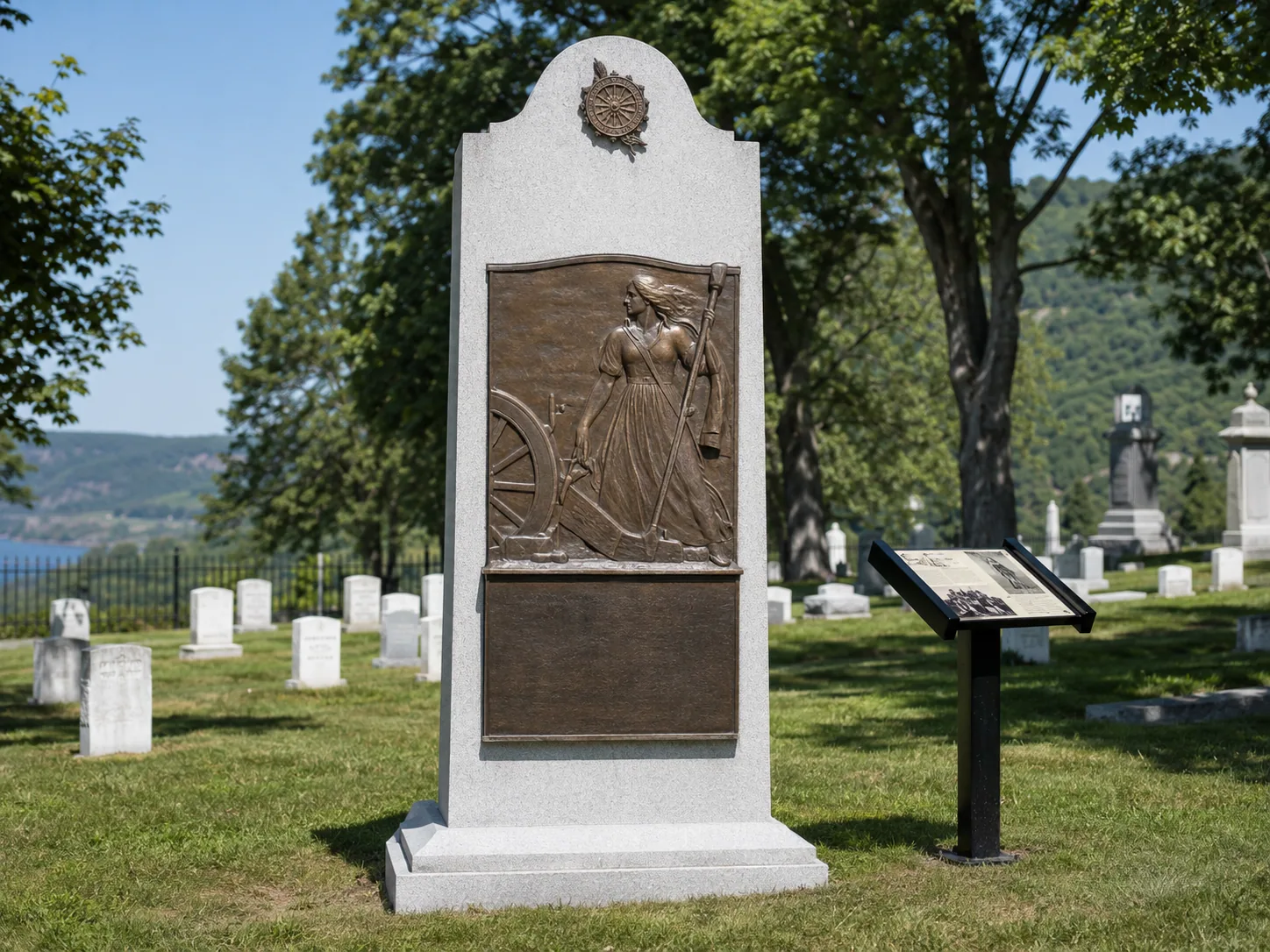
Margaret Corbin is honored at West Point with a monument recognizing her Revolutionary War service. For many years, remains believed to be hers were associated with that memorial. However, later forensic study determined that those remains were not Margaret Corbin’s. Because of that, her exact final resting place remains uncertain.
This does not lessen the importance of the monument. In some ways, it makes the story even more meaningful. The monument is not only about burial. It is about remembrance. It stands as a public acknowledgment that Margaret Corbin’s courage mattered and that women were part of America’s military story from the beginning.
Her monument also reminds us that history is always being studied, questioned, and refined. New evidence can change what we think we know. Responsible history does not ignore those corrections. It includes them.
Margaret Corbin’s story is powerful not because every detail is simple, but because her courage is clear. She stood in danger, suffered for her actions, and was later recognized for her sacrifice.
Women, War, and Overlooked Courage
Margaret Corbin’s legacy reaches beyond her own battlefield experience. Her story opens the door to a larger conversation about women in the American Revolution and the many ways their contributions have been overlooked.
Women served in a variety of roles during the war. They cooked, washed, sewed, nursed, carried supplies, managed homes and businesses, and supported soldiers through the hardships of military life. Some served as messengers or gathered intelligence. A few, such as Deborah Sampson, disguised themselves as men in order to serve as soldiers.
These stories do not take anything away from the military leaders and soldiers whose names are better known. Instead, they give us a fuller and more honest view of the past. The American Revolution was not carried by one kind of person alone. It was a collective struggle involving soldiers, families, communities, and women whose labor and courage helped sustain the cause.
Margaret Corbin stands out because she crossed from support into direct battlefield action. Yet her story also belongs to this larger pattern of women stepping into difficult and dangerous roles during the Revolution.
Her life asks us to look again at the edges of history. Who else stood close to danger? Who else gave more than they were ever credited for? Who else deserves to be remembered?
Why Captain Molly Still Matters
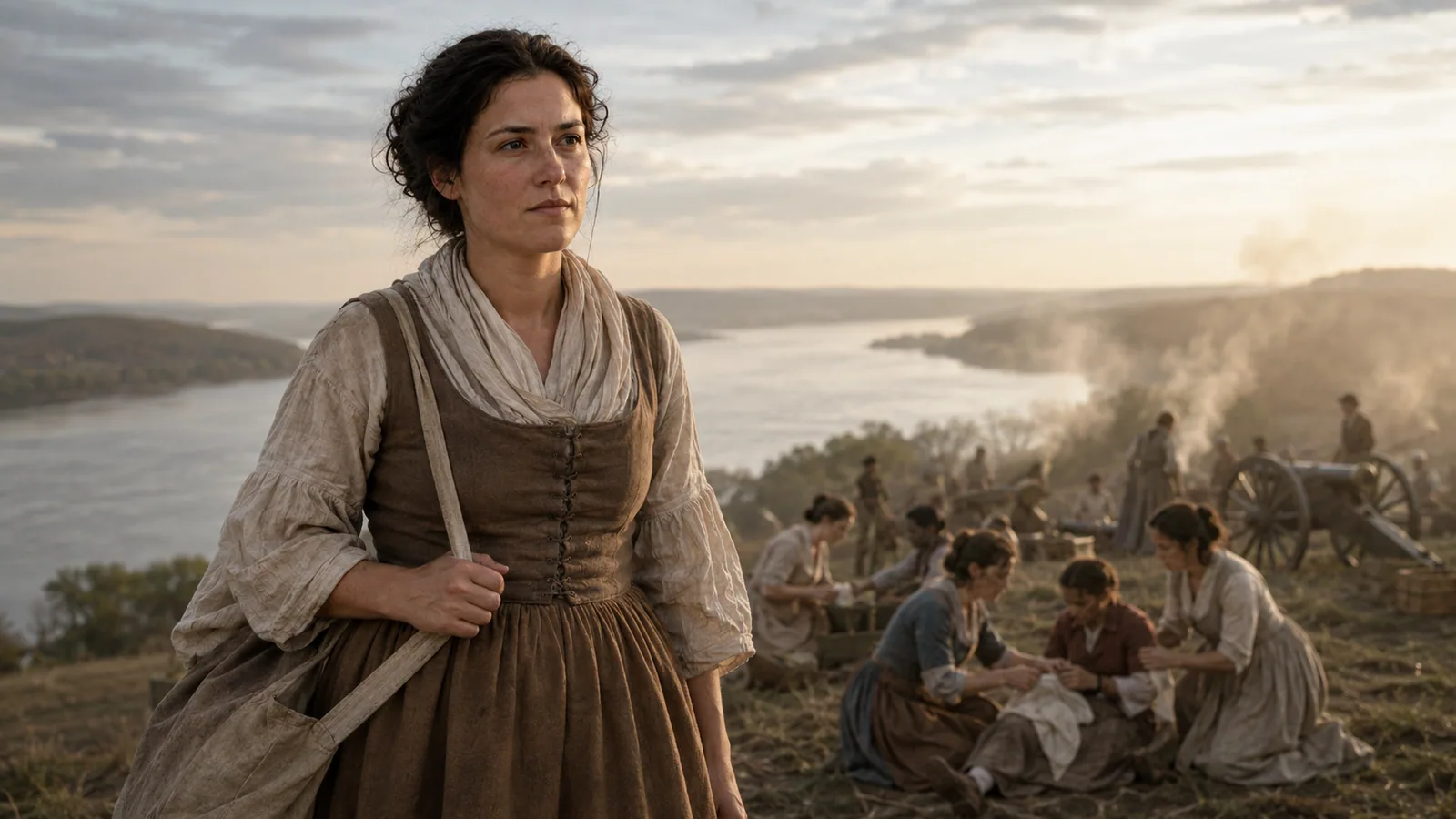
Margaret Corbin’s story matters because it broadens our understanding of the American Revolution. She was not a general, a statesman, or a wealthy political figure. She was a woman who followed the army, worked beside her husband, faced battle, suffered severe wounds, and was later recognized for her sacrifice.
Her actions at Fort Washington challenge the idea that women were only passive observers of the Revolution. She was present in battle, helped at an artillery position, took her husband’s place after he was killed, and carried the wounds of that moment for the rest of her life.
Her story also reminds us that courage is not always neat, famous, or celebrated right away. Sometimes courage appears in the middle of loss. Sometimes it belongs to someone who did not seek recognition but acted because the moment demanded it.
At the J. M. Davis Arms and Historical Museum, stories like Margaret Corbin’s remind us why museums preserve more than objects. They preserve memory. They preserve sacrifice. They preserve the lives of people whose courage might otherwise fade from view.
Captain Molly deserves to be remembered not simply because she was unusual for her time, but because her courage was real. Her story gives us another way to understand service, sacrifice, and the human cost of independence.
Related Questions
Who was Captain Molly? Captain Molly was the nickname given to Margaret Cochran Corbin, a Revolutionary War woman remembered for her bravery at the Battle of Fort Washington.
What happened to Margaret Corbin at the Battle of Fort Washington? Margaret Corbin was helping near her husband’s cannon when he was killed. She took his place at the cannon and continued helping operate it until she was severely wounded.
Was Margaret Corbin the same person as Molly Pitcher? No. Margaret Corbin is sometimes connected with the broader “Molly Pitcher” tradition, but she was a real, documented woman with her own story. She should not be confused with the legendary or composite figure often called Molly Pitcher.
Why did Margaret Corbin receive a military pension? Margaret Corbin received a pension because she was severely wounded while helping defend Fort Washington during the Revolutionary War. In 1779, the Continental Congress recognized her sacrifice with a military pension.
Where is Margaret Corbin honored today? Margaret Corbin is honored with a monument at West Point. However, her exact final resting place remains uncertain because later forensic study found that remains once believed to be hers were not actually hers.
Why is Margaret Corbin important in American history? Margaret Corbin is important because her story shows that women were not only witnesses to the American Revolution. Some endured military life, faced danger, and made sacrifices that became part of the nation’s founding history.
Sources
American Battlefield Trust. “Fort Washington.” American Battlefield Trust, www.battlefields.org/learn/revolutionary-war/battles/fort-washington
Daughters of the American Revolution. “Who Is Margaret Cochran Corbin?” National Society Daughters of the American Revolution, www.dar.org/national-society/who-margaret-cochran-corbin
National Museum of the United States Army. “Margaret Corbin.” The National Museum of the United States Army, www.thenmusa.org/biographies/margaret-corbin/
National Women’s History Museum. “Margaret Cochran Corbin.” National Women’s History Museum, www.womenshistory.org/education-resources/biographies/margaret-cochran-corbin
United States Army. “West Point Hosts Monument Rededication and 92nd Anniversary Ceremony for Margaret Cochran Corbin.” Army.mil, 8 May 2018, www.army.mil/article/204658/west_point_hosts_monument_rededication_and_92nd_anniversary_ceremony_for_margaret_cochran_corbin
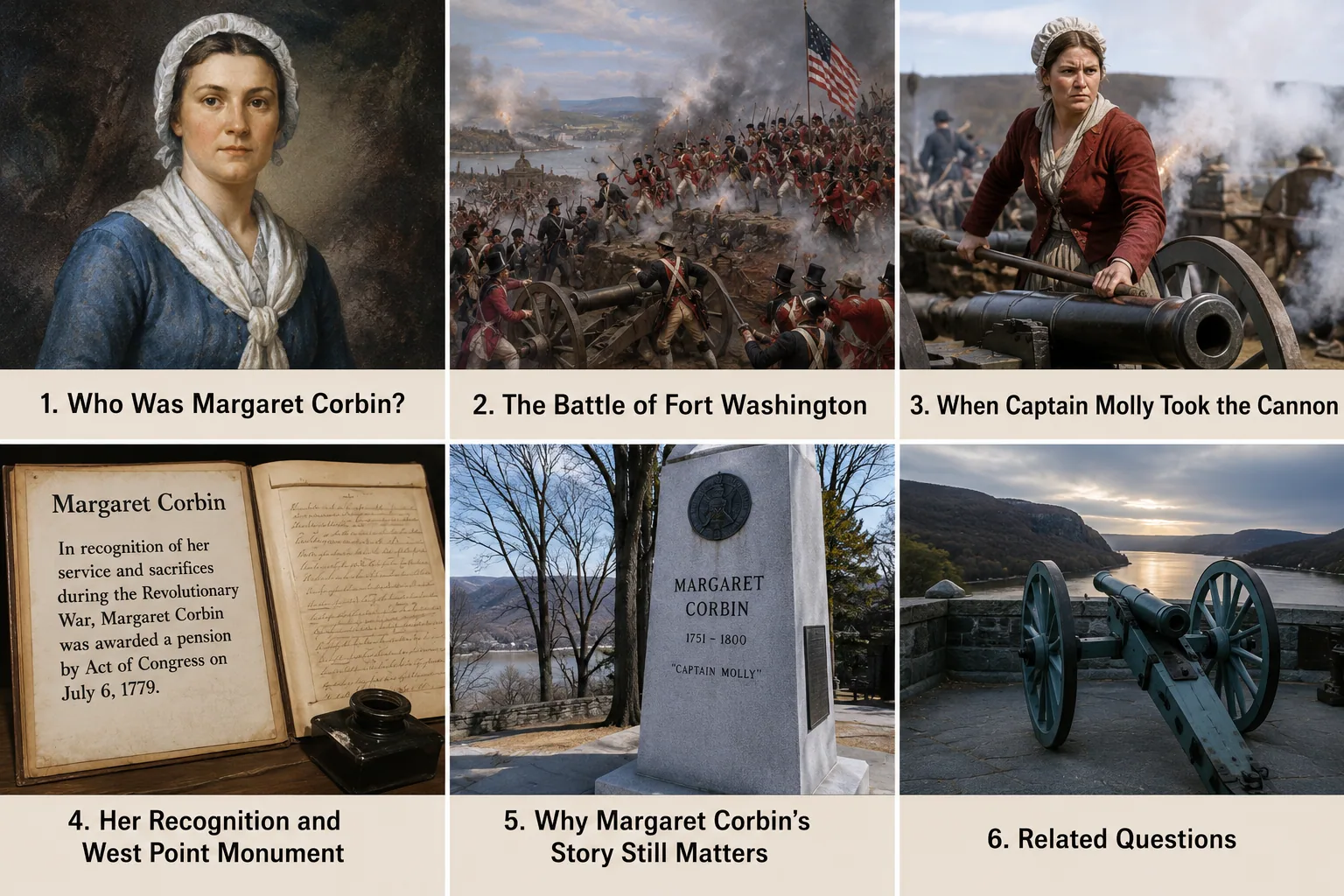
Artistic representation of the Battle of Fort Washington area, created for educational storytelling. Not a contemporary image of the original fort.
Share this article
Help someone else find this post
Share it to your favorite platform, email it directly, or copy the link for your next post or message.
Reader reflection
Who was Margaret Corbin, and how did her courage at the Battle of Fort Washington earn her the nickname “Captain Molly”?
Margaret Cochran Corbin, known as “Captain Molly,” was a Revolutionary War woman remembered for her bravery during the Battle of Fort Washington on November 16, 1776. She accompanied her husband, John Corbin, with the army and helped at his artillery position. When John was killed during the battle, Margaret took his place at the cannon and continued helping keep it in action until she was severely wounded.
Public reading stays open. Private reflection requires a member account so you can save your thinking and come back to it later.