The Man Who Helped Pave The Way For Route 66 Built Pyramids In The Ozarks
Discover William “Coin” Harvey, the Ozark Trails road system, Monte Ne, and the early automobile routes that helped pave the way for Route 66.
Before Route 66 Became America’s Most Famous Highway, William “Coin” Harvey Was Dreaming Much Bigger
Long before interstate highways, GPS directions, and famous Route 66 signs, traveling across the country was often unpredictable, muddy, and slow.
Early motorists faced dirt roads, confusing intersections, unreliable maps, and very few signs pointing them in the right direction.
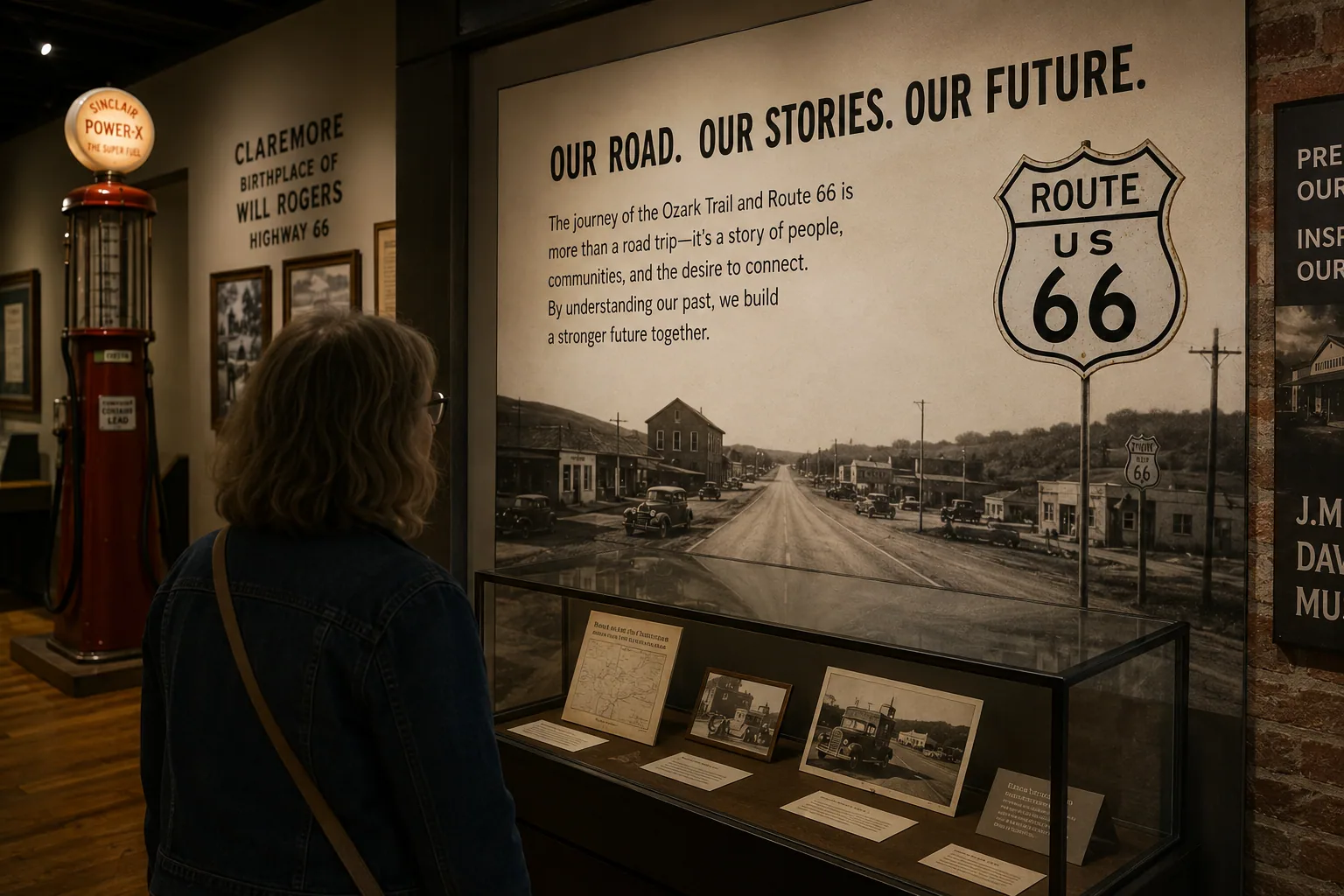
Communities across Oklahoma, including Claremore, would eventually feel the impact of these changing travel routes as automobile tourism and roadside culture began transforming the American landscape.
A trip across multiple states could easily turn into an adventure involving flat tires, mechanical problems, wrong turns, and long conversations with strangers trying to explain which road might actually lead somewhere useful.
It is important not to confuse Harvey’s Ozark Trails road system with modern hiking trails that use similar names. Harvey’s Ozark Trails movement focused on early automobile routes, marked roads, tourism, and highway development.
Travel during the early twentieth century required patience.
It also required visionaries.
One of those visionaries was William “Coin” Harvey, a businessman, writer, promoter, and dreamer whose ideas helped shape early organized automobile travel across the Ozarks and surrounding states.
And strangely enough, his story eventually involved pyramids.
Who Was William “Coin” Harvey?
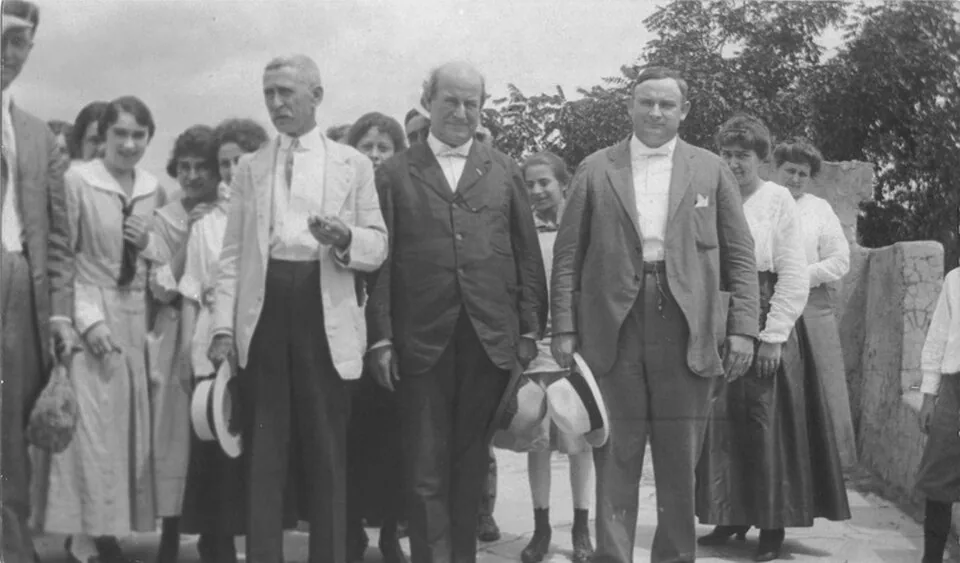
William Hope Harvey, often known as “Coin” Harvey, was born in 1851 and became nationally known as a political writer and economic reform advocate during the late nineteenth century. His nickname came from his famous book Coin’s Financial School, which promoted free silver policies during America’s heated monetary debates of the 1890s.
But Harvey’s interests extended far beyond politics.
He believed strongly in development, tourism, transportation, and the future of the American automobile. At a time when cars were still transforming society, Harvey recognized that organized travel routes would become increasingly important for connecting communities and encouraging tourism.
In 1913, Harvey founded the Ozark Trails Association, an organization dedicated to promoting marked automobile routes through Missouri, Arkansas, Oklahoma, and surrounding regions. The goal was simple but ambitious: help motorists navigate the growing network of early American roads while encouraging tourism and economic growth throughout the Ozarks.
Long before Route 66 existed, Harvey was already helping shape the future of American road travel.
Monte Ne And The Vision Of Something Bigger
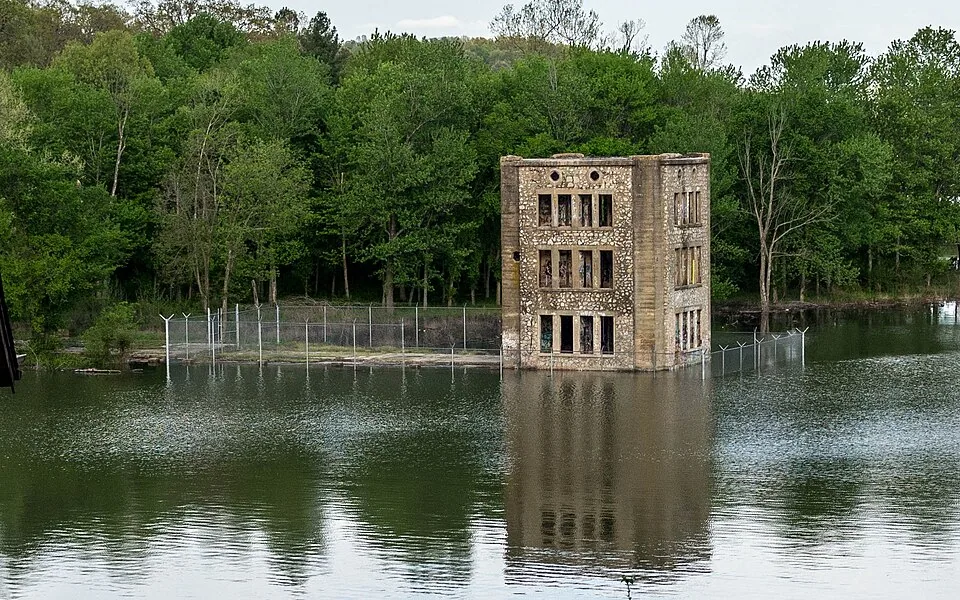
Harvey also became closely associated with Monte Ne, Arkansas, a resort community he developed in the Ozarks.
Monte Ne was more than a hotel destination. It reflected Harvey’s larger vision of tourism, recreation, transportation, and regional development. Visitors traveled there by rail and early automobile routes, making accessibility a central part of Harvey’s plans for the area.
Today, Monte Ne is remembered partly because of its unusual ruins and ambitious ideas.
Among the most fascinating features connected to Harvey’s vision were pyramid inspired structures and an unfinished pyramid mausoleum project. Harvey believed the pyramids could help preserve knowledge and historical records for future generations in case civilization ever faced catastrophe.
Yes, that sounds unusual.
And honestly, it was unusual.
But that eccentric vision also reflected the larger personality behind the Ozark Trails movement. Harvey was not simply thinking about roads. He was thinking about the future, tourism, transportation, history, and how communities could grow through connection and travel.
In many ways, he was decades ahead of his time.
The Ozark Trails Road System Begins
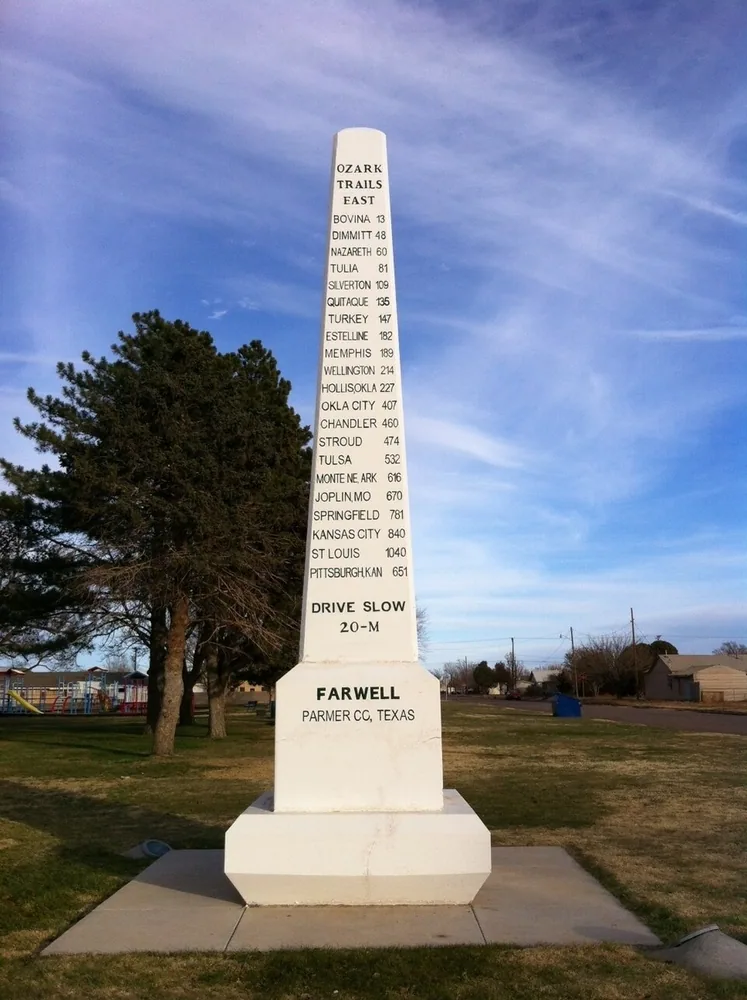
The Ozark Trails road system was not a hiking trail or a single road. It was a connected network of early automobile routes designed to guide motorists through the Ozarks and surrounding states.
At a time when highways were poorly organized, the Ozark Trails system helped travelers move more confidently between communities. Harvey and the Ozark Trails Association promoted the routes heavily and worked to improve road organization throughout the region.
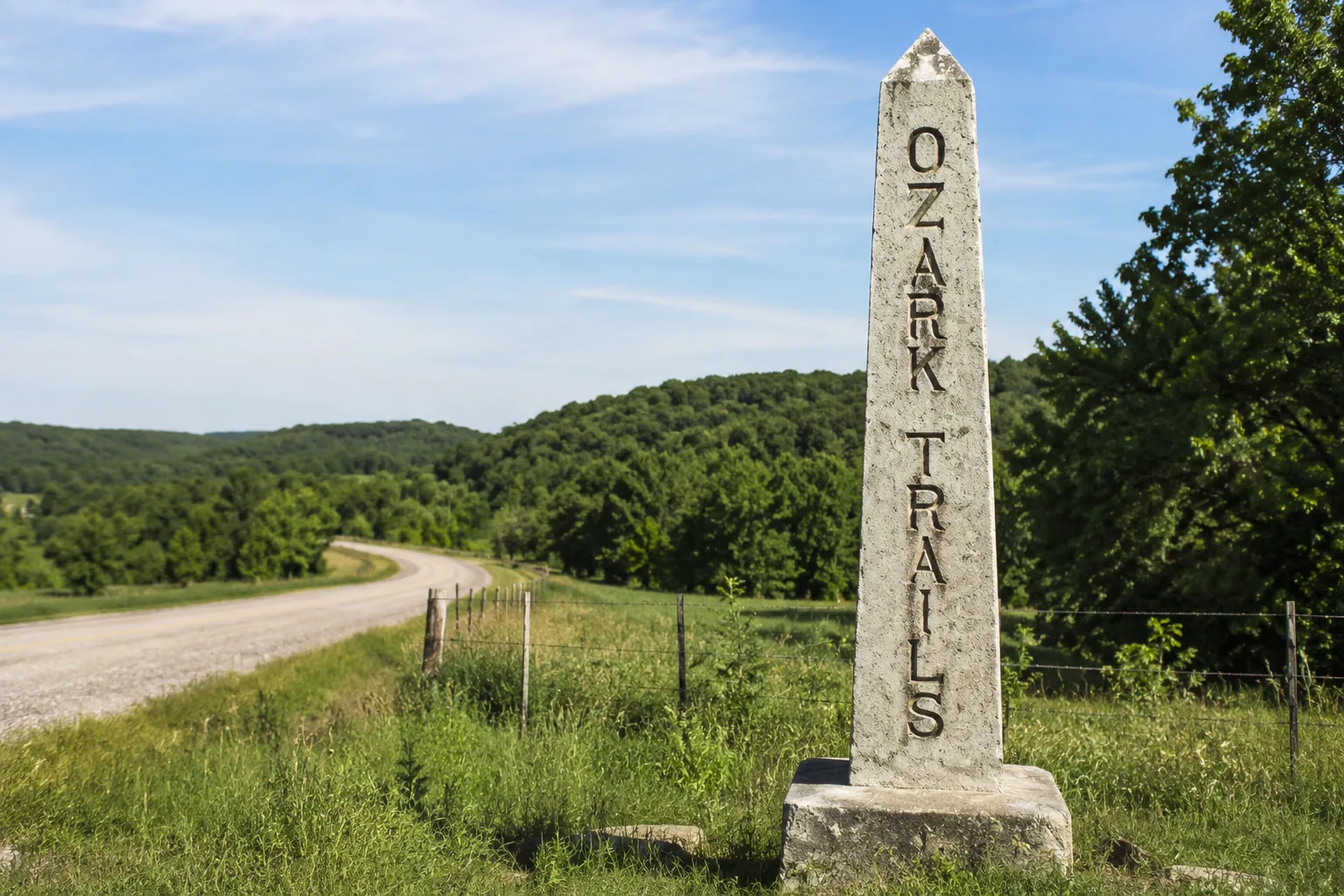
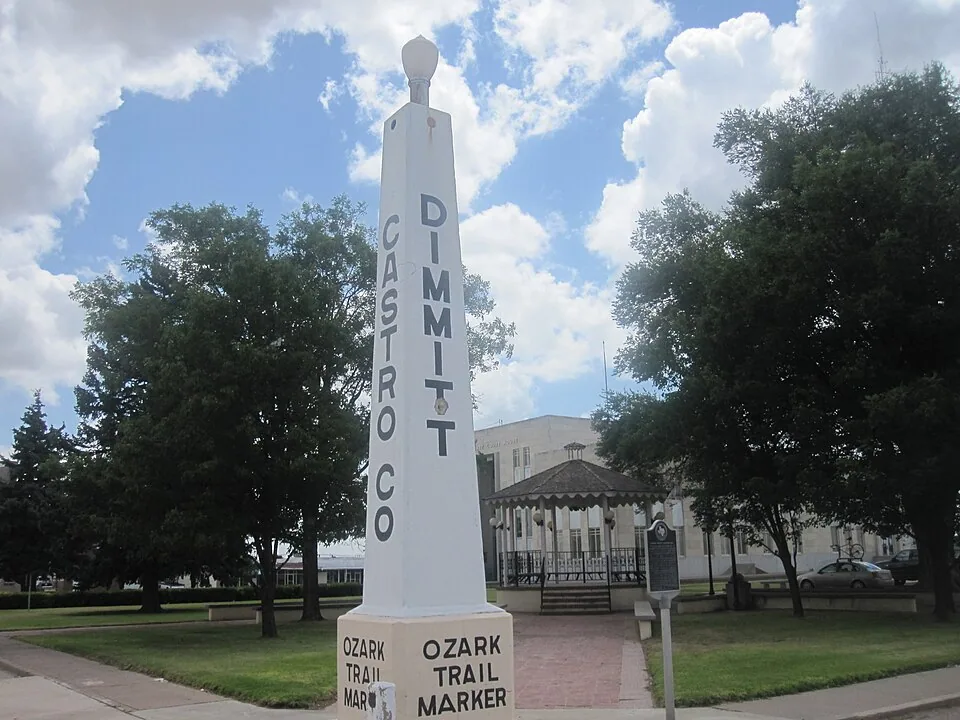
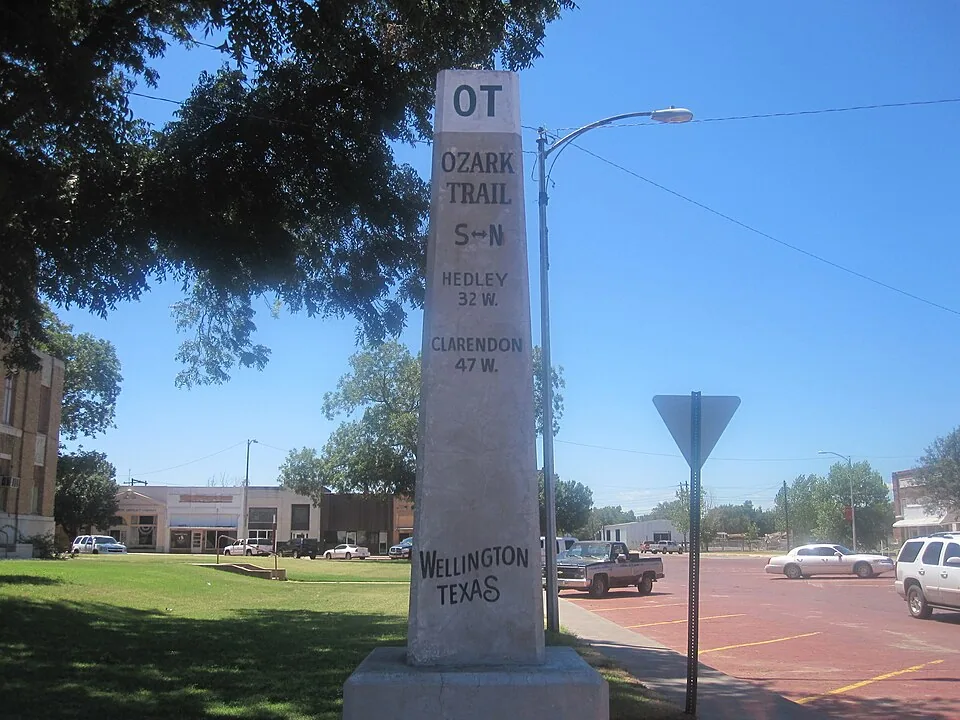
One of the most recognizable features of the Ozark Trails road system was its stone and concrete obelisk markers. These markers helped guide travelers along the routes before modern highway signage existed.
Imagine traveling through rural Oklahoma or Arkansas in the early 1900s and spotting one of those markers along the roadside.
For travelers, it probably felt reassuring.
For local businesses, it represented opportunity.
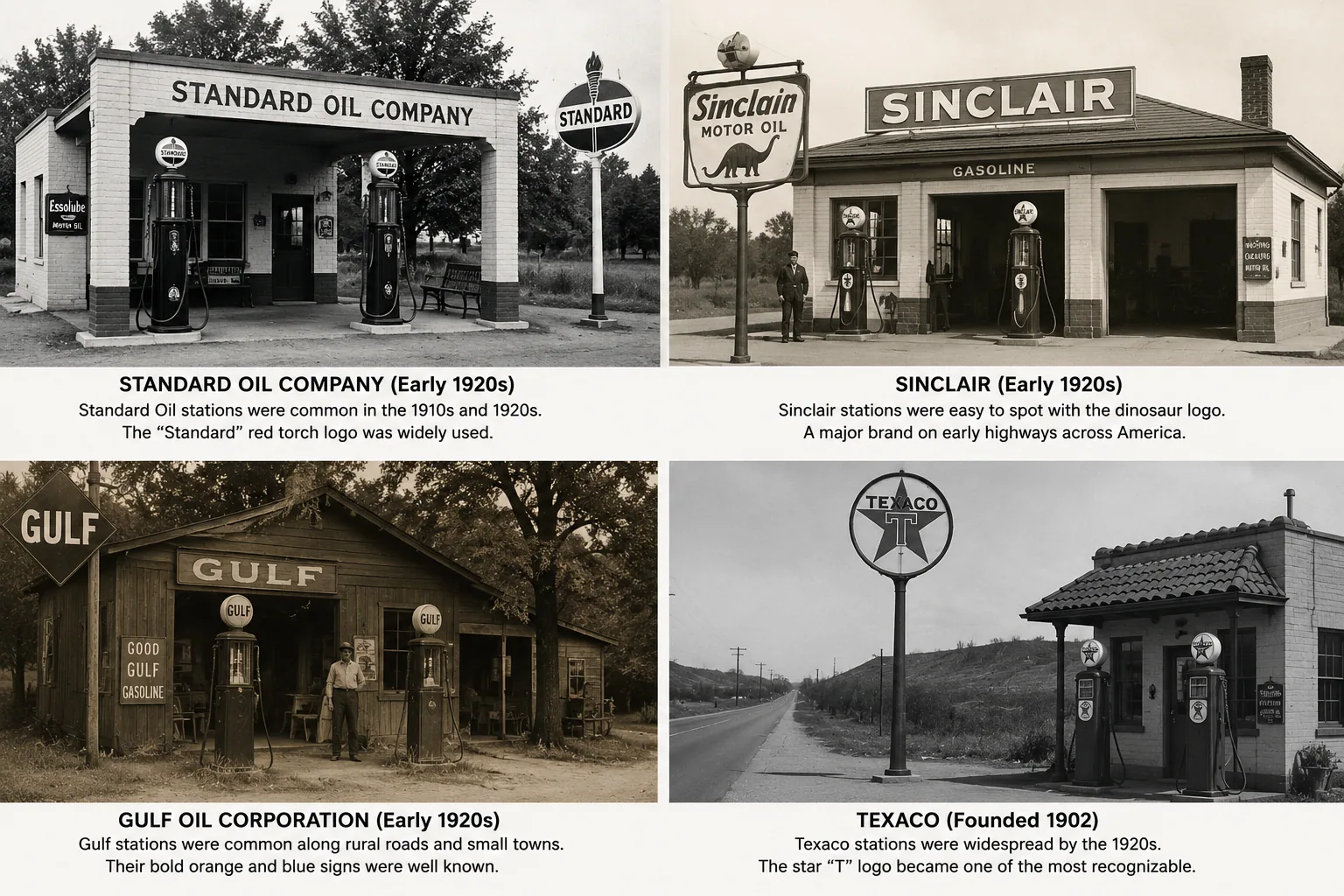
As automobile tourism increased, towns along the routes benefited from restaurants, hotels, gas stations, and other roadside services designed to help travelers continue their journeys.
When Travel Was An Adventure
Modern travelers sometimes complain when GPS loses signal for a few seconds.
Early motorists faced far greater challenges.
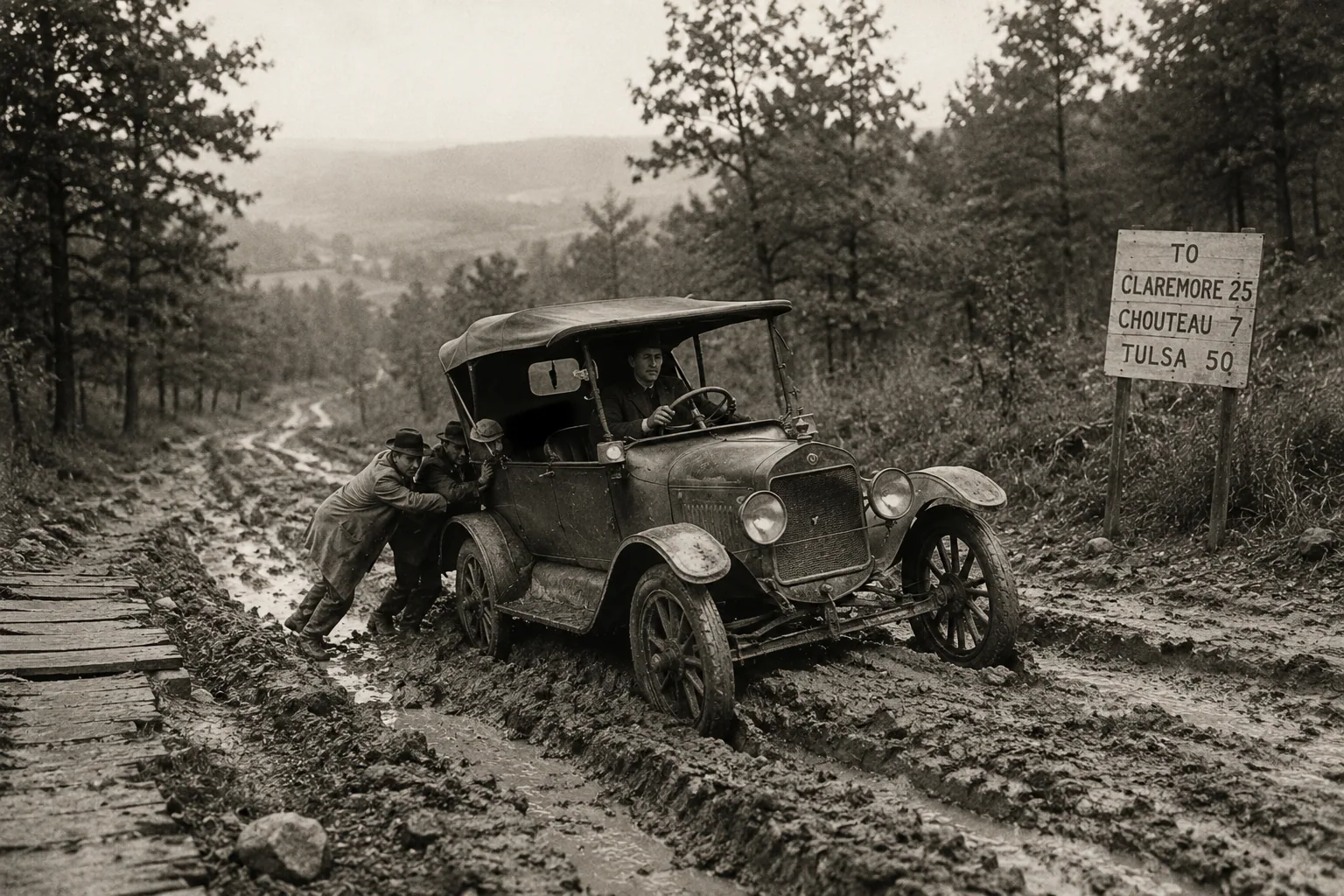
Roads could quickly become muddy and impassable after rain. Mechanical breakdowns were common. Travelers often carried tools, spare tires, extra fuel, food, and water because there was no guarantee help would be nearby.
Finding directions could become its own adventure.
Instead of digital maps, travelers relied on painted trail markers, printed guides, railroad references, and conversations with local residents.
A traveler might hear something like:
“Turn left at the old barn, follow the creek, and if you cross the bridge twice, you went too far.”
Road trips during this era required flexibility and a sense of humor.
But they also created a spirit of exploration that became deeply connected to American travel culture.
That spirit later became part of Route 66 itself.
How The Ozark Trails Road System Helped Shape Route 66
William “Coin” Harvey did not create Route 66.
That distinction belongs largely to Cyrus Avery, often called the “Father of Route 66.”
However, Harvey’s earlier work through the Ozark Trails Association helped lay important groundwork for organized automobile travel in the region. Portions of the Ozark Trails routes later became incorporated into highways including Route 66 and other developing highway systems.
In many ways, the Ozark Trails road system represented a predecessor to Route 66.
Long before Route 66 postcards, roadside diners, neon signs, and cross country tourism became symbols of American travel, Harvey and other highway promoters were already working to organize the chaos of early road systems.
Their efforts helped transform automobile travel from a risky experiment into a growing national experience.
Why This Story Connects To Claremore And The Museum
At first glance, a story about early highways and pyramids in Arkansas may seem far removed from the J. M. Davis Arms and Historical Museum.
In reality, it connects naturally to the broader American story the museum helps preserve.
The museum reflects changing American life across generations, including travel, tourism, western expansion, transportation, roadside culture, and the development of communities throughout Oklahoma.
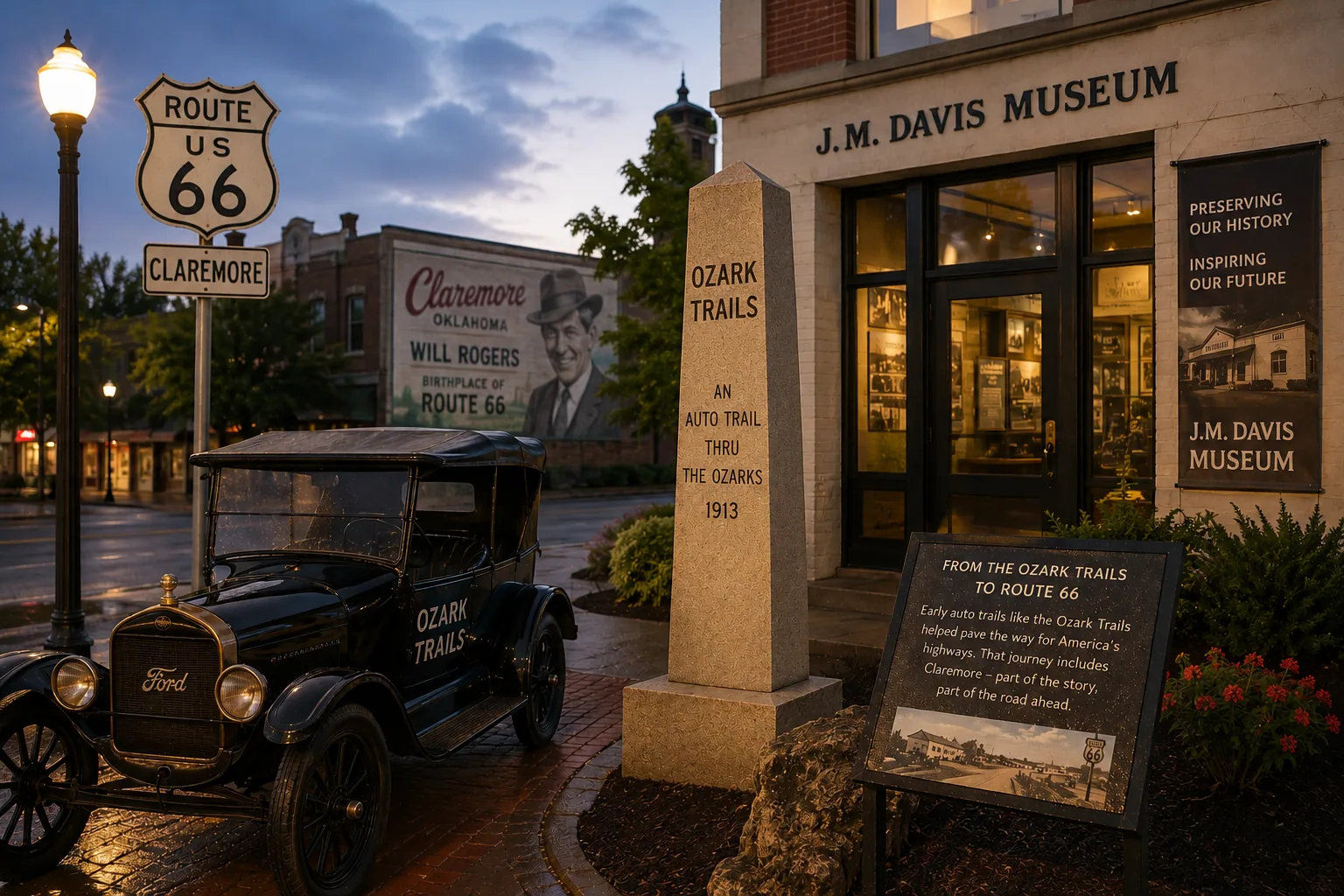
Claremore itself became part of the growing highway culture that eventually surrounded Route 66. Travelers passing through the region brought new business, new ideas, and new opportunities. Hotels, restaurants, shops, and roadside attractions all benefited from America’s expanding automobile culture.
Claremore’s location along important travel routes helped shape the city’s identity during the early automobile era. Visitors traveling through Oklahoma brought commerce, tourism, and new connections to communities like Claremore long before modern interstate highways existed. As automobile travel increased across the region, cities along these routes became part of America’s growing roadside culture and tourism economy.
J. M. Davis himself lived during this period of expanding American travel and tourism. As travelers moved through Oklahoma and communities continued growing, Mr. Davis built a collection that reflected changing American life, western history, transportation culture, and the stories people carried with them across the country.
Today, visitors to the J. M. Davis Arms and Historical Museum can explore far more than firearms alone. The museum preserves stories connected to travel, exploration, western heritage, military history, transportation, and the evolving culture of America during the late nineteenth and early twentieth centuries.
Much like the Ozark Trails road system connected communities across multiple states, museums help connect modern visitors to the stories, people, and ideas that shaped those communities generations ago.
Stories like Harvey’s remind us that history is often connected through unexpected roads and personalities.
Sometimes those personalities include ambitious highway promoters.
Sometimes they include unusual pyramid projects hidden in the Ozarks.
And sometimes they help shape the future of American travel long before the rest of the country realizes what is coming.
Why Stories Like This Still Matter
Visitors exploring the museum today are often surprised by how many unexpected stories connect back to Oklahoma history, travel culture, Route 66, and the people who helped shape the American experience.
Stories like William “Coin” Harvey’s remind us that history is often much bigger, stranger, and more connected than we first realize.
Related Questions
Who Was William “Coin” Harvey?
William Hope Harvey was a businessman, political writer, and transportation promoter who founded the Ozark Trails Association in 1913.
Did William “Coin” Harvey Create Route 66?
No. Harvey did not create Route 66. However, his work promoting the Ozark Trail helped pave the way for organized highway travel before Route 66 existed.
What Was The Ozark Trail?
The Ozark Trail was a network of early automobile routes connecting communities across Missouri, Arkansas, Oklahoma, and surrounding states.
What Was Monte Ne?
Monte Ne was a resort community in Arkansas developed by William “Coin” Harvey. It later became known for its unusual ruins and pyramid inspired structures.
Sources
“Monte Ne.” Encyclopedia Of Arkansas, encyclopediaofarkansas.net/entries/monte-ne-5019/
“Ozark Trails.” The Encyclopedia Of Oklahoma History And Culture, www.okhistory.org/publications/enc/entry?entry=OZ005
“William Hope Harvey.” Wikipedia, en.wikipedia.org/wiki/William_Hope_Harvey
Share this article
Help someone else find this post
Share it to your favorite platform, email it directly, or copy the link for your next post or message.
Reader reflection
What part of The Man Who Helped Pave The Way For Route 66 Built Pyramids In The Ozarks feels most relevant to your understanding of American history, travel, or innovation today, and what is one historical place or story you would like to explore further in the next few days?
Choose one idea from the article, connect it to your own interests or experiences, and think about how transportation, tourism, and bold ideas helped shape the communities we know today.
Public reading stays open. Private reflection requires a member account so you can save your thinking and come back to it later.