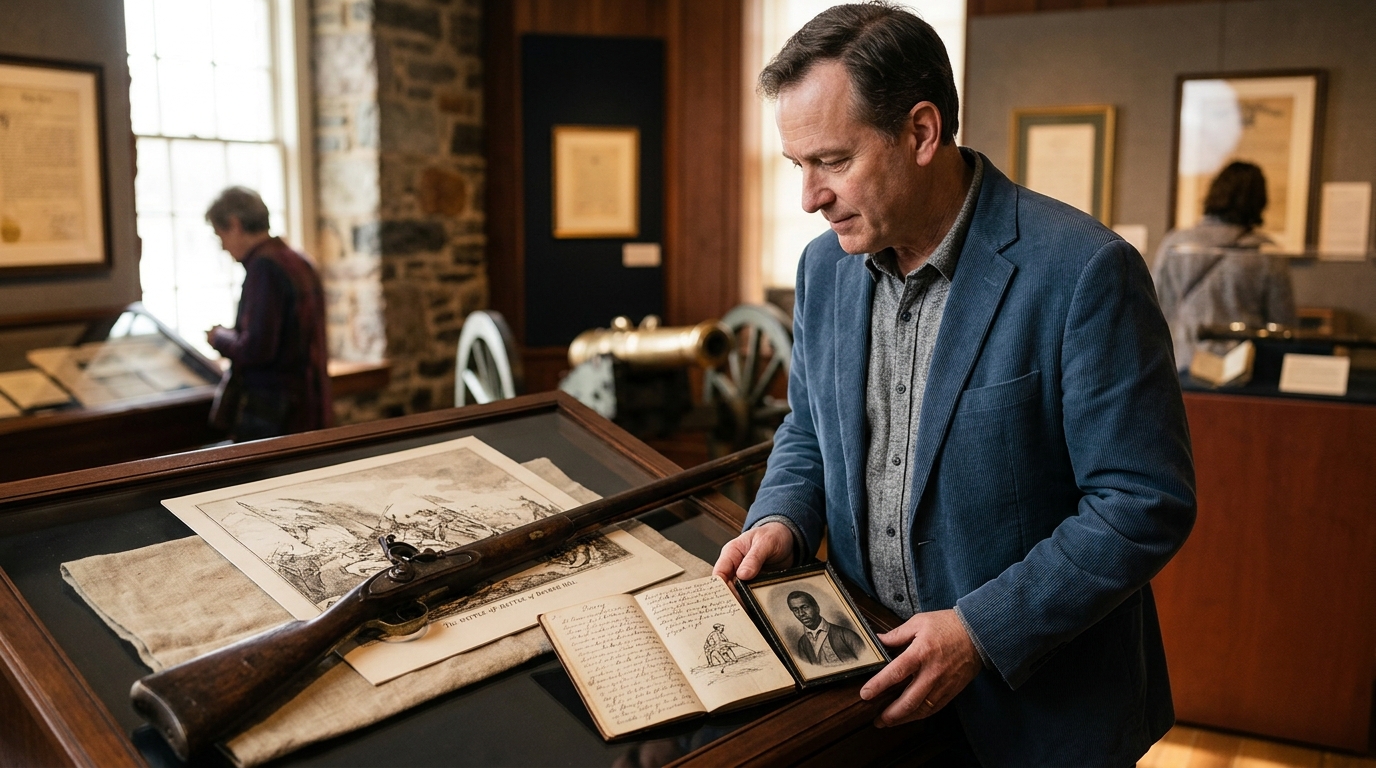
Peter Salem: The Patriot Soldier History Almost Forgot
Discover the story of Peter Salem, a Black Patriot soldier remembered for his courage at the Battle of Bunker Hill during the American Revolution.
Peter Salem: The Soldier Bunker Hill Almost Forgot
When Americans remember the Revolution, we often begin with the familiar names. George Washington. John Adams. Thomas Jefferson. Benjamin Franklin. Their names are carved into the story of our nation, and rightly so.
But America was not built by famous names alone.
It was also carried forward by ordinary soldiers who stood in smoke, fear, mud, heat, hunger, and uncertainty. Some left farms. Some left trades. Some left families. Some were fighting for an idea that had not yet fully included them.
Peter Salem was one of those men.
Born enslaved in Framingham, Massachusetts, around 1750, Salem’s early life began far from the freedom that would become the language of the Revolution. Yet when the fight for independence began, he became part of the Patriot cause. His story reminds us that America’s founding was not simple. It was brave, complicated, imperfect, and carried by people whose names deserve to be remembered.
As America approaches its 250th birthday, Peter Salem stands as one of those unsung heroes.
A Soldier at Bunker Hill
The Battle of Bunker Hill was fought on June 17, 1775, just two months after Lexington and Concord. It was one of the first major battles of the American Revolution.
Although history remembers it as the Battle of Bunker Hill, much of the fighting took place on nearby Breed’s Hill in Charlestown, Massachusetts. Colonial forces had built earthworks during the night, preparing to hold their position against the British Army. They were not professional soldiers in the way the British regulars were, but they stood their ground.
The British won the field that day, but the victory came at a terrible cost. The battle proved that colonial forces could face one of the most powerful armies in the world and make that army pay dearly for every step.
Among the Patriot soldiers was Peter Salem.
He was not a general. He did not sign a declaration. He did not become a household name. He stood as a soldier in one of the Revolution’s defining early moments.
That alone is worthy of remembrance.
The Shot Remembered by History
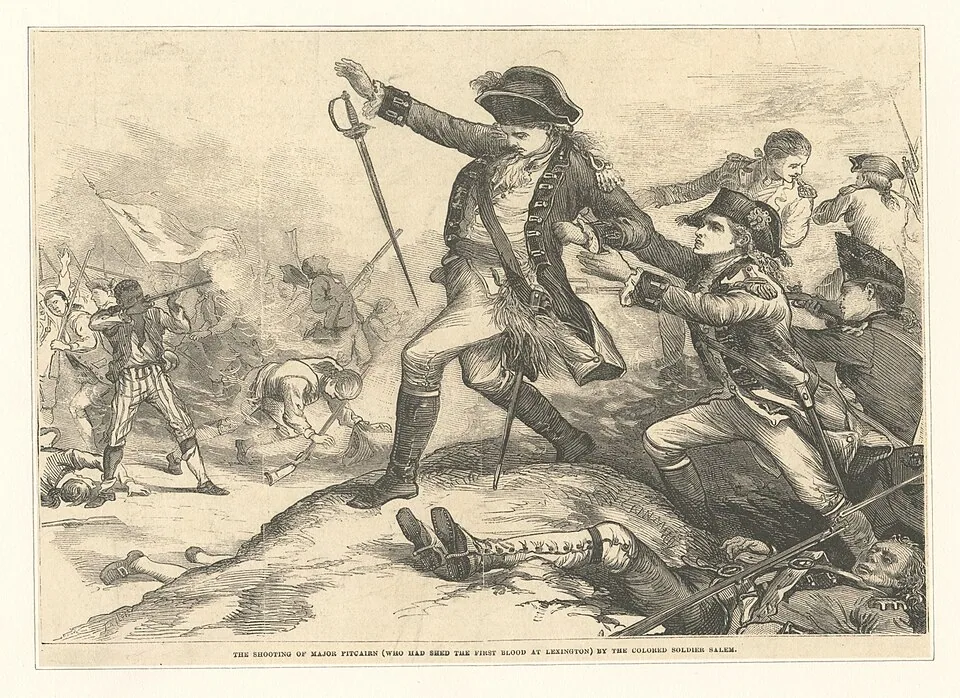
Peter Salem is most often remembered for his connection to the death of British Major John Pitcairn during the Battle of Bunker Hill.
The story has been told in different ways over the years. Some later accounts and traditions credited Salem with firing the shot that killed Pitcairn as British forces pushed against the colonial position. Because historical accounts are not all in agreement, this moment should be told with care. It is best to say that Peter Salem was credited by some accounts with the shot, not that it can be proven beyond question.
Even with that caution, the story matters.
It shows how Salem’s name became attached to one of the most dramatic moments of the battle. It also reminds us how easily the lives of ordinary soldiers can fade behind the names of officers, generals, and public leaders.
For many years, the American Revolution was often told from the top down. We learned the names of commanders, lawmakers, and founders. Those stories matter, but they are not the whole story. The Revolution was also fought by men whose names appeared briefly in records, if they appeared at all. Men like Peter Salem carried muskets, faced cannon fire, and risked everything in a war whose promises were still unfinished.
A Complicated Fight for Freedom
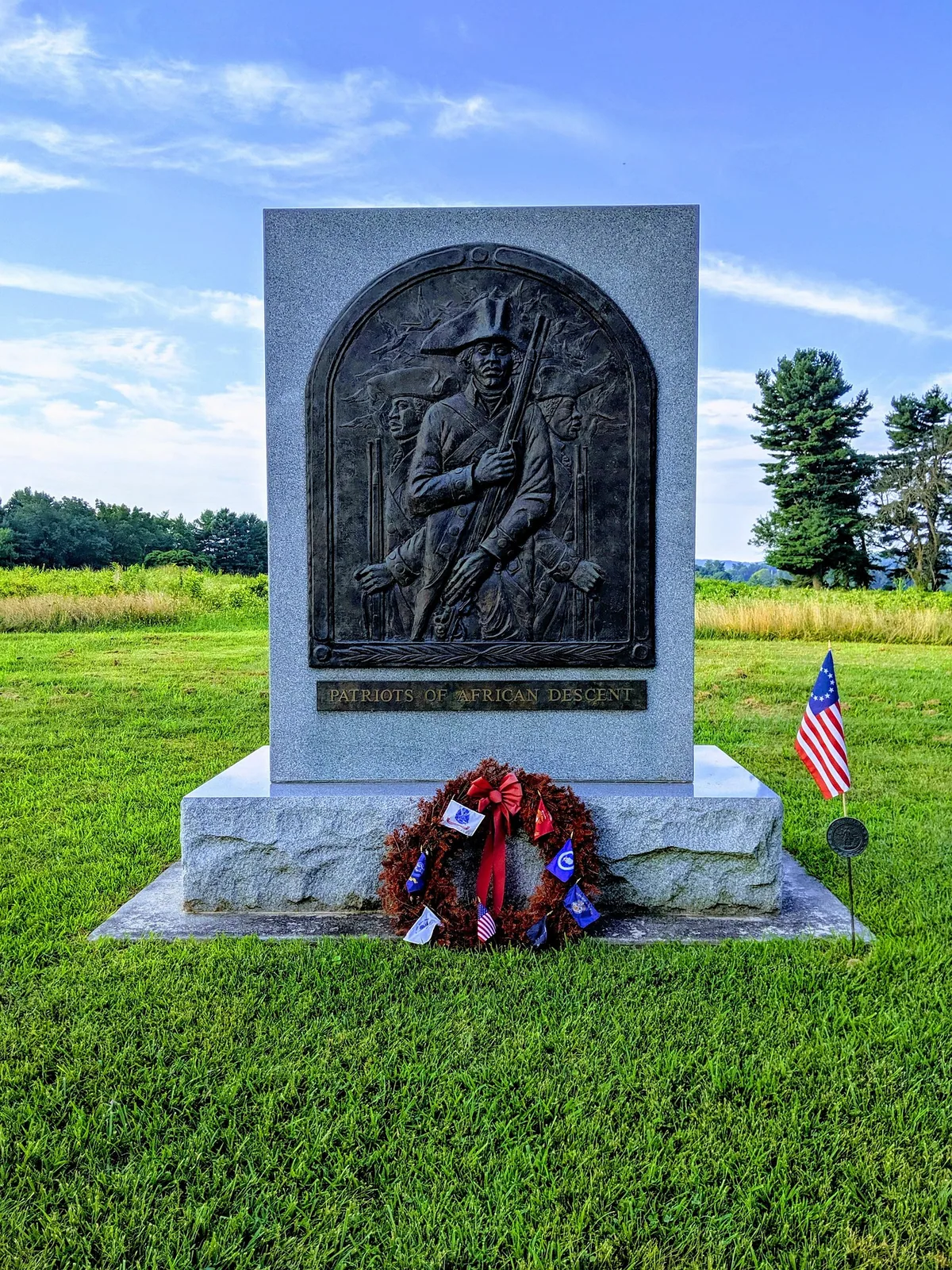
Peter Salem’s story carries a deeper meaning because he was a Black Patriot soldier in a nation still struggling with the meaning of liberty.
The Revolution spoke boldly of freedom. It declared that rights came not from kings, but from the Creator. It challenged tyranny and called for self-government. Yet at the same time, slavery still existed in the colonies. Many people who heard the language of liberty were not yet allowed to fully live under it.
That truth does not weaken the story of the Revolution. It makes the story more honest.
Peter Salem’s service forces us to look closely at the founding generation. A man born without freedom fought in a war that helped create a nation built on the promise of freedom. His courage does not fit neatly into a simple version of history, and that is exactly why his story matters.
History is often most powerful when it asks us to hold more than one truth at a time.
The American Revolution was a fight for independence.
It was also the beginning of a long and unfinished conversation about who would be included in that independence.
Peter Salem stood at the center of that contradiction. He served. He fought. He risked his life. His story gives us a fuller picture of the people who helped shape the United States.
Why His Story Belongs in a Museum
At the J. M. Davis Arms & Historical Museum, we often say that the collection is about more than firearms. It is about the people connected to them.
A musket is not only wood and iron. It is the hands that carried it. It is the decision to stand in line when fear said to run. It is the noise of battle, the weight of duty, and the hope that sacrifice might mean something beyond one lifetime.
Peter Salem’s story belongs in that kind of conversation.
His life helps visitors think beyond the object and into the human experience behind it. The Revolutionary War was not just a chapter in a textbook. It was lived by real people. Some were famous. Most were not. Some left behind portraits and letters. Others left only scattered records and stories passed down through time.
But all of them were part of the larger American story.
When we remember Peter Salem, we are not only remembering one soldier. We are remembering the many men and women whose lives helped carry history forward, even when history did not always remember their names clearly.
America 250 and the Names Worth Remembering
America’s 250th birthday gives us a chance to look back with gratitude, honesty, and renewed curiosity. It is a time to celebrate the nation’s founding, but it is also a time to ask who else stood in the shadows of that founding.
Peter Salem reminds us that courage does not always come with fame. Sometimes it appears in the form of a soldier standing his ground on a hill outside Boston. Sometimes it belongs to a man born into bondage who chose to fight in a war for liberty. Sometimes it survives not because history made room for it easily, but because people kept telling the story.
As we honor America at 250, we should remember the famous founders, the generals, and the great documents. But we should also remember the soldiers who carried the fight forward one step, one shot, and one sacrifice at a time.
Peter Salem was one of those soldiers.
His name may not be as familiar as others from the American Revolution, but his story belongs in the nation’s memory. He stood at Bunker Hill. He served the Patriot cause. He became part of the larger story of a country still learning how to live up to the word freedom.
And 250 years later, his name is still worth saying.
Sources
“Peter Salem (Salem Middlesex).” National Park Service, U.S. Department of the Interior, 9 Sept. 2025.
“Peter Salem and the Battle of Bunker Hill.” National Museum of African American History and Culture, Smithsonian Institution.
“Peter Salem.” American Battlefield Trust.
“Bunker Hill.” American Battlefield Trust.
“Remembering Revolution: Bunker Hill Monument.” National Park Service, U.S. Department of the Interior, 2 Jan. 2025.
MonicaVolpin. “Granite Obelisk Bunker Hill.” Pixabay.
Share this article
Help someone else find this post
Share it to your favorite platform, email it directly, or copy the link for your next post or message.
Reader reflection
What other unsung heroes from America’s founding do you think deserve to be remembered?
Peter Salem’s story reminds us that American history was shaped by more than the famous names we already know. Share a lesser-known patriot, soldier, family story, or local connection that you believe should be part of America’s 250th birthday conversation.
Public reading stays open. Private reflection requires a member account so you can save your thinking and come back to it later.